




Compare Acetyl Octapeptide-3 (Snap-8) vs GHK-Cu copper peptide for anti-aging skincare formulations. Learn mechanisms, benefits, formulation applications, and sourcing from PeptidChem, a professional cosmetic peptide manufacturer.
Acetyl Octapeptide-3 vs GHK-Cu: Which Peptide Is Better for Anti-Aging Skincare?
The global skincare industry is rapidly shifting toward biotechnology-driven active ingredients, and peptides have become one of the most researched categories in premium anti-aging formulations.Among cosmetic peptides, Acetyl Octapeptide-3 (Snap-8) and GHK-Cu (Copper Tripeptide-1) are two widely recognized ingredients used for improving visible signs of skin aging.
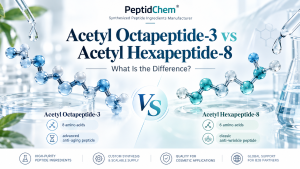
Acetyl Octapeptide-3 vs GHK-Cu
| Feature | Acetyl Octapeptide-3 (Snap-8) | GHK-Cu Copper Peptide |
|---|---|---|
| Peptide Type | Synthetic octapeptide | Copper-binding tripeptide complex |
| Main Target | Expression wrinkles | Skin aging and extracellular matrix |
| Primary Mechanism | Modulates SNARE-related neurotransmitter signaling | Copper-dependent skin repair signaling |
| Main Benefit | Reduces appearance of fine lines caused by facial movement | Supports collagen synthesis and skin regeneration |
| Best Application | Anti-wrinkle serums, eye creams | Repair creams, anti-aging serums |
| Ideal Market | Fast visible wrinkle-care products | Premium longevity and regenerative skincare |
| Supplier Need | High purity synthetic peptide | Stable copper peptide manufacturing |
What Is Acetyl Octapeptide-3 (Snap-8)?
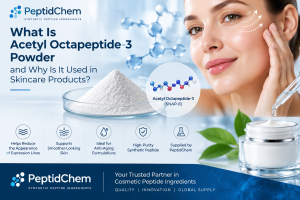
Acetyl Octapeptide-3, commonly known as Snap-8, is a synthetic peptide ingredient developed for anti-aging skincare applications.
It is designed as a cosmetic alternative inspired by the mechanism of SNAP-25, a protein involved in neurotransmitter release.
By influencing the SNARE complex pathway, Acetyl Octapeptide-3 is mainly researched for reducing the appearance of dynamic wrinkles, especially:
- forehead lines
- crow’s feet
- expression wrinkles around eyes
Unlike collagen-supporting peptides, Snap-8 mainly addresses mechanical aging caused by repeated facial expressions.
What Is GHK-Cu Copper Peptide?
GHK-Cu (Copper Tripeptide-1) is a naturally occurring copper-binding peptide consisting of:
Glycine–Histidine–Lysine + Copper Ion (Cu²⁺)
It has been extensively investigated in cosmetic science because of its role in:
- extracellular matrix remodeling
- collagen-related pathways
- antioxidant response
- skin repair mechanisms
Research indicates that GHK-Cu interacts with fibroblast-related processes and may influence collagen production and matrix metalloproteinase regulation.
How Do Acetyl Octapeptide-3 and GHK-Cu Work Differently?
The biggest difference is their biological target.
Acetyl Octapeptide-3 Mechanism
Facial movement → muscle contraction → expression lines
↓
Snap-8 interacts with neurotransmitter-release pathways
↓
Reduced appearance of repetitive expression wrinkles
GHK-Cu Mechanism
Aging, UV exposure, oxidative stress
↓
Reduced extracellular matrix quality
↓
GHK-Cu supports skin remodeling pathways
↓
Improved skin firmness and elasticity appearance
GHK-Cu has been reported to influence collagen-related genes and extracellular matrix components in experimental models.
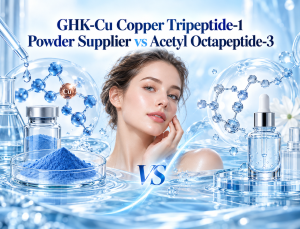
Which Peptide Provides Better Anti-Aging Results?
The answer depends on the desired product positioning.
Choose Acetyl Octapeptide-3 when developing:
✔ instant anti-wrinkle products
✔ eye-area treatments
✔ expression-line serums
✔ premium cosmetic lines focused on visible smoothing effects
Choose GHK-Cu when developing:
✔ regenerative anti-aging products
✔ mature skin formulations
✔ barrier-support products
✔ premium “skin longevity” concepts
Acetyl Octapeptide-3 vs GHK-Cu: Formulation Comparison
| Formulation Goal | Recommended Peptide |
|---|---|
| Reduce appearance of expression wrinkles | Acetyl Octapeptide-3 |
| Improve mature skin appearance | GHK-Cu |
| Luxury anti-aging serum | Combination approach |
| Eye cream formulation | Acetyl Octapeptide-3 |
| Skin repair concept | GHK-Cu |
| Premium biotechnology skincare | Both peptides |
Can Acetyl Octapeptide-3 and GHK-Cu Be Used Together?
Yes. Because they target different aspects of skin aging, they are considered complementary ingredients.
A combination formula can address:
Structural aging
(GHK-Cu)
Expression-related aging
(Acetyl Octapeptide-3)
This multi-pathway approach is increasingly used in advanced anti-aging product development.
Why Choose PeptidChem as Your Cosmetic Peptide Supplier?
PeptidChem specializes in the manufacturing of synthesized peptide ingredients for cosmetic and biotechnology applications.
Our capabilities include:
✔ Custom Synthetic Peptide Manufacturing
We provide:
- Acetyl Octapeptide-3
- GHK-Cu Copper Peptide
- cosmetic signaling peptides
- customized peptide sequences
✔ High Purity Peptide Production
PeptidChem focuses on:
- controlled synthesis processes
- analytical characterization
- batch consistency
- cosmetic-grade ingredient supply
✔ B2B Ingredient Partnership
We support:
- skincare brands
- cosmetic manufacturers
- formulation laboratories
- ingredient distributors
with reliable peptide raw materials.
Why Peptide Quality Matters in Cosmetic Formulation
Important quality factors include:
1. Purity
Higher purity reduces unwanted synthesis by-products.
2. Stability
Peptides require proper:
- storage conditions
- packaging
- formulation compatibility
3. Analytical Documentation
Professional suppliers should provide:
- HPLC analysis
- MS identification
- specification sheets
- technical documentation
Market Trend: Why Peptide Ingredients Are Growing in Anti-Aging Skincare
Consumers increasingly demand:
- scientifically supported ingredients
- biotechnology-based skincare
- premium anti-aging solutions
Peptides have become key active ingredients because they provide targeted biological signaling rather than traditional moisturizing effects alone.
GHK-Cu, in particular, has gained attention as a copper peptide used in cosmetic formulations focused on skin firmness and aging appearance.
Final Verdict: Acetyl Octapeptide-3 or GHK-Cu?
Which peptide is better?
There is no universal winner.
Acetyl Octapeptide-3 (Snap-8)
Best for:
Visible wrinkle reduction and expression-line care
GHK-Cu Copper Peptide
Best for:
Skin regeneration, firmness, and premium anti-aging positioning
For advanced anti-aging formulations, many cosmetic developers consider combining both peptides to target multiple aging pathways.
Why Partner with PeptidChem?
PeptidChem provides synthesized peptide ingredients for cosmetic innovators seeking:
- reliable peptide supply
- high-quality raw materials
- technical support
- customized peptide synthesis solutions
📩Contact with PeptidChem for cosmetic peptide ingredient sourcing and formulation development support.
Also See
Copper Tripeptide-1 (GHK-Cu): Cosmetic Formulation Guide | Peptidchem
How Does Copper Tripeptide GHK-Cu Support Skin Repair, Collagen Synthesis, and Hair Care Formulas
Acetyl Octapeptide-3 (SNAP-8): A Next-Generation Peptide Ingredient for Wrinkle Reduction Formulas
FAQs:
Q1. What is the difference between Acetyl Octapeptide-3 and GHK-Cu?
Acetyl Octapeptide-3 mainly targets expression wrinkles through neurotransmitter-related pathways, while GHK-Cu supports extracellular matrix and collagen-related skin processes.
Q2. Is GHK-Cu a peptide?
Yes. GHK-Cu is a copper-binding tripeptide consisting of Glycine, Histidine, Lysine, and copper ions.
Q3. Is Acetyl Octapeptide-3 synthetic?
Yes. Acetyl Octapeptide-3 is a laboratory-synthesized cosmetic peptide ingredient.
Q4. Can manufacturers buy Acetyl Octapeptide-3 in bulk?
Yes. Cosmetic ingredient suppliers such as PeptidChem provide synthesized peptide raw materials for B2B applications.
Q5. Can PeptidChem provide customized peptide synthesis?
Yes. PeptidChem specializes in synthesized peptide ingredient manufacturing and customized peptide solutions.
References
Pickart L. et al. Copper peptide research and extracellular matrix regulation studies.
GHK-Cu molecular mechanism studies on fibroblast activity and collagen-related pathways.
Cosmetic peptide research literature on neurotransmitter-modulating peptides including Acetyl Octapeptide-3.
Cosmetic ingredient reviews on peptide-based anti-aging applications.