




Discover how Copper Tripeptide-1 (GHK-Cu) supports collagen synthesis, skin repair, anti-aging, and hair care formulations. Learn formulation considerations, quality standards, and how Peptidchem provides high-quality peptide solutions for cosmetic brands.
Copper Tripeptide-1: Unlocking the Science Behind Regenerative Skincare
The global skincare industry is rapidly shifting from traditional moisturizing and surface-level solutions toward biomimetic, regenerative, and scientifically validated active ingredients. Among these advanced cosmetic actives, GHK-Cu Copper Tripeptide-1 Powder Supplier has emerged as one of the most researched copper-binding peptides for premium anti-aging, skin repair, and hair-care formulations.
Unlike conventional cosmetic ingredients that mainly improve the appearance of skin temporarily, Copper Tripeptide-1 works through biological signaling pathways associated with extracellular matrix remodeling, antioxidant protection, and tissue regeneration.
For cosmetic brands developing high-performance serums, creams, scalp treatments, and professional skincare products, selecting a reliable peptide ingredient with consistent quality and formulation support is critical.
Peptidchem provides advanced peptide solutions designed to help cosmetic innovators transform scientific discoveries into effective skincare products.
What Is Copper Tripeptide-1 (GHK-Cu)?
Copper Tripeptide-1, commonly known as GHK-Cu, is a naturally occurring copper peptide composed of:
- Glycine (G)
- Histidine (H)
- Lysine (K)
- Copper ion (Cu²⁺)
Its official INCI name is:
Copper Tripeptide-1
Chemical identification:
- CAS Number: 89030-95-5
- Molecular Formula: C₁₄H₂₂N₆O₄Cu
Copper Tripeptide-1 is naturally found in human biological fluids, including plasma and saliva, but cosmetic-grade material is typically produced through controlled synthetic peptide manufacturing processes.
The peptide acts as a copper delivery system, enabling copper ions to participate in biological processes related to skin remodeling and repair.
Why Copper Tripeptide-1 Is Considered a Premium Anti-Aging Ingredient?
The aging process involves multiple biological changes:
- Reduced collagen synthesis
- Loss of extracellular matrix integrity
- Increased oxidative stress
- Slower wound repair
- Declining skin elasticity
Copper Tripeptide-1 addresses these challenges through several complementary mechanisms.
Stimulates Collagen and Extracellular Matrix Production
One of the most important reasons cosmetic formulators use GHK-Cu is its ability to support extracellular matrix activity.
Copper plays an essential role in enzymes involved in collagen maturation, including:
- Lysyl oxidase activity
- Connective tissue formation
- Structural protein stabilization
By supporting collagen-related pathways, Copper Tripeptide-1 helps improve:
✓ Skin firmness
✓ Elasticity
✓ Fine-line appearance
✓ Skin texture
This makes it particularly valuable in:
- Premium anti-aging serums
- Firming creams
- Professional facial treatments
Supports Skin Repair and Recovery
Healthy skin requires efficient repair mechanisms after environmental stress, UV exposure, or cosmetic procedures.
Copper Tripeptide-1 has been investigated for its role in:
- Tissue remodeling
- Cellular communication
- Wound healing support
- Inflammatory balance
This makes it suitable for formulations targeting:
- Sensitive skin
- Barrier recovery
- Post-treatment skincare
- Damaged skin appearance
Powerful Antioxidant and Skin Protection Activity
Modern consumers are increasingly concerned about:
- Pollution
- Blue light exposure
- UV-induced oxidative stress
Copper Tripeptide-1 contributes to antioxidant defense by supporting cellular protection mechanisms.
Benefits include:
- Reduction of oxidative stress
- Improved skin resilience
- Protection against environmental damage
Hair and Scalp Care Applications
Beyond facial skincare, Copper Tripeptide-1 has gained attention in advanced hair-care formulations.
Potential applications include:
- Scalp conditioning products
- Hair density-supporting serums
- Follicle-care formulations
Its biological activity makes it an attractive ingredient for:
- Anti-hair-loss cosmetic products
- Scalp rejuvenation products
- Premium hair growth-support formulations
However, cosmetic claims should remain within regulatory boundaries and focus on improving scalp condition and hair appearance.
Copper Tripeptide-1 Applications in Cosmetic Formulations
1. Anti-Aging Serums
Common formulation concept:
- Copper Tripeptide-1
- Hyaluronic Acid
- Niacinamide
- Peptides
- Antioxidants
Target benefits:
✓ Wrinkle reduction appearance
✓ Skin firmness
✓ Hydration improvement
2. Skin Repair Creams
Ideal for:
- Mature skin
- Sensitive skin
- Barrier-support products
Common supporting ingredients:
- Ceramides
- Panthenol
- Centella extracts
- Beta-glucan
3. Hair and Scalp Products
Applications:
- Scalp tonics
- Hair serums
- Leave-on treatments
Formulation Challenges of Copper Tripeptide-1
Although Copper Tripeptide-1 is a highly valuable active, successful formulation requires technical expertise.
1. Stability Issues
Peptides are sensitive molecules affected by:
- Extreme pH
- Oxidation
- Heavy metal interactions
- Temperature stress
Recommended formulation considerations:
- Maintain suitable pH conditions
- Avoid incompatible oxidizing ingredients
- Use protective packaging
2. Compatibility With Other Actives
Copper peptides require careful formulation design.
Special attention should be given when combining with:
- Strong acids
- Certain vitamin C systems
- Aggressive exfoliating ingredients
A professional formulation approach is necessary to maintain peptide activity.
3. Purity and Manufacturing Quality
The performance of Copper Tripeptide-1 depends strongly on:
- Peptide purity
- Copper-binding efficiency
- Residual impurity control
- Batch consistency
Low-quality peptide materials may compromise:
- Stability
- Color consistency
- Product performance
How to Select High-Quality Copper Tripeptide-1 for Cosmetic Manufacturing?
Professional cosmetic manufacturers should evaluate:
Purity
High-purity Copper Tripeptide-1 ensures:
- Better biological activity
- Improved formulation reliability
Analytical Documentation
Reliable suppliers should provide:
- Certificate of Analysis (COA)
- HPLC testing
- Heavy metal analysis
- Microbial testing
Manufacturing Expertise
Peptide production requires:
- Controlled synthesis
- Advanced purification
- Quality management systems
Why Choose Peptidchem for Copper Peptide Solutions?
At Peptidchem, we understand that cosmetic innovation requires more than supplying an ingredient.
We support brands through:
Scientific Peptide Expertise
Our peptide solutions are developed with knowledge of:
- Cosmetic chemistry
- Bioactive peptides
- Skin biology
- Formulation requirements
Reliable Quality Control
Peptidchem focuses on:
✓ High purity peptide materials
✓ Batch-to-batch consistency
✓ Technical documentation
✓ Formulation support
Customized Solutions for Cosmetic Brands
We help manufacturers develop:
- Anti-aging serums
- Professional skincare products
- Hair-care formulations
- Premium peptide-based cosmetics
From ingredient selection to application guidance, Peptidchem helps bridge the gap between peptide science and market-ready beauty products.
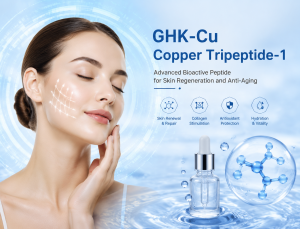
Copper Tripeptide-1 vs Other Anti-Aging Ingredients
| Ingredient | Main Function | Best Application |
|---|---|---|
| Copper Tripeptide-1 | Skin regeneration signaling | Premium anti-aging |
| Hyaluronic Acid | Hydration | Moisturizers |
| Retinol | Cell turnover support | Wrinkle treatment |
| Niacinamide | Barrier improvement | Multi-functional skincare |
| Vitamin C | Antioxidant protection | Brightening |
Copper Tripeptide-1 is often selected when brands want a biologically inspired, gentle, and premium positioning ingredient.
Conclusion
Contact us to request a quotation or discuss your specific requirements. Let’s build a strong partnership supply for your anti-aging cosmetics product line.
FAQs:
Q1:Is Copper Tripeptide-1 safe in cosmetics?
Copper Tripeptide-1 is commonly used in cosmetic formulations within recommended concentration ranges. Proper formulation and stability testing are essential.
Q2:Can Copper Tripeptide-1 be used in hair-care products?
Yes. It is used in scalp and hair-care formulations designed to support scalp condition and healthier-looking hair.
Q3:Why should cosmetic companies source Copper Tripeptide-1 from Peptidchem?
Peptidchem provides peptide-focused expertise, quality-controlled materials, and technical support to help cosmetic brands develop reliable peptide-based products.
References
Pickart L. Copper binding peptides and their role in tissue regeneration. Biochemistry and Molecular Biology International.
Maquart FX et al. Stimulation of collagen synthesis by copper peptides. Biochemical and Biophysical Research Communications.
Lupo MP. Antioxidants and vitamins in cosmetics. Clinics in Dermatology.
SpecialChem Cosmetics Ingredient Database – Copper Tripeptide-1 INCI Profile.
Copper Tripeptide-1 safety and formulation overview