





Discover the difference between Palmitoyl Tripeptide-1 and Palmitoyl Tetrapeptide-7 in Matrixyl technology. Buy high-quality cosmetic peptides from a trusted peptide manufacturer.
Palmitoyl Tripeptide-1 vs Palmitoyl Tetrapeptide-7: Understanding Matrixyl Peptide Technology
The demand for advanced anti-aging cosmetic ingredients has increased significantly as skincare brands search for scientifically supported active ingredients that improve visible signs of aging.Among the most recognized cosmetic peptides are Palmitoyl Tripeptide-1 and Palmitoyl Tetrapeptide-7, two synthetic signal peptides widely associated with Matrixyl™ peptide technology.These peptides belong to the category of biomimetic peptides, designed to mimic natural skin repair signals and support extracellular matrix (ECM) activity. Research reviews classify cosmetic peptides as important active ingredients because they may influence collagen synthesis, skin regeneration pathways, and visible aging concerns.
What Is Palmitoyl Tripeptide-1?
Palmitoyl Tripeptide-1 (INCI: Palmitoyl Tripeptide-1) is a synthetic lipopeptide derived from the combination of a tripeptide sequence and palmitic acid.
It is designed as a signal peptide, meaning it communicates with skin cells through biochemical signaling pathways related to skin repair mechanisms.
Palmitoyl Tripeptide-1 is commonly used in:
- Anti-aging serums
- Firming creams
- Eye-care formulations
- Premium facial moisturizers
- Professional skincare products
Main Cosmetic Benefits
| Function | Cosmetic Application |
|---|---|
| Skin renewal support | Helps improve the appearance of aged skin |
| Collagen-related signaling | Supports firmer-looking skin |
| Wrinkle appearance reduction | Used in anti-wrinkle formulations |
| Skin texture improvement | Enhances smoothness and elasticity appearance |
Studies on topical peptide technologies have reported improvements in wrinkle appearance and skin texture parameters with certain palmitoyl peptide applications.
What Is Palmitoyl Tetrapeptide-7?
Palmitoyl Tetrapeptide-7 (INCI: Palmitoyl Tetrapeptide-7) is another synthetic signaling peptide consisting of four amino acids linked with palmitic acid.
It is one of the key components associated with Matrixyl™ 3000, a peptide complex containing Palmitoyl Tripeptide-1 and Palmitoyl Tetrapeptide-7.
Main Cosmetic Benefits
| Function | Cosmetic Application |
|---|---|
| Skin firmness support | Used in anti-aging products |
| Skin repair signaling | Supports healthier-looking skin |
| Fine line reduction appearance | Common ingredient in wrinkle-care products |
| Skin resilience improvement | Used in mature skin formulations |
Research literature identifies Palmitoyl Tetrapeptide-7 as a promising cosmetic signaling peptide associated with improving visible fine lines, elasticity, and skin repair appearance.
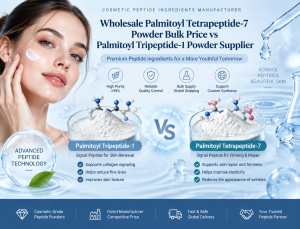
What Is the Difference Between Palmitoyl Tripeptide-1 and Palmitoyl Tetrapeptide-7?
Although both peptides belong to Matrixyl peptide technology, they have different peptide structures and roles.
| Feature | Palmitoyl Tripeptide-1 | Palmitoyl Tetrapeptide-7 |
|---|---|---|
| Peptide type | Tripeptide | Tetrapeptide |
| Amino acids | 3 amino acids | 4 amino acids |
| Category | Signal peptide | Signal peptide |
| Main focus | Skin renewal signaling | Skin repair and firmness support |
| Common use | Anti-aging serums | Anti-aging creams and complexes |
| Matrixyl role | One component of Matrixyl technology | One component of Matrixyl technology |
How Do Palmitoyl Tripeptide-1 and Palmitoyl Tetrapeptide-7 Work Together in Matrixyl Technology?
The combination of Palmitoyl Tripeptide-1 and Palmitoyl Tetrapeptide-7 creates a complementary peptide system.
This combination is commercially known as Matrixyl™ 3000 technology, where both peptides function as messenger molecules to support visible skin rejuvenation.
Synergistic Mechanism
Palmitoyl Tripeptide-1
↓
Supports repair signaling pathways
↓
Improves appearance of skin firmness and texture
Palmitoyl Tetrapeptide-7
↓
Supports skin conditioning mechanisms
↓
Helps maintain youthful-looking skin structure
Together, they are widely incorporated into:
- Anti-wrinkle formulations
- Premium peptide serums
- Luxury skincare products
- Eye creams
- Professional cosmetic products
Which Peptide Is Better: Palmitoyl Tripeptide-1 or Palmitoyl Tetrapeptide-7?
Neither peptide is universally “better.” Their value depends on the formulation objective.
Choose Palmitoyl Tripeptide-1 When Your Product Focus Is:
✓ Skin renewal
✓ Fine-line appearance improvement
✓ Collagen-support positioning
✓ Premium anti-aging serum formulations
Choose Palmitoyl Tetrapeptide-7 When Your Product Focus Is:
✓ Firming skincare
✓ Mature skin products
✓ Skin conditioning
✓ Anti-aging cream formulations
For maximum anti-aging positioning, many cosmetic brands prefer combining both peptides because Matrixyl technology uses their complementary functions.
Why Are Cosmetic Brands Buying Synthetic Peptide Ingredients?
Synthetic peptides provide cosmetic manufacturers with:
- High purity
- Controlled molecular structure
- Batch consistency
- Formulation flexibility
- Reliable supply chain
Modern peptide manufacturing allows skincare brands to develop advanced products targeting:
- Wrinkles
- Loss of firmness
- Skin texture
- Aging appearance
- Skin quality improvement
Where Can Manufacturers Buy Cosmetic Grade Palmitoyl Tripeptide-1 and Palmitoyl Tetrapeptide-7?
Professional skincare brands, cosmetic laboratories, and ingredient distributors require reliable peptide manufacturers that provide:
- Cosmetic-grade peptide powders
- High purity testing reports
- COA documentation
- Stable bulk supply
- Customized peptide synthesis services
Our company specializes in synthetic cosmetic peptide ingredient manufacturing, supplying high-quality peptide raw materials for global skincare brands.
Our Cosmetic Peptide Products Include:
✔ Palmitoyl Tripeptide-1
✔ Palmitoyl Tetrapeptide-7
✔ Matrixyl peptide ingredients
✔ Anti-aging peptide raw materials
✔ Customized synthesized cosmetic peptides
Contact our peptide experts for:
- Bulk peptide pricing
- Technical data sheets
- COA/MSDS documents
- OEM ingredient supply solutions
Product Application Areas
Palmitoyl Tripeptide-1 Applications
- Anti-aging serum
- Facial cream
- Eye serum
- Firming lotion
- Premium skincare formulations
Palmitoyl Tetrapeptide-7 Applications
- Wrinkle-care products
- Skin repair creams
- Professional cosmetics
- Luxury anti-aging formulations
Conclusion
Palmitoyl Tripeptide-1 and Palmitoyl Tetrapeptide-7 represent two important synthetic peptides in modern anti-aging skincare technology.
While Palmitoyl Tripeptide-1 focuses on peptide signaling associated with skin renewal, Palmitoyl Tetrapeptide-7 provides complementary skin conditioning and firmness-support benefits.📩 Contact us to request a quotation or discuss your specific requirements. Let’s build a strong partnership supply for your anti-aging cosmetics product line.
Also See
FAQs:
Q1: Is Palmitoyl Tripeptide-1 the same as Matrixyl?
No. Palmitoyl Tripeptide-1 is one peptide component used in Matrixyl peptide technology. Matrixyl 3000 combines Palmitoyl Tripeptide-1 with Palmitoyl Tetrapeptide-7.
Q2: Is Palmitoyl Tetrapeptide-7 safe for cosmetic use?
Palmitoyl Tetrapeptide-7 is widely used as a cosmetic ingredient in anti-aging formulations. Safety evaluations and cosmetic ingredient reviews have assessed palmitoyl peptide ingredients for topical applications.
Q3: Can Palmitoyl Tripeptide-1 and Tetrapeptide-7 be combined with Hyaluronic Acid?
Yes. They are commonly formulated together with hydrating ingredients such as hyaluronic acid, glycerin, and antioxidants in anti-aging skincare products.
Q4: What is the recommended application of cosmetic peptides?
The usage level depends on peptide purity, formulation design, and supplier specifications. Cosmetic manufacturers should follow technical documentation provided by peptide suppliers.
Q5: Do you provide wholesale cosmetic peptide ingredients?
Yes. We manufacture synthesized peptide ingredients and provide bulk supply solutions for cosmetic manufacturers, skincare brands, and ingredient distributors.
References
Pintea A. et al. Peptides: Emerging Candidates for the Prevention and Treatment of Skin Aging. 2025.
Veiga E. et al. Anti-aging peptides for advanced skincare. 2023.
Yang F. et al. Comprehensive evaluation of peptide-based cosmetic efficacy and safety. 2024.
Schagen S. Topical Peptide Treatments with Effective Anti-Aging Results. Cosm
Matrixyl™ 3000 ingredient technology information.