




Discover how Palmitoyl Tripeptide-1 and Palmitoyl Tetrapeptide-7 enhance anti-aging skincare formulas. Learn peptide mechanisms, benefits, applications, and sourcing from a professional synthesized cosmetic peptide ingredient manufacturer.
Why Are Cosmetic Peptides Transforming Modern Anti-Aging Skincare?
The global skincare industry is rapidly moving toward scientifically developed active ingredients, and cosmetic peptides have become one of the most important technologies in advanced anti-aging formulations.
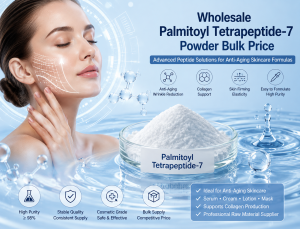
Among the most recognized peptide ingredients, Palmitoyl Tripeptide-1 and Wholesale Palmitoyl Tetrapeptide-7 Powder Bulk Price are widely used in premium anti-aging creams, serums, eye treatments, and professional skincare products because of their role as signaling peptides supporting skin structure, firmness, and youthful appearance.
For cosmetic brands, formulators, and raw material distributors, sourcing high-quality synthesized peptide ingredients from a reliable peptide manufacturer is essential to achieve formulation stability, consistency, and performance.
This guide explains the science, applications, formulation strategies, and supplier considerations for Palmitoyl Tripeptide-1 and Palmitoyl Tetrapeptide-7.
What Are Palmitoyl Tripeptide-1 and Palmitoyl Tetrapeptide-7?
Palmitoyl Tripeptide-1 is a synthetic signal peptide consisting of three amino acids linked with palmitic acid.
The palmitoyl modification improves lipid compatibility and enhances interaction with the skin surface, making it suitable for topical cosmetic formulations.
Key Functions:
- Supports extracellular matrix signaling
- Helps maintain collagen-related skin structure
- Improves the appearance of fine lines
- Supports smoother and firmer-looking skin
Research on cosmetic peptides indicates that Palmitoyl Tripeptide-1 can influence pathways associated with collagen synthesis and skin repair mechanisms.
Palmitoyl Tetrapeptide-7 (Pal-GQPR)
Palmitoyl Tetrapeptide-7 is a synthetic tetrapeptide commonly used in advanced anti-aging formulas.
It belongs to the category of signaling peptides designed to communicate with skin cells and support healthier-looking skin.
Key Functions:
- Helps improve skin firmness
- Supports elasticity improvement
- Reduces visible signs of aging
- Provides skin conditioning benefits
Studies have reported that Palmitoyl Tetrapeptide-7 contributes to improvements in skin smoothness, firmness, and elasticity through multiple biological pathways.
How Do Palmitoyl Tripeptide-1 and Palmitoyl Tetrapeptide-7 Work in Anti-Aging Skincare?
1. Collagen Support Mechanism
Skin aging is strongly associated with reduced collagen production and extracellular matrix degradation.
Signal peptides such as Palmitoyl Tripeptide-1 are designed to mimic natural biological signals that encourage skin-supporting processes.
Benefits include:
- Improved appearance of wrinkles
- Enhanced skin firmness
- Better skin texture
- More youthful appearance
2. Extracellular Matrix Protection
The extracellular matrix provides structural support for healthy skin.
With aging:
- Collagen decreases
- Elasticity declines
- Fine lines become more visible
Peptidchem ingredients are used in cosmetic formulations to support the appearance of stronger and more resilient skin.
3. Anti-Inflammatory Skin Support
Palmitoyl Tetrapeptide-7 has been studied for its ability to influence inflammatory-related pathways associated with skin aging.
This makes it valuable in:
- Sensitive skin products
- Anti-aging moisturizers
- Eye creams
- Barrier repair formulations
Why Are These Peptides Often Combined in Anti-Aging Formulas?
Palmitoyl Tripeptide-1 and Palmitoyl Tetrapeptide-7 are frequently combined because they provide complementary functions.
This combination is commonly recognized as Matrixyl 3000, one of the best-known peptide complexes used in cosmetic anti-aging products.
Functional Advantages of Combination:
| Ingredient | Primary Role |
|---|---|
| Palmitoyl Tripeptide-1 | Skin signaling and collagen-supporting activity |
| Palmitoyl Tetrapeptide-7 | Skin firmness, elasticity, and aging support |
Together, they are used in formulations targeting:
- Wrinkles
- Fine lines
- Loss of firmness
- Uneven skin texture
- Mature skin appearance
What Cosmetic Products Use Palmitoyl Tripeptide-1 and Palmitoyl Tetrapeptide-7?
These peptides are widely incorporated into:
1. Anti-Aging Face Serums
Recommended formulation concepts:
- Peptide serum
- Firming serum
- Advanced wrinkle-care serum
Typical supporting ingredients:
- Hyaluronic acid
- Niacinamide
- Ceramides
- Antioxidants
2. Eye Cream Formulations
Eye-area products commonly use peptides because the skin around the eyes is thin and more vulnerable to visible aging.
Applications:
- Crow’s feet treatment products
- Eye firming creams
- Under-eye smoothing formulas
3. Professional Skincare Products
Used in:
- Dermatological skincare lines
- Luxury cosmetic brands
- Anti-aging treatment systems
- Private-label skincare products
What Are the Advantages of Using Synthesized Cosmetic Peptides?
Modern cosmetic peptide manufacturing uses controlled synthesis technology to achieve:
High Purity
Professional peptide synthesis allows manufacturers to produce ingredients with controlled purity and reproducible quality.
Batch Consistency
Cosmetic brands require:
- Stable peptide content
- Reliable specifications
- Consistent performance
Custom Development
Experienced peptide manufacturers can support:
- Custom peptide sequences
- Bulk supply
- OEM ingredient solutions
- Technical documentation
Synthetic peptides are increasingly important in cosmetic science because they provide targeted functions at low concentrations.
How Should Cosmetic Brands Select a Palmitoyl Peptide Supplier?
When choosing a peptide ingredient supplier, evaluate:
1. Manufacturing Capability
A professional supplier should provide:
- Advanced peptide synthesis technology
- Quality control systems
- Batch-to-batch consistency
2. Documentation Support
Important documents include:
- COA (Certificate of Analysis)
- MSDS/SDS
- HPLC purity report
- Technical data sheet
3. Cosmetic Grade Standards
Reliable suppliers should support:
- Cosmetic formulation requirements
- International export documentation
- Stable bulk production capacity
What Are the Recommended Formulation Considerations?
Stability Factors
Peptide formulations should consider:
- pH compatibility
- Temperature control
- Preservative compatibility
- Packaging protection
Common Compatible Ingredients:
✔ Hyaluronic acid
✔ Niacinamide
✔ Ceramides
✔ Panthenol
✔ Antioxidants
Avoid Excessive Processing Conditions:
High temperature and unsuitable pH conditions may reduce peptide stability.
Why Choose a Professional Synthesized Peptide Ingredient Manufacturer?
For skincare companies developing anti-aging products, working directly with a peptide manufacturer provides advantages:
Bulk Supply Capability
Suitable for:
- Cosmetic brands
- Contract manufacturers
- Ingredient distributors
Technical Expertise
Manufacturers can provide:
- Peptide specifications
- Formulation guidance
- Application support
Competitive Supply Chain
Direct sourcing helps companies achieve:
- Better cost efficiency
- Stable supply
- Customized solutions
Commercial Applications: Palmitoyl Peptide Ingredients for Global Skincare Markets
Demand for peptide-based skincare continues to grow as consumers seek scientifically supported anti-aging solutions.
High-demand applications include:
- Premium anti-aging creams
- Peptide serums
- Eye care products
- Professional beauty products
- Dermatological skincare
A reliable Palmitoyl Tripeptide-1 supplier and Palmitoyl Tetrapeptide-7 supplier can help brands develop next-generation skincare formulas with scientifically recognized active ingredients.
Conclusion:
Palmitoyl Tripeptide-1 and Palmitoyl Tetrapeptide-7 represent the next generation of scientifically developed anti-aging cosmetic ingredients.
📩 Contact us to request a quotation or discuss your specific requirements. Let’s build a strong partnership supply for your anti-aging cosmetics product line for skincare brands seeking reliable peptide raw materials, partnering with a professional synthesized peptide ingredient manufacturer ensures:
- High-quality cosmetic peptides
- Stable bulk supply
- Technical support
- Customized ingredient solutions
As demand for peptide-based skincare continues expanding, advanced cosmetic peptides will remain a key technology driving innovation in global anti-aging formulations.
Also See:
How Cosmetic Peptides Support Skin Renewal: Science Behind Advanced Peptide Ingredients
Top Anti-Aging Peptides Used in Modern Skincare: Benefits, Functions, and Applications
Why Are Skincare Brands Choosing Palmitoyl Tetrapeptide-7 Powder for Premium Anti-Aging Products
FAQs:
Q1: What is Palmitoyl Tripeptide-1 used for?
Palmitoyl Tripeptide-1 is a cosmetic signal peptide used in anti-aging skincare formulations to support smoother, firmer, and more youthful-looking skin.
Q2: What is Palmitoyl Tetrapeptide-7 used for?
Palmitoyl Tetrapeptide-7 is commonly used in anti-aging products to improve the appearance of skin firmness, elasticity, and fine lines.
Q3: Are Palmitoyl Tripeptide-1 and Palmitoyl Tetrapeptide-7 safe for cosmetic use?
These peptides are widely used cosmetic ingredients and have been evaluated for skincare applications. Cosmetic formulations should always comply with regional regulatory requirements.
Q4: Can manufacturers buy Palmitoyl peptides in bulk?
Yes. Cosmetic ingredient suppliers provide Palmitoyl Tripeptide-1 and Palmitoyl Tetrapeptide-7 in bulk quantities for skincare manufacturers and distributors.
Q5: What is the difference between Palmitoyl Tripeptide-1 and Palmitoyl Tetrapeptide-7?
Palmitoyl Tripeptide-1 mainly functions as a signaling peptide supporting skin structure, while Palmitoyl Tetrapeptide-7 provides complementary anti-aging and skin conditioning benefits.
References
Schagen SK. Topical Peptide Treatments with Effective Anti-Aging Results. Cosmetics. 2017.
Veiga E. et al. Anti-aging peptides for advanced skincare. 2023.
Resende DI et al. Usage of Synthetic Peptides in Cosmetics for Sensitive Skin. 2021.
Yang F. et al. Comprehensive evaluation of anti-aging peptide efficacy and safety. 2024.
Li F. et al. Clinical evidence of efficacy and safety of peptide-containing anti-aging serum. Journal of Cosmetic Dermatology.