




Discover how cosmetic peptides support skin renewal, collagen synthesis, and skin barrier repair. Explore advanced synthesized peptide ingredients for skincare formulations.
Why Are Cosmetic Peptides Becoming Essential in Modern Skincare?
The skincare industry is moving beyond traditional moisturizing and antioxidant ingredients toward scientifically designed bioactive compounds capable of supporting biological skin functions. Among these advanced ingredients, Bulk Palmitoyl Oligopeptide Powder Supplier have become highly valued because they can communicate with skin cells, support extracellular matrix activity, and improve visible signs of aging.
Peptides are short chains of amino acids that act as functional signaling molecules. Depending on their structure, they can stimulate collagen-related pathways, support skin barrier function, reduce oxidative stress, and improve overall skin appearance. Scientific reviews classify cosmetic peptides into major groups including signal peptides, carrier peptides, neurotransmitter-inhibiting peptides, and enzyme-inhibiting peptides.
For cosmetic manufacturers seeking innovative anti-aging formulations, high-quality synthesized peptide ingredients provide a reliable approach to developing advanced serums, creams, eye-care products, and professional skincare solutions.
What Are Cosmetic Peptides?
Cosmetic peptidechem are synthetic or naturally derived short amino acid sequences designed for topical skincare applications. Unlike complete proteins, peptides have smaller molecular structures that allow them to interact with specific biological pathways related to skin health.
In cosmetic formulations, peptides are primarily used to support:
- Collagen and elastin production
- Skin firmness and elasticity
- Hydration and moisture retention
- Skin barrier recovery
- Reduction of visible fine lines
- Protection against environmental stress
Research indicates that peptide-based cosmetic ingredients can influence collagen synthesis, cellular proliferation, and inflammatory pathways associated with skin aging.
How Do Cosmetic Peptides Support Skin Renewal?
Skin renewal depends on continuous communication between skin cells, fibroblasts, extracellular matrix components, and protective barrier systems. Advanced peptides support these processes through several mechanisms.
1. Stimulating Collagen Production
Collagen provides structural support responsible for skin firmness and elasticity. As aging progresses, collagen synthesis decreases while collagen degradation increases, leading to wrinkles and loss of skin resilience.
Signal peptides can mimic natural biological signals and encourage fibroblasts to increase production of extracellular matrix components such as:
- Type I collagen
- Elastin
- Fibronectin
- Hyaluronic acid
Examples:
| Peptide Type | Function |
|---|---|
| Palmitoyl Pentapeptide-4 | Supports collagen-related pathways |
| Palmitoyl Tripeptide-1 | Promotes extracellular matrix signaling |
| Palmitoyl Tripeptide-38 | Supports dermal matrix renewal |
What Are the Main Types of Cosmetic Peptides?
1. Signal Peptides
Signal peptides are among the most widely used cosmetic peptides.
Function:
They send biological messages to skin cells to encourage repair processes.
Applications:
- Anti-aging creams
- Firming serums
- Wrinkle reduction formulations
Examples:
- Palmitoyl Pentapeptide-4
- Palmitoyl Tripeptide-1
- Acetyl Tetrapeptide-9
2. Carrier Peptides
Carrier peptides transport important trace elements required for skin functions.
Example:
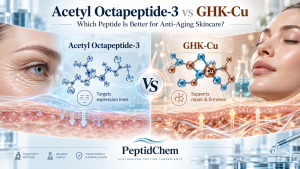
Copper Peptides (GHK-Cu)
Copper peptide complexes are studied for their role in:
- Supporting wound repair mechanisms
- Encouraging extracellular matrix activity
- Maintaining skin quality
Copper peptides remain among the most researched peptide ingredients in advanced skincare.
3. Neurotransmitter-Inhibiting Peptides
These peptides target facial expression-related wrinkles.
Example:
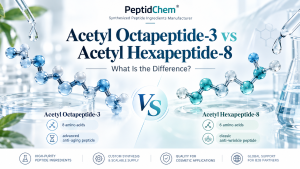
Acetyl Hexapeptide-8
Commonly used in:
- Anti-expression wrinkle products
- Eye-care formulations
- Advanced facial serums
4. Enzyme-Inhibiting Peptides
These peptides help regulate enzymes involved in skin degradation processes.
Applications:
- Anti-aging formulations
- Skin protection products
- Firming skincare systems
Why Are Synthesized Peptide Ingredients Preferred by Cosmetic Manufacturers?
Synthetic peptide manufacturing allows better control over:
1. Purity
Advanced synthesis technologies enable production of peptides with controlled purity profiles suitable for cosmetic applications.
2. Consistency
Synthetic production provides:
- Batch-to-batch consistency
- Defined molecular structure
- Reliable formulation performance
3. Customization
Professional peptide manufacturers can develop:
- Customized peptide sequences
- Modified peptide structures
- Specific functional peptides for targeted skincare applications
4. Stability Optimization
Modern peptide engineering improves:
- Solubility
- Stability
- Compatibility with cosmetic formulations
What Skin Concerns Can Cosmetic Peptides Address?
| Skin Concern | Peptide Function |
|---|---|
| Fine lines and wrinkles | Supports collagen signaling |
| Loss of firmness | Enhances extracellular matrix activity |
| Dry skin | Supports barrier function |
| Uneven texture | Promotes skin renewal processes |
| Sensitive skin appearance | Helps regulate inflammatory responses |
| Aging-related changes | Supports healthier skin structure |
 How Do Cosmetic Peptides Compare With Other Anti-Aging Ingredients?
| Ingredient | Primary Function | Skin Compatibility |
|---|---|---|
| Retinoids | Cell turnover and collagen stimulation | May cause irritation |
| Vitamin C | Antioxidant and collagen support | Generally well tolerated |
| Hyaluronic Acid | Hydration | Excellent compatibility |
| Cosmetic Peptides | Signaling and skin renewal support | Usually gentle |
Peptides are increasingly incorporated into formulations because they provide multifunctional benefits while generally maintaining good tolerability compared with stronger active ingredients.
Advanced Cosmetic Peptide Ingredients for Skincare Development
Manufacturers developing premium skincare products commonly use peptide ingredients such as:
Anti-Aging Peptides
- Palmitoyl Pentapeptide-4
- Palmitoyl Tripeptide-1
- Palmitoyl Tripeptide-38
Repair & Regeneration Peptides
- Copper Tripeptide-1 (GHK-Cu)
- Oligopeptide complexes
Firming Peptides
- Acetyl Tetrapeptide-9
- Acetyl Tetrapeptide-11
Customized Peptide Solutions
Advanced peptide suppliers provide:
- Custom sequence synthesis
- Research-grade peptides
- Cosmetic-grade peptide raw materials
- Bulk supply solutions
Why Choose a Professional Cosmetic Peptide Supplier?
Selecting a reliable peptide ingredient manufacturer is critical for cosmetic brands because peptide performance depends on:
- Molecular accuracy
- Purity level
- Analytical verification
- Manufacturing quality standards
- Formulation compatibility
A specialized synthesized peptide manufacturer can support cosmetic companies with:
✓ High-purity peptide ingredients
✓ Custom peptide synthesis
✓ Research and development support
✓ Bulk cosmetic peptide supply
✓ Stable production capacity
Future Trends: The Growing Role of Peptide Technology in Skincare
The future of cosmetic peptides is moving toward:
1. Multi-functional Peptides
New peptide combinations are designed to simultaneously target:
- Collagen maintenance
- Hydration
- Barrier repair
- Skin protection
2. Advanced Delivery Systems
Researchers are exploring technologies such as:
- Nanocarriers
- Encapsulation systems
- Enhanced penetration technologies
These approaches aim to improve peptide stability and biological availability in topical products.
3. Personalized Skincare Peptides
Customized peptide sequences may enable targeted solutions based on:
- Age-related concerns
- Skin type
- Environmental exposure
Conclusion
Cosmetic peptides represent one of the most scientifically advanced categories of skincare ingredients. Through targeted biological signaling, they support collagen pathways, skin barrier function, and visible skin renewal. 📩 Contact us to request a quotation or discuss your specific requirements. Let’s build a strong partnership supply for your anti-aging cosmetics product line and cosmetic brands developing next-generation anti-aging products, selecting a reliable synthesized peptide ingredients manufacturer ensures access to high-quality, consistent, and innovative peptide solutions
Also See:
Top Anti-Aging Peptides Used in Modern Skincare: Benefits, Functions, and Applications
Why Are Cosmetic Brands Choosing Madecassoside Powder for Premium Cica-Based Skincare Products
What Is Copper Tripeptide Powder and Why Is It a Leading Ingredient in Anti-Aging Skincare
FAQs:
Q1. What are cosmetic peptides used for?
Cosmetic peptides are used in skincare formulations to support collagen synthesis, improve skin firmness, enhance hydration, and reduce visible signs of aging.
Q2. Are cosmetic peptides safe for daily skincare?
Most cosmetic peptides are considered gentle ingredients and are commonly used in daily skincare products such as serums, moisturizers, and eye creams.
Q3. What is the difference between peptides and proteins?
Proteins contain long chains of amino acids, while peptides are shorter sequences designed to perform specific biological functions in cosmetic formulations.
Q4. Why should cosmetic brands choose synthesized peptides?
Synthesized peptides provide better purity control, consistent quality, scalability, and customization options compared with variable natural extracts.
Q5. Can peptide manufacturers provide customized cosmetic peptides?
Yes. Professional peptide manufacturers can design and synthesize customized sequences according to cosmetic formulation requirements.
References
Pintea A. et al. Peptides: Emerging Candidates for the Prevention and Treatment of Skin Aging. 2025.
Rovero P. et al. The Clinical Evidence-Based Paradigm of Topical Anti-Aging Treatments. 2022.
Schagen SK. Topical Peptide Treatments with Effective Anti-Aging Results. Cosmetics. 2017.
Veiga E. et al. Anti-aging peptides for advanced skincare. 2023.
Gorouhi F., Maibach HI. Role of topical peptides in preventing or treating aged skin. 2009.