





Discover the differences between Palmitoyl Tripeptide-1, Palmitoyl Pentapeptide-4, and Palmitoyl Tetrapeptide-7. Compare benefits, applications, and cosmetic peptide raw materials.
Palmitoyl Peptides in Cosmetics: Understanding the Differences
The global skincare industry increasingly relies on synthetic cosmetic peptides as high-performance active ingredients for anti-aging, skin repair, and collagen-supporting formulations. Among the most widely researched palmitoylated peptides are:
- Palmitoyl Tripeptide-1
- Palmitoyl Pentapeptide-4
- Palmitoyl Tetrapeptide-7
Although these peptides share a similar structure, their amino acid sequences, biological signaling pathways, and cosmetic applications are different. Selecting the correct peptide ingredient is critical for developing effective serums, creams, eye products, and professional skincare formulations.As a professional cosmetic peptide supplier and synthesized peptide manufacturer, we provide high-purity peptide raw materials manufactured according to strict quality standards for global cosmetic brands and formulation companies.
What Are Palmitoyl Peptides?
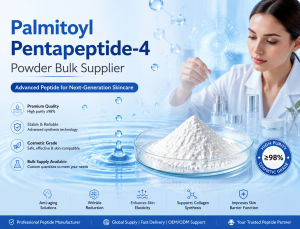
Palmitoyl Pentapeptide-4 Powder are synthetic peptides chemically linked with palmitic acid, a fatty acid that improves their oil solubility and skin compatibility.
The palmitoyl modification helps:
- Increase peptide stability
- Improve penetration into the skin barrier
- Enhance interaction with cellular receptors
- Improve cosmetic formulation performance
Most palmitoyl peptides function as signal peptides, meaning they send biological messages to skin cells associated with extracellular matrix production, collagen synthesis, and skin regeneration.Research has categorized palmitoylated peptides as important cosmetic ingredients due to their ability to influence collagen-related pathways and inflammatory responses.
What Is Palmitoyl Tripeptide-1?
INCI Name: Palmitoyl Tripeptide-1
Peptide Type: Sig
Basic Information
nal peptide
Amino Acid Sequence: Pal-Gly-His-Lys (Pal-GHK)
CAS Number: 147732-56-7
Palmitoyl Tripeptide-1 is a short-chain peptide derived from the well-known collagen-associated sequence GHK (glycine-histidine-lysine).
It is primarily used in anti-aging formulations because it mimics natural extracellular matrix signaling.
How Does Palmitoyl Tripeptide-1 Work?
Palmitoyl Tripeptide-1 may stimulate skin fibroblast activity and support the production of:
- Collagen
- Fibronectin
- Extracellular matrix proteins
Its main cosmetic functions include:
✔ Improving skin firmness
✔ Reducing the appearance of fine lines
✔ Supporting smoother skin texture
✔ Enhancing skin renewal processes
Common Applications
Palmitoyl Tripeptide-1 is commonly found in:
- Anti-wrinkle serums
- Facial creams
- Firming products
- Premium skincare formulations
- Eye-care products
What Is Palmitoyl Pentapeptide-4?
Basic Information
INCI Name: Palmitoyl Pentapeptide-4
Trade Name: Matrixyl® (commonly known)
Amino Acid Sequence: Pal-Lys-Thr-Thr-Lys-Ser
CAS Number: 214047-00-4
Palmitoyl Pentapeptide-4 is one of the most recognized cosmetic peptides in the anti-aging industry. It was introduced as an active ingredient for wrinkle-reducing formulations under the Matrixyl brand.
How Does Palmitoyl Pentapeptide-4 Work?
Peptidchem acts as a collagen-supporting signal molecule.
It helps communicate with skin cells to promote extracellular matrix components, including:
- Collagen I
- Elastin-related proteins
- Glycosaminoglycans
Cosmetic Benefits
Palmitoyl Pentapeptide-4 is mainly associated with:
✔ Reduction of visible wrinkles
✔ Improved skin smoothness
✔ Enhanced firmness
✔ Better skin elasticity
✔ Anti-aging performance
Common Applications
Used in:
- Luxury anti-aging creams
- Wrinkle correction products
- Facial serums
- Professional skincare products
What Is Palmitoyl Tetrapeptide-7?
Basic Information
INCI Name: Palmitoyl Tetrapeptide-7
Amino Acid Sequence: Pal-Gly-Gln-Pro-Arg
CAS Number: 221227-05-0
Palmitoyl Tetrapeptide-7 is a synthetic tetrapeptide designed to support skin repair mechanisms and regulate inflammatory signaling.
How Does Palmitoyl Tetrapeptide-7 Work?
Unlike peptides mainly focused on collagen signaling, Palmitoyl Tetrapeptide-7 is particularly studied for its ability to regulate inflammatory pathways.
Research indicates that Palmitoyl Tetrapeptide-7 can reduce UV-induced inflammatory responses and influence cytokine-related pathways.
Cosmetic Benefits
Main benefits include:
✔ Reducing visible signs of skin stress
✔ Supporting skin barrier recovery
✔ Improving firmness
✔ Reducing appearance of wrinkles
✔ Enhancing anti-aging formulations
What Are the Main Differences Between These Three Peptides?
| Feature | Palmitoyl Tripeptide-1 | Palmitoyl Pentapeptide-4 | Palmitoyl Tetrapeptide-7 |
|---|---|---|---|
| Peptide Length | Tripeptide (3 amino acids) | Pentapeptide (5 amino acids) | Tetrapeptide (4 amino acids) |
| Main Function | Collagen signaling | Matrix stimulation | Anti-inflammatory signaling |
| Primary Target | Fibroblast activity | Extracellular matrix | Inflammatory pathways |
| Anti-aging Role | Firmness and repair | Wrinkle reduction | Skin recovery and protection |
| Typical Products | Serums, creams | Premium anti-aging products | Sensitive skin and anti-aging products |
| Combination Use | Often combined with Tetrapeptide-7 | Used as independent active | Frequently combined with Tripeptide-1 |
Which Peptide Is Better for Anti-Aging Formulations?
There is no single “best” peptide because each peptide provides different biological functions.
For collagen-supporting formulations:
Choose:
Palmitoyl Tripeptide-1
Best for:
- Firmness
- Skin renewal
- Collagen-focused products
For advanced wrinkle-care products:
Choose:
Palmitoyl Pentapeptide-4
Best for:
- Mature skin products
- Premium anti-aging creams
- Luxury formulations
For combination anti-aging products:
Choose:
Palmitoyl Tripeptide-1 + Palmitoyl Tetrapeptide-7
This combination is widely recognized because the peptides provide complementary actions:
- Tripeptide-1 → matrix stimulation
- Tetrapeptide-7 → inflammatory regulation
The combination is commonly associated with Matrixyl® 3000-type formulations.
Can Cosmetic Manufacturers Buy These Peptides in Bulk?
Yes. Cosmetic manufacturers commonly purchase palmitoylated peptides as:
- Powder raw materials
- Customized peptide blends
- Bulk cosmetic ingredients
- Private-label active ingredients
A reliable synthetic peptide manufacturer should provide:
✔ High purity testing
✔ HPLC analysis
✔ MS identification
✔ Batch documentation
✔ Stability data
✔ Technical support for formulation development
Why Choose Our Synthetic Cosmetic Peptide Manufacturing Service?
We specialize in:
- Custom peptide synthesis
- Cosmetic active peptide production
- High-purity palmitoylated peptides
- Bulk peptide ingredient supply
- Research-grade and cosmetic-grade peptides
Our manufacturing capabilities support:
- Skincare brands
- Cosmetic ingredient distributors
- R&D laboratories
- Contract manufacturers
Conclusion
Palmitoyl Tripeptide-1, Palmitoyl Pentapeptide-4, and Palmitoyl Tetrapeptide-7 are three highly valuable cosmetic peptides with different mechanisms and skincare applications. Palmitoyl Tripeptide-1 mainly supports collagen signaling and skin firmness, Palmitoyl Pentapeptide-4 is widely recognized for wrinkle reduction and extracellular matrix stimulation, while Palmitoyl Tetrapeptide-7 helps regulate skin stress and inflammatory pathways.📩 Contact us to request a quotation or discuss your specific requirements. Let’s build a strong partnership supply for your anti-aging cosmetics product line.
Also See
How Does Palmitoyl Tripeptide-1 Powder Improve the Performance of Professional Skincare Products
Palmitoyl Tetrapeptide-7 and Palmitoyl Tripeptide-1: Key Peptides for Advanced Skincare Products
FAQs:
Q1. Is Palmitoyl Tripeptide-1 the same as Matrixyl?
No. Matrixyl commonly refers to Palmitoyl Pentapeptide-4, while Matrixyl 3000 is a combination of Palmitoyl Tripeptide-1 and Palmitoyl Tetrapeptide-7.
Q2. Which peptide is better for wrinkles?
Palmitoyl Pentapeptide-4 has extensive cosmetic application history for wrinkle-reduction products, while Palmitoyl Tripeptide-1 and Tetrapeptide-7 are frequently combined for broader anti-aging effects.
Q3. Are palmitoyl peptides safe in cosmetics?
Palmitoyl peptides are widely used cosmetic ingredients. Safety depends on formulation concentration, product design, and regulatory compliance.
Q4. What is the difference between tripeptide, tetrapeptide, and pentapeptide?
The terms describe the number of amino acids:
- Tripeptide = 3 amino acids
- Tetrapeptide = 4 amino acids
- Pentapeptide = 5 amino acids
The amino acid sequence determines biological activity.
Q5. Can you manufacture customized cosmetic peptides?
Yes. Professional peptide manufacturers can design and synthesize customized peptide sequences according to customer requirements.
References
Resende, D. I. S. P., et al. (2021). Usage of Synthetic Peptides in Cosmetics for Sensitive Skin. Pharmaceuticals, 14(7), 702.
Sederma. Matrixyl® peptide technology and cosmetic peptide applications.
PubChem Database. Palmitoyl Pentapeptide-4 chemical information.
PubChem Database. Palmitoyl Tetrapeptide-7 chemical information.
Cosmetic Ingredient Review (CIR). Safety assessments of cosmetic peptides.