





Discover why Palmitoyl Pentapeptide-4 (Matrixyl®/Pal-KTTKS) remains a leading anti-aging cosmetic peptide ingredient. Learn its mechanism, collagen-boosting benefits, formulation applications, and how to source high-quality Palmitoyl Pentapeptide-4 powder from a reliable peptide manufacturer.
Palmitoyl Pentapeptide-4 (Matrixyl): The Science Behind a Trusted Anti-Aging Peptide
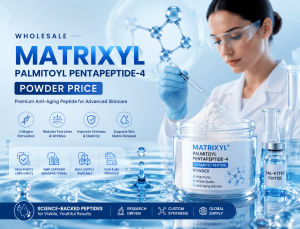
The global skincare industry continues to shift toward scientifically validated active ingredients, and cosmetic peptides remain among the fastest-growing categories in advanced anti-aging formulations.Among these peptides, Wholesale Matrixyl Palmitoyl Pentapeptide-4 Powder remains one of the most recognized signal peptides used in premium skincare products because of its ability to support extracellular matrix (ECM) renewal, collagen synthesis, and visible wrinkle improvement.
Unlike traditional moisturizing ingredients that mainly improve surface hydration, Palmitoyl Pentapeptide-4 works as a biological messenger peptide, helping skin cells activate processes associated with youthful skin structure.
For cosmetic manufacturers searching for a reliable Palmitoyl Pentapeptide-4 supplier or synthetic peptide manufacturer, understanding its mechanism, benefits, and formulation applications is essential.
What Is Palmitoyl Pentapeptide-4?
Palmitoyl Pentapeptide-4 is a synthetic biomimetic peptide composed of:
- Palmitoyl lipid chain
- Five amino acids:
- Lysine (K)
- Threonine (T)
- Threonine (T)
- Lysine (K)
- Serine (S)
Its scientific name is:
Palmitoyl-Lysyl-Threonyl-Threonyl-Lysyl-Serine
Common names include:
- Palmitoyl Pentapeptide-4
- Pal-KTTKS
- Matrixyl
- Palmitoyl Pentapeptide-3 (historical name)
The palmitoyl modification improves lipid compatibility and enhances interaction with skin structures compared with the original peptide sequence.
Why Is Palmitoyl Pentapeptide-4 Called a Signal Peptide?
Palmitoyl Pentapeptide-4 belongs to the category of signal peptides, which communicate with skin cells and stimulate extracellular matrix-related activities.
The peptide is derived from the concept of matrikines—small messenger molecules generated during extracellular matrix degradation that can signal tissue repair responses.
After topical application, Pal-KTTKS may stimulate fibroblast activity and encourage production of important dermal components including:
- Type I collagen
- Type III collagen
- Fibronectin
- Glycosaminoglycans
These components contribute to:
- Skin firmness
- Elasticity
- Structural support
- Reduction of visible wrinkles
Scientific studies have shown that KTTKS-related peptides stimulate extracellular matrix production and collagen expression pathways.
Scientific Mechanism of Action
The anti-aging activity of Palmitoyl Pentapeptide-4 can be summarized through three major pathways:
1. Collagen Stimulation
Aging skin naturally experiences reduced collagen production, leading to:
- Fine lines
- Wrinkles
- Loss of firmness
Palmitoyl Pentapeptide-4 acts as a collagen-supporting signal peptide by activating fibroblast responses.
2. Extracellular Matrix Renewal
The extracellular matrix provides structural support for skin tissue.
Pal-KTTKS supports renewal of ECM components responsible for:
- Skin density
- Smoothness
- Resilience
3. Improved Skin Texture and Appearance
Through long-term cosmetic use, formulations containing Palmitoyl Pentapeptide-4 may improve:
- Fine-line appearance
- Surface smoothness
- Skin firmness
- Overall youthful appearance
Clinical Evidence Supporting Palmitoyl Pentapeptide-4
Yes. Palmitoyl Pentapeptide-4 is among the better-studied cosmetic peptides.
A double-blind, placebo-controlled clinical study evaluated topical Pal-KTTKS in 93 women aged 35–55 years over 12 weeks.
The study reported:
- Significant improvement in fine lines and wrinkles compared with placebo
- Good skin tolerance
- Improvement confirmed through technical measurements and expert evaluation
The formulation contained only 3 ppm Pal-KTTKS, demonstrating activity at very low concentrations.
Additional clinical investigations have reported improvements in wrinkle depth, thickness, and skin firmness following topical application of Palmitoyl Pentapeptide-4 formulations.
Key Cosmetic Benefits of Palmitoyl Pentapeptide-4
1. Anti-Wrinkle Activity
Palmitoyl Pentapeptide-4 is widely used in:
- Anti-aging creams
- Eye creams
- Premium serums
- Firming formulations
because it helps reduce the appearance of:
- Crow’s feet
- Fine lines
- Wrinkles
2. Supports Collagen Production
The peptidchem supports collagen-related pathways that maintain youthful skin structure.
3. Improves Skin Firmness
By supporting extracellular matrix components, Pal-KTTKS contributes to improved skin resilience.
4. Suitable for Sensitive Skin Formulations
Compared with stronger exfoliating anti-aging actives, peptides are generally considered gentle ingredients for long-term skincare development.
Why Cosmetic Brands Continue Using Palmitoyl Pentapeptide-4
The success of Palmitoyl Pentapeptide-4 comes from several advantages:
| Advantage | Benefit |
|---|---|
| Scientific validation | Supported by published cosmetic research |
| Biomimetic mechanism | Mimics natural repair signaling |
| High consumer recognition | Strong anti-aging ingredient reputation |
| Formulation compatibility | Suitable for creams, serums, and lotions |
| Low effective concentration | Cost-effective active ingredient |
Modern cosmetic brands continue selecting peptide-based solutions because consumers increasingly demand products supported by scientific evidence.
Applications of Palmitoyl Pentapeptide-4 in Cosmetic Formulations
Common applications include:
Facial Care Products
- Anti-aging creams
- Wrinkle reduction serums
- Firming moisturizers
Eye Care Products
- Eye creams
- Crow’s feet treatments
- Under-eye rejuvenation products
Premium Beauty Formulations
- Luxury skincare lines
- Professional cosmetic products
- Dermatology-inspired skincare
Recommended Formulation Considerations
Cosmetic formulators should consider:
Stability
Peptide stability depends on:
- pH conditions
- Temperature
- Preservative system
- Manufacturing process
Concentration
Typical cosmetic usage levels are usually low and depend on:
- Product format
- Delivery system
- Desired positioning
Compatibility
Palmitoyl Pentapeptide-4 can be combined with:
- Hyaluronic acid
- Niacinamide
- Antioxidants
- Ceramides
- Other cosmetic peptides
Why Choose a Professional Palmitoyl Pentapeptide-4 Supplier?
When sourcing Palmitoyl Pentapeptide-4 powder, cosmetic companies should evaluate:
1. Manufacturing Capability
A reliable supplier should provide:
- Synthetic peptide production expertise
- Batch consistency
- Quality control documentation
2. Quality Documentation
Professional peptide manufacturers should provide:
- HPLC analysis
- Mass spectrometry confirmation
- Certificate of Analysis (COA)
- Purity specifications
3. Custom Peptide Manufacturing Support
Experienced peptide suppliers can support:
- Bulk peptide production
- Custom synthesis
- Cosmetic ingredient development
Palmitoyl Pentapeptide-4 Bulk Supply for Cosmetic Manufacturers
We specialize in the manufacturing of synthetic cosmetic peptide ingredients, providing high-quality peptide raw materials for global skincare companies.
Our Palmitoyl Pentapeptide-4 supply solutions support:
- Cosmetic brands
- Ingredient distributors
- Contract manufacturers
- Research and development teams
Available services include:
- Bulk peptide powder supply
- Customized peptide synthesis
- Technical documentation support
- Quality testing
Conclusion:
For cosmetic manufacturers and skincare brands, selecting a reliable Palmitoyl Pentapeptide-4 supplier is essential to ensure consistent quality, purity, and regulatory documentation. As a professional manufacturer of synthetic cosmetic peptide ingredients, we provide high-quality Palmitoyl Pentapeptide-4 powder with comprehensive quality support, including analytical documentation, bulk supply capability, and customized peptide synthesis solutions 📩 Contact us to request a quotation or discuss your specific requirements. Let’s build a strong partnership supply for your anti-aging cosmetics product line.
Also See
How Does Palmitoyl Pentapeptide-4 Support Collagen Synthesis and Wrinkle Reduction Formulas
FAQs:
Q1: Is Palmitoyl Pentapeptide-4 the same as Matrixyl?
Yes. Palmitoyl Pentapeptide-4 is commonly associated with Matrixyl, although Matrixyl is a commercial trademark originally developed for specific peptide-based cosmetic ingredients.
Q2: What is the INCI name of Palmitoyl Pentapeptide-4?
The INCI name is:
Palmitoyl Pentapeptide-4
Q3: Is Palmitoyl Pentapeptide-4 safe for cosmetic use?
Available cosmetic safety assessments indicate that Palmitoyl Pentapeptide-4 has demonstrated acceptable safety profiles when used at cosmetic concentrations.
What is the difference between Palmitoyl Pentapeptide-4 and Palmitoyl Tripeptide-5?
Both are anti-aging peptides, but their structures and mechanisms differ:
| Ingredient | Main Function |
| Palmitoyl Pentapeptide-4 | Signal peptide supporting ECM and collagen pathways |
| Palmitoyl Tripeptide-5 | Collagen-related peptide with different sequence activity |
Q5: Where can I buy Palmitoyl Pentapeptide-4 powder?
Cosmetic manufacturers can purchase Palmitoyl Pentapeptide-4 from professional synthetic peptide suppliers offering bulk quantities, quality documentation, and formulation support.
References
Robinson LR et al. Topical palmitoyl pentapeptide provides improvement in photoaged human facial skin. International Journal of Cosmetic Science. 2005.
Tałałaj U et al. The Effects of a Novel Series of KTTKS Analogues on Skin Aging-Related Processes. 2019.
Schagen SK. Topical Peptide Treatments with Effective Anti-Aging Results. Cosmetics. 2017.
Aruan RR et al. Double-blind Randomized Trial on the Effectiveness of Palmitoyl Pentapeptide-4 Cream for Crow’s Feet. Journal of Clinical and Aesthetic Dermatology. 2023.
Waszkielewicz AM et al. Peptides and Their Mechanisms of Action in the Skin. Applied Sciences. 2024.