



Discover 7 leading anti-aging peptides, their functions, cosmetic applications, and market potential. Explore high-quality synthesized cosmetic peptide ingredients.
Why Are Anti-Aging Peptides Becoming a Key Cosmetic Ingredient?
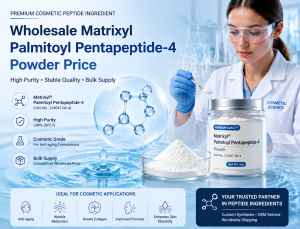
The global skincare industry is moving toward scientifically validated active ingredients, and cosmetic peptides have become one of the fastest-growing categories in advanced anti-aging formulations.Unlike conventional moisturizing ingredients, peptides act as biological signaling molecules that can influence collagen synthesis, skin barrier repair, hydration, and visible wrinkle reduction. Modern cosmetic formulations increasingly incorporate synthetic peptides because they offer targeted functions, high purity, and formulation flexibility.Research has identified peptides such as Wholesale Matrixyl Palmitoyl Pentapeptide-4 Powder Price, Copper Tripeptide-1 (GHK-Cu), and Acetyl Hexapeptide-8 as important cosmetic actives used in anti-aging products.For cosmetic manufacturers and brands, selecting the right peptide ingredient is essential for developing competitive skincare products.
What Are Anti-Aging Peptides and How Do They Work?
Anti-aging peptides are short chains of amino acids designed to communicate with skin cells and support specific biological pathways.
Depending on their structure and function, cosmetic peptides are generally categorized into:
- Signal peptides
- Carrier peptides
- Neurotransmitter-inhibiting peptides
- Enzyme-inhibiting peptides
Their main cosmetic functions include:
- Supporting collagen and elastin production
- Improving skin firmness
- Reducing visible fine lines
- Enhancing skin repair mechanisms
- Supporting hydration and barrier function
Synthetic peptide technology allows manufacturers to produce highly purified cosmetic-grade peptides with controlled composition and consistent quality.
Which Are the 7 Most Popular Anti-Aging Peptides Used in Cosmetics?
1. Palmitoyl Pentapeptide-4 (Matrixyl)
Category:
Signal peptide
Main Function:
- Stimulates extracellular matrix activity
- Supports collagen synthesis
- Improves appearance of wrinkles and skin firmness
Cosmetic Applications:
Commonly used in:
- Anti-wrinkle creams
- Facial serums
- Eye-care formulations
- Premium anti-aging products
Palmitoyl Pentapeptide-4 is one of the most studied cosmetic peptides. It acts as a matrikine peptide, helping regulate extracellular matrix renewal processes.
Market Opportunity:
Due to strong consumer demand for collagen-supporting skincare, Matrixyl-type peptides remain among the highest-demand cosmetic peptide ingredients.
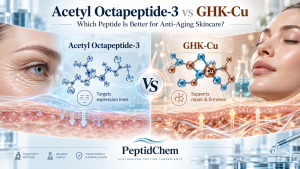
2. Copper Tripeptide-1 (GHK-Cu)
Category:
Carrier peptide
Main Function:
- Supports collagen production
- Helps skin regeneration pathways
- Improves skin texture and elasticity
Cosmetic Applications:
Used in:
- Anti-aging serums
- Repair creams
- Post-treatment skincare
- Premium skincare products
GHK-Cu naturally binds copper ions and has been widely studied for skin remodeling and repair-related applications.
Market Opportunity:
Copper peptides are gaining strong interest among luxury skincare brands because of their positioning as advanced regenerative cosmetic ingredients.
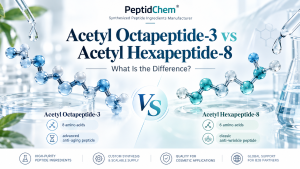
3. Acetyl Hexapeptide-8 (Argireline)
Category:
Neurotransmitter peptide
Main Function:
- Helps reduce the appearance of expression lines
- Targets wrinkle formation associated with facial movement
Cosmetic Applications:
Popular in:
- Anti-wrinkle creams
- Eye serums
- Facial lifting formulations
Market Opportunity:
Often marketed as a non-invasive alternative ingredient for consumers seeking smoother-looking skin.
4. Palmitoyl Tripeptide-1
Category:
Signal peptide
Main Function:
- Supports collagen-related pathways
- Improves skin firmness
- Enhances skin renewal appearance
Cosmetic Applications:
Used in:
- Anti-aging creams
- Moisturizers
- Skin repair formulations
5. Palmitoyl Tetrapeptide-7
Category:
Anti-inflammatory signal peptide
Main Function:
- Helps improve aged skin appearance
- Supports healthier-looking skin structure
Cosmetic Applications:
Commonly combined with Palmitoyl Tripeptide-1 in multi-peptide complexes.
6. Palmitoyl Tripeptide-38
Category:
Advanced signal peptide
Main Function:
- Supports multiple extracellular matrix components
- Targets visible signs of aging
Cosmetic Applications:
Used in:
- Premium anti-aging serums
- Firming creams
- Luxury skincare formulations
7. Oligopeptide-1 (EGF-related peptide)
Category:
Growth-factor related peptide
Main Function:
- Supports skin renewal signaling
- Enhances youthful skin appearance
Cosmetic Applications:
Used in:
- High-end repair products
- Professional skincare formulations
How Should Cosmetic Manufacturers Select an Anti-Aging Peptide Ingredient?
When selecting peptide raw materials, cosmetic companies should evaluate:
1. Purity and Quality Control
Important parameters include:
- HPLC purity
- Molecular identification
- Stability testing
- Batch consistency
2. Application Compatibility
Different peptides serve different formulation goals:
| Cosmetic Goal | Recommended Peptide Type |
|---|---|
| Wrinkle reduction | Palmitoyl Pentapeptide-4 |
| Skin repair | Copper Tripeptide-1 |
| Expression lines | Acetyl Hexapeptide-8 |
| Firmness improvement | Palmitoyl peptides |
| Premium anti-aging products | Multi-peptide blends |
Why Is the Cosmetic Peptide Market Growing?
The demand for peptide-based skincare continues to increase because consumers are shifting toward:
- Science-based skincare
- Preventive anti-aging solutions
- High-performance active ingredients
- Personalized beauty products
Market reports indicate continued expansion of cosmetic peptide manufacturing driven by demand for advanced skincare actives.
Why Choose a Synthesized Cosmetic Peptide Ingredient Manufacturer?
Professional peptide manufacturers provide advantages including:
High Purity Production
Synthetic peptide manufacturing enables:
- Controlled amino acid sequences
- Reduced impurities
- Reliable batch quality
Customized Solutions
Manufacturers can support:
- Custom peptide synthesis
- Bulk ingredient supply
- Research-grade peptide development
- Cosmetic formulation partnerships
Global Supply Capability
Reliable suppliers help cosmetic brands maintain:
- Stable ingredient sourcing
- Regulatory documentation
- Consistent product quality
Applications of Anti-Aging Peptide Ingredients
Synthesized cosmetic peptides are widely applied in:
Facial Skincare
- Anti-aging creams
- Facial serums
- Moisturizers
Eye Care
- Eye creams
- Fine-line treatments
Professional Beauty
- Skin repair products
- Premium treatment formulations
Hair Care
- Scalp-care formulations
- Hair-strengthening products
Future Market Opportunities for Cosmetic Peptide Suppliers
The next generation of cosmetic peptides is expected to focus on:
1. Multi-Peptide Complexes
Combining different peptide mechanisms to achieve:
- Collagen support
- Hydration improvement
- Skin barrier protection
2. Personalized Skincare
Brands increasingly require customized peptide combinations based on consumer needs.
3. Sustainable Peptide Manufacturing
Green synthesis technologies and efficient production processes will become increasingly important.
Why Partner With Our Cosmetic Peptide Manufacturing Platform?
We specialize in the synthesis and supply of high-quality cosmetic peptide ingredients for global skincare manufacturers.
Our capabilities include:
- Custom synthesized peptide ingredients
- Cosmetic-grade peptide production
- Bulk peptide supply
- Technical support for formulation development
- Reliable quality control systems
Whether you are developing anti-aging serums, premium creams, or innovative skincare solutions, our peptide ingredients help brands create scientifically advanced products.Contact us for customized cosmetic peptide solutions and bulk ingredient supply.
Also See
How to Select the Right Cosmetic Peptide Blend for Anti-Aging Serum and Cream Formulations
Expert Guide: Formulating High-Performance Skincare Products with Cosmetic Peptides
Why High-Purity Cosmetic Peptides Matter for Premium Anti-Aging Skincare Products
FAQs:
Q1. What are the best peptides for anti-aging skincare?
The most commonly used anti-aging peptides include Palmitoyl Pentapeptide-4, Copper Tripeptide-1 (GHK-Cu), Acetyl Hexapeptide-8, Palmitoyl Tripeptide-1, and Palmitoyl Tripeptide-38.
Q2. Are cosmetic peptides synthetic ingredients?
Many cosmetic peptides are produced through controlled synthetic peptide manufacturing processes to ensure purity, stability, and consistency.
Q3. Can peptide ingredients be purchased in bulk?
Yes. Cosmetic peptide manufacturers supply bulk ingredients for skincare brands, laboratories, and formulation companies.
Q4. What is the difference between collagen peptides and cosmetic peptides?
Collagen peptides are generally hydrolyzed protein fragments, while cosmetic peptides are specifically designed amino acid sequences used as active skincare ingredients.
Q5. How do I choose a cosmetic peptide supplier?
Choose suppliers with:
- Verified synthesis capability
- Quality certifications
- Analytical testing
- Stable production capacity
- Technical support
References
Schagen SK. Topical peptide treatments with effective anti-aging results. Cosmetics. 2017;4(2):16.
Pickart L. Regenerative and protective actions of GHK-Cu peptide. International Journal of Molecular Sciences. 2018.
Cosmetic peptide applications and anti-aging mechanisms. Bioactive peptides in cosmetic formulations: Review of current applications. 2025.
Overview of cosmetic peptides and synthesis applications.