




Discover how cosmetic peptides enhance anti-aging, skin repair, and advanced skincare formulations. Learn peptide selection, formulation strategies, and how to source high-purity synthesized cosmetic peptides from an experienced peptide ingredient supplier.
Why Cosmetic Peptides Are Transforming Modern Skincare Formulation
The skincare industry is moving toward scientifically supported active ingredients that deliver targeted biological functions. Among these ingredients, cosmetic peptides have become increasingly important because they can support skin firmness, barrier function, hydration, and visible signs of aging.Unlike conventional cosmetic ingredients that mainly provide surface-level benefits, peptides act as signaling molecules designed to interact with skin processes. Modern synthesized peptide technology allows manufacturers to develop highly purified, stable, and application-specific peptide ingredients for advanced skincare products.The global cosmetic peptide synthesis market continues to expand as brands increasingly invest in science-driven formulations, especially in anti-aging, barrier repair, and premium skincare segments.
What Are Cosmetic Peptides?
Wholesale Cosmetic peptides Copper Tripeptide Powder Supplier are short chains of amino acids linked through peptide bonds. They are smaller than proteins and are designed to perform specific cosmetic functions when incorporated into skincare formulations.Peptides used in cosmetics are generally classified according to their mechanism of action:
| Peptide Type | Primary Cosmetic Function |
|---|---|
| Signal Peptides | Support collagen-related skin processes |
| Carrier Peptides | Deliver mineral ions and support skin conditioning |
| Enzyme-Inhibiting Peptides | Help reduce processes associated with collagen degradation |
| Neurotransmitter-Modulating Peptides | Target the appearance of expression lines |
Scientific reviews highlight peptides as important bioactive cosmetic ingredients because of their potential roles in skin repair, antimicrobial activity, and cosmetic performance enhancement.
Why Are Cosmetic Peptides Important for High-Performance Skincare Products?
Consumers increasingly demand skincare products backed by biotechnology rather than traditional cosmetic marketing claims.
Cosmetic peptides provide formulators with several advantages:
1. Targeted Skin Function
Different peptide sequences can be selected based on desired product positioning:
- Anti-aging serums
- Firming creams
- Barrier repair products
- Eye-care formulations
- Premium facial treatments
2. Compatibility with Modern Formulations
Peptides can be incorporated into:
- Water-based serums
- Cream emulsions
- Gel formulations
- Eye products
- Professional skincare systems
3. Science-Based Product Differentiation
For skincare brands, peptide-based formulations provide stronger differentiation compared with conventional ingredient combinations.
How Are Cosmetic Peptides Manufactured?
High-quality cosmetic peptides are commonly produced through controlled peptide synthesis technologies, especially:
Solid Phase Peptide Synthesis (SPPS)
SPPS enables manufacturers to assemble amino acids step-by-step to produce specific peptide sequences with controlled purity.
The general manufacturing process includes:
Step 1: Peptide Sequence Design
Scientists select amino acid sequences according to the desired cosmetic application.
Examples:
- Collagen-supporting peptides
- Barrier-supporting peptides
- Skin-conditioning peptides
Step 2: Chemical Peptide Synthesis
Individual amino acids are sequentially linked using controlled synthesis reactions.
Step 3: Purification
Advanced purification methods remove unwanted by-products and incomplete sequences.
Common methods include:
- High-performance liquid chromatography (HPLC)
- Mass spectrometry analysis
- Analytical characterization
Step 4: Quality Control Testing
A reliable cosmetic peptide manufacturer evaluates:
- Purity percentage
- Molecular weight
- Identity confirmation
- Residual solvents
- Microbial quality
- Stability profile
How Should Cosmetic Brands Select the Right Peptide Ingredient Supplier?
Choosing a cosmetic peptide supplier requires evaluating several technical and commercial factors.
1. Manufacturing Capability
A qualified supplier should provide:
- Custom peptide synthesis
- Scale-up production capability
- Batch-to-batch consistency
- Technical documentation
2. Purity and Characterization
Important documentation includes:
- HPLC purity reports
- Mass spectrometry data
- Certificate of Analysis (COA)
- Safety documentation
3. Regulatory Compliance
Professional suppliers should follow appropriate quality systems, including:
- GMP-based manufacturing practices
- Cosmetic ingredient safety requirements
- Traceability systems
4. Research and Development Support
The best peptide suppliers work with formulation teams to optimize:
- Peptide selection
- Dosage range
- Stability
- Compatibility with other actives
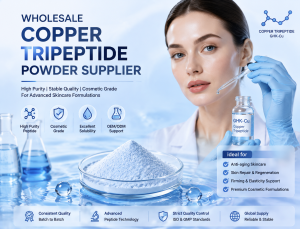
What Are the Most Common Applications of Cosmetic Peptides?
Cosmetic peptides are widely used in:
Anti-Aging Skincare
Common product categories:
- Anti-wrinkle creams
- Firming serums
- Premium facial treatments
Skin Barrier Products
Applications include:
- Repair creams
- Sensitive skin formulations
- Hydrating products
Eye Care
Peptides are frequently incorporated into:
- Eye creams
- Eye serums
- Fine-line targeting products
Hair and Scalp Care
Emerging applications include:
- Scalp treatments
- Hair strengthening formulations
Market analysis indicates that anti-aging remains one of the largest applications of cosmetic peptide ingredients, while hair-care applications are showing strong growth potential.
What Factors Affect Cosmetic Peptide Performance in a Formula?
The effectiveness of peptide-based skincare depends on formulation design.
Key factors include:
1. Peptide Stability
Peptides may be sensitive to:
- Temperature
- pH variation
- Oxidation
- Incompatible ingredients
2. Delivery System
Formulators may optimize performance through:
- Encapsulation technologies
- Compatible solvents
- Stabilizing systems
3. Ingredient Compatibility
Peptides should be evaluated alongside:
- Retinoids
- Vitamin C derivatives
- Acids
- Botanical extracts
Why Choose a Synthesized Cosmetic Peptide Manufacturer Instead of Standard Ingredient Traders?
Working directly with a synthesized peptide manufacturer provides advantages:
Technical Advantages
✔ Direct control over peptide sequence
✔ Higher manufacturing transparency
✔ Better quality consistency
✔ Custom synthesis options
Business Advantages
✔ Bulk supply capability
✔ Competitive ingredient sourcing
✔ Faster product development support
✔ Confidential formulation collaboration
For cosmetic brands developing innovative products, direct partnership with a peptide manufacturer reduces supply chain uncertainty.
Can Cosmetic Peptide Suppliers Provide Custom Peptide Development?
Advanced peptide manufacturers often provide:
- Custom peptide design
- Sequence optimization
- Laboratory-scale synthesis
- Pilot production
- Commercial-scale manufacturing
Custom peptide synthesis enables skincare companies to develop differentiated formulations rather than relying only on commonly available ingredients.
How to Choose a Reliable Cosmetic Peptide Supplier: Buyer Checklist
Before selecting a supplier, skincare companies should evaluate:
✓ Does the supplier manufacture peptides directly?
✓ Can they provide analytical testing reports?
✓ Do they support custom synthesis?
✓ Do they have scalable production capability?
✓ Can they provide technical formulation support?
✓ Are quality systems documented?
Why Partner With Our Synthesized Cosmetic Peptide Manufacturing Platform?
We specialize in the development and manufacturing of high-purity synthesized peptide ingredients for cosmetic applications.
Our capabilities include:
- Custom cosmetic peptide synthesis
- Research-grade and commercial-scale production
- Advanced purification technologies
- Quality-controlled peptide manufacturing
- Technical support for skincare formulation development
Whether you are developing anti-aging serums, peptide creams, professional skincare products, or innovative cosmetic formulations, 📩 Contact us to request a quotation or discuss your specific requirements. Let’s build a strong partnership supply for your anti-aging cosmetics product line and our peptide solutions are designed to support next-generation beauty products.
Also See
Cosmetic Peptide Manufacturer Guide: What Skincare Brands Should Know Before Sourcing Peptides
Palmitoyl Tripeptide-5 Explained: Mechanism, Skincare Benefits, and Formulation Applications
Palmitoyl Pentapeptide-4 (Matrixyl): Why It Remains a Leading Anti-Aging Peptide Ingredient
FAQs:
Q1. What is a cosmetic peptide supplier?
A cosmetic peptide supplier provides purified peptide ingredients used by skincare brands and cosmetic manufacturers to formulate advanced beauty products.
Q2. What is the difference between cosmetic peptides and proteins?
Peptides are shorter amino acid chains that can be designed for specific cosmetic functions, while proteins are larger molecular structures.
Q3. Are synthesized peptides suitable for skincare products?
Yes. Synthesized peptides are widely used in cosmetic formulations because manufacturers can control sequence accuracy, purity, and consistency.
Q4. What purity level should cosmetic peptides have?
The required purity depends on peptide type and application. High-quality cosmetic peptides generally require strict analytical characterization and documented purity testing.
Q5. Can peptide manufacturers supply bulk quantities?
Yes. Professional cosmetic peptide manufacturers typically support laboratory, pilot, and commercial-scale supply.
Q6. Can cosmetic peptide suppliers provide custom sequences?
Yes. Many advanced manufacturers provide custom peptide synthesis services for specific skincare applications.
References
Cosmetic Peptide Synthesis Market Analysis and Forecast Reports.
Current Approaches in Cosmeceuticals: Peptides, Biotics and Bioactive Ingredients.
Peptides in Cosmetics: From Pharmaceutical Breakthroughs to Cosmetic Applications.
Peptide Ingredient Market Development and Biotechnology Applications.