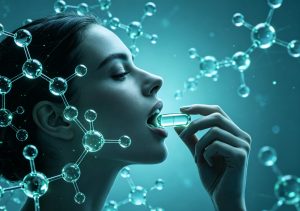




Discover how synthesized peptide ingredients are transforming anti-aging skincare. Source cosmetic peptides in bulk from a professional peptide manufacturer for advanced cosmetic formulations.
The Future of Anti-Aging Skincare: How Peptide Ingredients Are Transforming Cosmetic Formulations
Anti-aging skincare is entering a more sophisticated era. Consumers and formulators are increasingly looking beyond conventional moisturization toward targeted cosmetic ingredients that can support smoother-looking, firmer, more hydrated and healthier-looking skin.Among the ingredients driving this shift are cosmetic peptides—short amino-acid sequences that can be engineered for specific cosmetic applications.
Scientific reviews now classify cosmetic peptides into several functional categories, including signal peptides, carrier peptides, neurotransmitter-inhibiting peptides and enzyme-inhibiting peptides. Research has investigated their potential roles in collagen-related pathways, skin conditioning, hydration, pigmentation and the visible signs associated with skin aging.For cosmetic brands, this is creating a significant formulation opportunity.For ingredient buyers, however, success depends not simply on adding “a peptide” to a formula. The peptide sequence, modification, purity, formulation compatibility, stability, delivery system and supporting documentation all matter.
As a manufacturer focused on synthesized peptide ingredients, we support cosmetic developers seeking peptide raw materials for next-generation skincare formulations.
What Are Cosmetic Peptides?
Cosmetic peptidchem are relatively short chains of amino acids used as functional ingredients in skincare and personal-care formulations.
Peptides occupy the molecular space between individual amino acids and much larger proteins. Their biological and physicochemical properties depend heavily on their amino-acid sequence and chemical modifications.
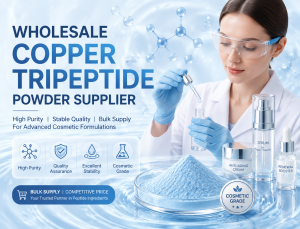
Modern cosmetic science has investigated peptides because certain sequences can act as signaling molecules or participate in pathways relevant to skin appearance. Reviews describe applications involving skin conditioning, extracellular-matrix-related signaling, hydration, pigmentation and visible signs of aging.The European Commission’s CosIng database also contains numerous peptide-related cosmetic ingredient entries, including Wholesale Copper Tripeptide Powder Supplier and multiple synthetic and modified peptide ingredients. CosIng itself is an informational database and should not be interpreted as automatic regulatory approval of an ingredient or claim.
Why Are Peptides Becoming Important in Anti-Aging Skincare
Traditional anti-aging formulas often rely on established ingredients such as:
- Retinoids
- Vitamin C and other antioxidants
- Hyaluronic acid
- Ceramides
- Alpha hydroxy acids
- Niacinamide
- Botanical extracts
- Moisturizing ingredients
These ingredients remain important. Peptides do not necessarily replace them.
Instead, peptides give formulators another route for designing multi-mechanism formulations.A peptide-based serum, for example, can combine selected peptides with humectants, barrier-supporting ingredients and antioxidants to create a formulation addressing several aspects of visible skin aging at the same time.A 2024 review of cosmeceuticals used for photoaging identified peptides among the better-supported categories examined, although the quality and strength of evidence varies considerably among individual peptides and finished formulations.
What Does the Scientific Evidence Say About Peptides and Skin Aging?
The evidence is promising, but it should be interpreted carefully.
A 2026 systematic review and meta-analysis covering 19 randomized controlled trials and 1,341 participants examined oral and topical peptides for skin aging. The researchers reported improvements in outcomes including hydration and brightness and a modest pooled effect on wrinkle reduction. Effects on elasticity and density were less consistent, and a substantial part of the observed benefit was driven by oral peptide studies rather than topical peptides. Peptides were generally well tolerated in the included studies.
How Do Cosmetic Peptides Work?
Cosmetic peptides are often divided according to their proposed functional mechanisms.
1. Signal Peptides
What are signal peptides?
Signal peptides are studied for their ability to participate in cellular signaling associated with extracellular-matrix components and skin appearance.
Certain peptides have therefore been investigated in cosmetic formulations targeting the appearance of:
- Fine lines
- Wrinkles
- Loss of firmness
- Uneven texture
- Aging skin
Signal peptides are among the most extensively discussed classes of cosmetic peptides in current scientific reviews.
Examples used or investigated in cosmetics include palmitoylated peptide sequences such as Palmitoyl Pentapeptide-4 and related peptides
2. Carrier Peptides
What are carrier peptides?
Carrier peptides can complex with or transport trace elements associated with biological processes.
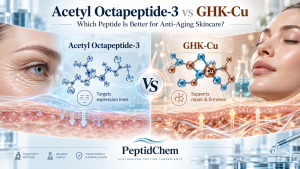
One of the best-known examples is Copper Tripeptide-1, a copper complex of Tripeptide-1 recognized as a cosmetic ingredient in the European Commission’s CosIng database.Copper-containing peptides continue to attract interest in advanced skincare formulations, particularly products positioned around mature-looking skin and skin-conditioning applications.
Neurotransmitter-Inhibiting Peptides
This category includes peptides investigated for cosmetic concepts associated with expression-line appearance.
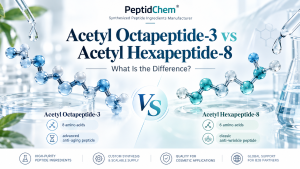
One prominent example is Acetyl Hexapeptide-8.
A 2025 scientific review concluded that preclinical and clinical research has reported potential improvements in parameters including wrinkle appearance, elasticity and hydration. However, the authors also emphasized an important limitation: skin permeability and delivery remain major formulation challenges.
This means that selecting the peptide is only part of the formulation problem.
The delivery system matters as well.
Enzyme-Inhibiting Peptides
Some peptide sequences are researched for interactions with enzymes associated with components of the extracellular matrix or other skin-related pathways.
These peptides represent another strategy for developing targeted cosmetic formulations, although evidence should always be evaluated at the individual peptide and finished-product level rather than generalized across the entire peptide category.
Why Are Synthesized Peptides Especially Valuable for Cosmetic Formulators?
Synthetic peptide technology gives cosmetic developers substantial design flexibility.
Instead of relying exclusively on complex natural extracts, manufacturers can produce a defined amino-acid sequence and introduce selected chemical modifications according to the intended application.
Depending on the peptide, these modifications can include:
- Acetylation
- Amidation
- Palmitoylation
- Lipid conjugation
- Metal complexation
- Sequence optimization
- Custom peptide synthesis
The European Commission cosmetic ingredient database contains multiple modified and synthetic peptide entries, demonstrating the diversity of peptide structures now relevant to cosmetic science.For a skincare R&D team, defined synthetic ingredients can also make it easier to establish technical specifications and batch-quality requirements than relying solely on chemically heterogeneous natural materials.
Why Is Peptide Delivery One of the Biggest Formulation Challenges?
Peptides offer interesting biological functionality, but many are relatively hydrophilic and have limited passive penetration across the skin barrier.
This creates one of the most important challenges in peptide skincare formulation.
A major 2025 review identified poor membrane permeability as a significant limitation for cosmetic peptides and discussed delivery approaches including liposomes, niosomes, ethosomes, nanoemulsions and other systems.
A separate review of anti-aging peptides likewise highlighted dermal delivery as a major focus of peptide formulation research.
What does this mean for formulators?
Selecting a peptide based solely on its theoretical mechanism is insufficient.
A commercially successful peptide formula may also require evaluation of:
- Solubility
- Molecular weight
- Ionic characteristics
- pH compatibility
- Temperature sensitivity
- Oxidative stability
- Interaction with other actives
- Preservative system
- Packaging
- Delivery technology
- Finished-product stability
This is why collaboration between the peptide supplier and cosmetic formulation team can be valuable during product development.
Which Cosmetic Peptides Are Relevant to Modern Skincare Formulation?
Depending on local regulations, formulation objectives and supporting evidence, cosmetic R&D teams may evaluate ingredients such as:
| Peptide Ingredient | Common Formulation Positioning |
|---|---|
| Acetyl Hexapeptide-8 | Expression-line / anti-wrinkle formulations |
| Copper Tripeptide-1 | Skin-conditioning and mature-skin formulations |
| Palmitoyl Pentapeptide-4 | Anti-aging and firmness-focused formulations |
| Palmitoyl Tripeptide-1 | Skin-conditioning and age-support formulations |
| Palmitoyl Tetrapeptide-7 | Multi-peptide anti-aging formulations |
| Nonapeptide-1 | Complexion and tone-focused formulations |
| Tripeptide-1 | Skin-conditioning formulations |
| Tetrapeptide-21 | Advanced anti-aging formulation research |
Important: Cosmetic function, permitted claims, INCI naming and regulatory status should be verified separately for every target market and finished formulation.
Peptides vs. Traditional Anti-Aging Ingredients: Which Is Better?
There is no universal “best” cosmetic active.
The strongest modern formulations are often built around complementary ingredient systems.
| Ingredient Class | Primary Formulation Role |
| Peptides | Targeted cosmetic signaling/conditioning concepts |
| Retinoids | Skin-renewal and established anti-aging applications |
| Vitamin C | Antioxidant and brightening support |
| Hyaluronic Acid | Hydration and temporary plumping |
| Ceramides | Skin-barrier support |
| Niacinamide | Barrier, tone and multifunctional skincare |
| AHAs | Exfoliation and texture refinement |
Rather than asking “peptides or traditional ingredients?”, skincare developers should ask:
“Which combination of actives best supports the intended product claim, consumer group and formulation architecture?”
Peptides are therefore likely to complement—not eliminate—established cosmetic actives.
What Will the Next Generation of Peptide Skincare Look Like?
The future of cosmetic peptides is likely to be driven by several interconnected technologies.
Precision peptide design
More targeted sequences can be designed around specific cosmetic applications.
Modified peptide structures
Lipidation, acetylation and other modifications can alter peptide properties and formulation behavior.
Advanced delivery systems
Liposomes, nanoemulsions and related formulation technologies are being studied to address peptide stability and permeability challenges.
Multi-peptide formulations
Instead of relying on a single active, formulators can investigate combinations targeting complementary cosmetic pathways.
Personalized skincare
Peptide systems may increasingly be incorporated into formulations developed around specific age groups, skin concerns and product formats.
Evidence-driven beauty
As the category becomes more competitive, technical documentation and credible efficacy substantiation will become increasingly important.
The winners in peptide skincare are therefore unlikely to be products containing the largest number of peptide names.
They are more likely to be well-designed formulations using appropriately selected peptide ingredients supported by credible science and responsible claims.
Why Does Choose the Peptide Cosmetic Supplier Matter?
Peptidchem cosmetic is brands and formulators, peptide sourcing is not simply a purchasing decision.
It is a quality, formulation and supply-chain decision.
When evaluating a cosmetic peptide manufacturer, buyers should consider:
1. Peptide identity
Confirm the exact sequence, modification and intended INCI positioning.
2. Purity specification
Define the required purity and analytical testing method.
3. Analytical characterization
Depending on the peptide and supply specification, relevant characterization may include methods such as HPLC and mass spectrometry.
4. Batch consistency
Commercial skincare manufacturing requires reproducibility between production lots.
5. Documentation
Before purchasing, ask what documentation is available, such as:
- Certificate of Analysis (COA)
- Technical Data Sheet (TDS)
- Safety Data Sheet (SDS)
- Product specification
- Storage information
- Stability information
- INCI information
- Regulatory support documentation
6. Scale
A supplier should be able to discuss the transition from development quantities to commercial bulk requirements.
7. Custom synthesis capability
Brands developing differentiated products may require modified sequences or custom peptide synthesis rather than standard catalog ingredients.
Current B2B search results for cosmetic peptide manufacturing show that buyers increasingly encounter suppliers emphasizing manufacturing capability, analytical quality control, custom synthesis and scale rather than merely listing ingredient names.
Your Cosmetic Peptide Manufacturing Partner
We focus on the manufacture of synthesized peptide ingredients for cosmetic and skincare applications. Our goal is to help skincare brands, cosmetic laboratories and formulation companies identify peptide raw materials suitable for their product-development requirements.
Discuss Your Peptide Project
Contact us if you are looking for:
- Cosmetic peptide raw materials
- Anti-aging peptide ingredients
- Bulk synthesized peptides
- Peptide powders for cosmetic R&D
- Custom peptide synthesis
- Modified peptide sequences
- Peptide ingredients for serums
- Peptides for creams and emulsions
- Multi-peptide formulation projects
- Commercial-scale peptide sourcing
Need a cosmetic peptide quotation?
Send us your:
Peptide name / sequence + target quantity + required specification + application + destination market
and ask our team about available specifications, documentation, sample quantities and commercial supply options.
CTA
Request a Cosmetic Peptide Quote →
Ask for Technical Documentation →
Discuss Custom Peptide Synthesis →
Conclusion
Peptide technology is expanding the possibilities of modern anti-aging skincare.From signal and carrier peptides to increasingly sophisticated modified peptide systems, these ingredients allow cosmetic scientists to develop more targeted and differentiated formulations. At the same time, current research shows why peptide selection, stability, permeability, delivery and evidence remain critical. 📩 Contact us to request a quotation or discuss your specific requirements. Let’s build a strong partnership supply for your anti-aging cosmetics product line.
Also See:
Copper Tripeptide-1 (GHK-Cu): Cosmetic Formulation Guide | Peptidchem
What Is Palmitoyl Oligopeptide and Why Is It Used in Anti-Aging Skincare Formulas
What Is Palmitoyl Oligopeptide and Why Is It Used in Anti-Aging Skincare Formulas
FAQs:
Q1:What are cosmetic peptides?
Cosmetic peptides are short amino-acid sequences used as functional ingredients in skincare and personal-care formulations. Different peptide sequences are investigated for different applications, including skin conditioning, hydration, firmness, pigmentation and the appearance of wrinkles.
Q2:Are peptides effective for anti-aging skincare?
Research supports the potential of selected peptides and peptide-containing formulations, but results vary according to the peptide, concentration, delivery system and finished product. A 2026 systematic review of 19 randomized controlled trials involving 1,341 participants reported generally favorable effects for several skin-aging outcomes, although evidence was not equally strong for every endpoint or topical peptide.
Q3:What is the best peptide for anti-aging cosmetics?
There is no single best peptide for every formulation. The correct choice depends on the target claim, product format, compatibility, regulatory market and supporting evidence. Commonly investigated ingredients include Acetyl Hexapeptide-8, Copper Tripeptide-1 and palmitoylated peptides.
Q4:What is Acetyl Hexapeptide-8 used for?
Acetyl Hexapeptide-8 is widely investigated in cosmetic formulations positioned around expression lines and wrinkle appearance. Scientific reviews report promising results but also identify limited skin permeability as an important formulation consideration.
Q5:What is Copper Tripeptide-1?
Copper Tripeptide-1 is a copper complex of Tripeptide-1 and is listed in the European Commission CosIng cosmetic ingredient database.
Q6:Can peptides be combined with hyaluronic acid?
Peptides and humectants such as hyaluronic acid can be incorporated into the same formulation concept where compatibility and stability have been properly evaluated.
Q7:Can cosmetic peptides be synthesized commercially?
Yes. Peptide manufacturing technologies allow defined amino-acid sequences and chemically modified peptides to be produced for cosmetic research and commercial ingredient applications. Custom cosmetic peptide synthesis is also offered within the current B2B peptide manufacturing market.
References
Nukaly HY, Halawani IR, Irtaza HM, et al. Oral and topical peptides for skin aging: systematic review and meta-analysis of randomized controlled trials. Frontiers in Medicine. 2026;13:1618306. DOI: 10.3389/fmed.2026.1618306.
Pintea A, Manea A, Pintea C, et al. Peptides: Emerging Candidates for the Prevention and Treatment of Skin Senescence: A Review. Biomolecules. 2025;15(1):88. DOI: 10.3390/biom15010088.
Liu M, Chen S, Zhang Z, et al. Anti-ageing peptides and proteins for topical applications: a review. Pharmaceutical Development and Technology. 2022;27(1):108–125. DOI: 10.1080/10837450.2021.2023569.
Zdrada-Nowak J, Surgiel-Gemza A, Szatkowska M. Acetyl Hexapeptide-8 in Cosmeceuticals—A Review of Skin Permeability and Efficacy. International Journal of Molecular Sciences. 2025;26(12):5722. DOI: 10.3390/ijms26125722.
Chan LKW, Lee KWA, Lee CH, et al. Cosmeceuticals in photoaging: A review. Skin Research and Technology. 2024;30(9). DOI: 10.1111/srt.13730.
European Commission. CosIng — Cosmetics Ingredients Database. The database contains cosmetic ingredient information including peptide-related ingredients such as Copper Tripeptide-1 and synthetic peptide derivatives.
Google Search Central. Optimizing your website for generative AI features on Google Search. Google states that foundational SEO, useful non-commodity content, technical accessibility and people-first information remain the basis of visibility in generative AI Search experiences.