



Discover peptides vs hyaluronic acid for anti-aging skincare. Learn why cosmetic peptides support collagen, skin repair, and advanced formulations.
Peptides vs Hyaluronic Acid: Which Anti-Aging Ingredient Provides Better Skin Benefits?
Peptidechem is become a global skincare industry is shifting toward scientifically supported active ingredients that provide measurable anti-aging benefits. Among the most researched cosmetic ingredients, peptides and hyaluronic acid (HA) remain two leading solutions for improving visible signs of skin aging.
However, formulators and skincare brands often ask:
“Should an anti-aging formulation use peptides or hyaluronic acid?”
The answer depends on the desired skin benefit.
Hyaluronic acid primarily improves skin hydration and surface plumping, while cosmetic peptides are designed to support collagen synthesis, extracellular matrix maintenance, and skin regeneration pathways.
For advanced anti-aging formulations, many cosmetic scientists combine both ingredients to achieve complementary effects.
What Are Cosmetic Peptides?
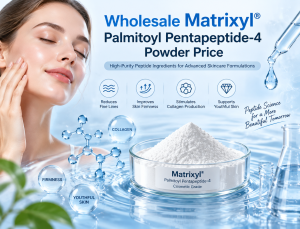
Wholesale Matrixyl Palmitoyl Pentapeptide-4 Powder are short chains of amino acids designed to interact with biological pathways related to skin structure and function.
Unlike complete proteins, peptides have smaller molecular structures and can be designed for specific cosmetic applications.
Synthetic cosmetic peptides are commonly classified into:
1. Signal Peptides
Signal peptides stimulate skin cells to increase production of structural proteins such as collagen.
Examples:
- Palmitoyl Pentapeptide-4
- Palmitoyl Tripeptide-1
Potential benefits:
- Reduced appearance of fine lines
- Improved firmness
- Enhanced skin texture
2. Carrier Peptides
Carrier peptides transport trace elements such as copper that support skin repair processes.
Example:
- Copper Tripeptide-1 (GHK-Cu)
Benefits:
- Supports extracellular matrix remodeling
- Helps improve skin recovery
3. Enzyme-Inhibiting Peptides
These peptides help reduce processes associated with collagen degradation.
Benefits:
- Protection against premature skin aging
- Improved elasticity appearance
Research indicates that cosmetic peptides have potential anti-aging applications through mechanisms involving collagen production, antioxidant activity, and extracellular matrix regulation. However, formulation quality and clinical validation remain important factors.
What Is Hyaluronic Acid in Skincare?
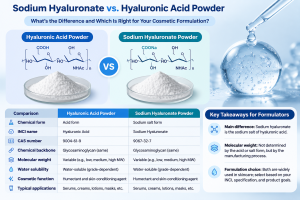
Hyaluronic acid is a naturally occurring polysaccharide found in human skin, connective tissue, and extracellular matrix.
Its primary cosmetic function is:
Water retention and skin hydration.
HA can hold large amounts of water, helping skin appear:
- More hydrated
- Fuller
- Smoother
- Temporarily plumper
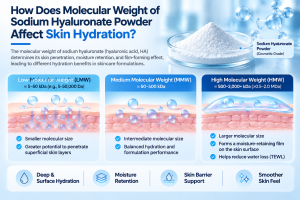
Different molecular weights provide different effects:
| Type | Main Function |
|---|---|
| High molecular weight HA | Forms protective moisturizing layer |
| Low molecular weight HA | Supports deeper skin hydration |
Clinical studies have demonstrated improvements in skin appearance, hydration, and wrinkle parameters following topical HA application.
Peptides vs Hyaluronic Acid: What Is the Main Difference?
The biggest difference is their biological target.
| Feature | Cosmetic Peptides | Hyaluronic Acid |
|---|---|---|
| Ingredient type | Amino acid chains | Polysaccharide |
| Primary function | Skin signaling and structural support | Hydration |
| Main target | Collagen and extracellular matrix | Water retention |
| Anti-aging approach | Long-term skin function support | Immediate hydration effect |
| Common application | Serums, creams, professional skincare | Moisturizers, serums |
| Best for | Wrinkles, firmness, aging skin | Dryness, dehydration |
Do Peptides Work Better Than Hyaluronic Acid for Anti-Aging?
Neither ingredient universally replaces the other because they address different causes of visible aging.
Peptides may provide stronger benefits for:
✓ Loss of firmness
✓ Fine lines associated with collagen reduction
✓ Skin texture improvement
✓ Advanced anti-aging formulations
Hyaluronic acid may provide stronger benefits for:
✓ Immediate hydration
✓ Skin plumping
✓ Improving dry skin appearance
✓ Supporting skin barrier moisture
For brands developing premium anti-aging products, peptide-based formulations are increasingly attractive because they target biological processes beyond surface hydration.
Why Are Cosmetic Brands Choosing Synthetic Peptide Ingredients?
Cosmetic peptide ingredients provide several advantages for modern cosmetic formulation:
1. Precise Molecular Design
Advanced peptide synthesis allows manufacturers to control:
- Amino acid sequence
- Purity
- Molecular characteristics
- Functional performance
2. Consistent Quality
Compared with biological extracts, synthesized peptides provide:
- Batch-to-batch consistency
- High purity
- Controlled composition
3. Customized Solutions
Professional peptide manufacturers can develop:
- Custom peptide sequences
- Research-grade peptides
- Cosmetic active peptides
- Bulk peptide ingredients
For skincare brands seeking differentiated anti-aging products, customized peptide solutions provide opportunities for innovation.
Can Peptides and Hyaluronic Acid Be Used Together?
Yes.
Many advanced skincare formulations combine peptides with hyaluronic acid because they provide complementary benefits.
A peptide + HA formulation can provide:
Hyaluronic Acid:
- Immediate hydration
- Moisture retention
- Skin plumping
Peptides:
- Collagen-supporting activity
- Skin firmness improvement
- Anti-aging positioning
A clinical evaluation of combined HA serum and peptide cream formulations demonstrated improvements in skin texture, tone, and wrinkles after consistent use.
Which Ingredient Should Cosmetic Manufacturers Choose?
The choice depends on the product positioning.
For Hydrating Products:
Recommended:
- Hyaluronic acid
- Sodium hyaluronate
- Multi-molecular-weight HA systems
For Premium Anti-Aging Products:
Recommended:
- Signal peptides
- Copper peptides
- Collagen-support peptides
- Custom synthetic peptides
For Next-Generation Skincare:
Recommended:
Peptide + Hyaluronic Acid Combination
This approach allows brands to provide both:
- Visible hydration benefits
- Advanced anti-aging claims
Why Choose Our Synthesized Cosmetic Peptide Ingredients?
As a professional manufacturer specializing in synthetic peptide ingredients, we provide high-quality peptide solutions for cosmetic and skincare applications.
Our capabilities include:
Cosmetic Peptide Manufacturing
- Custom peptide synthesis
- High-purity peptide production
- Cosmetic-grade peptide ingredients
- Bulk supply solutions
Applications
Our peptide ingredients can be used in:
- Anti-aging serums
- Facial creams
- Eye-care products
- Repair formulations
- Professional skincare products
Advantages
✓ Advanced peptide synthesis technology
✓ Strict quality control
✓ Customized peptide development
✓ Reliable global supply capability
✓ Support for cosmetic formulation development
Conclusion
The answer depends on the goal.
Hyaluronic acid is a powerful hydration ingredient that improves moisture retention and skin plumpness.
Cosmetic peptides provide targeted anti-aging benefits by supporting pathways related to collagen, skin structure, and repair mechanisms.
📩 Contact us or brands developing high-performance anti-aging products, synthetic peptide ingredients offer significant opportunities for innovation.
Also See
Palmitoyl Tetrapeptide-7 and Palmitoyl Tripeptide-1: Key Peptides for Advanced Skincare Products
Acetyl Tetrapeptide-5 and Acetyl Dipeptide-1 Cetyl: Functional Peptides for Eye Care Formulations
Palmitoyl Tripeptide-5 Explained: Mechanism, Skincare Benefits, and Formulation Applications
FAQs:
Q1. Are peptides better than hyaluronic acid for wrinkles?
Peptides may provide stronger support for wrinkle-related concerns by targeting collagen-related pathways, while hyaluronic acid mainly improves hydration and temporary skin plumping.
Q2. What is the best peptide ingredient for anti-aging skincare?
Common cosmetic anti-aging peptides include:
- Copper Tripeptide-1
- Palmitoyl Tripeptide-1
- Palmitoyl Pentapeptide-4
- Acetyl Hexapeptide-8
Selection depends on formulation goals.
Q3. Can cosmetic peptides replace hyaluronic acid?
No. Peptides and hyaluronic acid work through different mechanisms and are often combined.
Q4. Where can brands buy cosmetic peptide ingredients?
Brands can purchase cosmetic peptide raw materials from professional peptide manufacturers and suppliers offering bulk supply and custom synthesis services.
Q5. What should I look for in a cosmetic peptide supplier?
Important factors include:
- Manufacturing capability
- Purity testing
- Quality certifications
- Stability data
- Custom synthesis experience
- Technical support
References
Zhao X. et al. Collagen peptides and related synthetic peptides: applications in cosmeceuticals. Journal of Functional Foods, 2021.
Pintea A. et al. Peptides: Emerging Candidates for the Prevention and Treatment of Skin Aging. 2025.
Gold MH et al. Efficacy and tolerability of a hyaluronic acid-based serum and peptide-rich cream for skin aging. Clinical, Cosmetic and Investigational Dermatology, 2022.
Bravo B et al. Benefits of topical hyaluronic acid for skin quality and signs of aging. 2022.
Al-Atif H. Collagen supplements for aging and wrinkles: a paradigm shift in skin aging research. 2022.