




Discover the difference between collagen peptides and signal peptides in skin anti-aging. Learn how synthesized cosmetic peptides stimulate collagen, improve elasticity, and support advanced skincare formulations from a professional cosmetic peptide supplier.
Collagen Peptides vs Signal Peptides: Which Peptide Approach Is Better for Skin Anti-Aging?
Peptidchem is global skincare industry is rapidly moving toward science-based active ingredients, and cosmetic peptides have become one of the most researched anti-aging technologies. Unlike traditional moisturizing ingredients that mainly improve surface appearance, peptides are designed to interact with biological pathways related to collagen synthesis, extracellular matrix maintenance, and skin repair.Among various peptide categories, collagen peptides and signal peptides are two widely discussed approaches for improving signs of skin aging. However, they work through different mechanisms.
Are collagen peptides and signal peptides the same? Which peptide technology provides better anti-aging benefits?
The answer depends on their molecular structure, delivery method, and biological function.
What Are Collagen Peptides?
Collagen peptides are short-chain amino acid sequences produced through enzymatic hydrolysis of collagen proteins. They are smaller fragments of collagen that can be absorbed more efficiently than intact collagen.
Collagen peptides are commonly used in:
- nutricosmetics
- beauty supplements
- skin hydration products
- anti-aging formulations
Research indicates that collagen-derived peptides may support:
- skin hydration
- elasticity improvement
- dermal collagen density
- reduction of visible wrinkles
A systematic review reported that hydrolyzed collagen peptides showed potential benefits for skin hydration, elasticity, and wrinkle reduction when consumed regularly.
How Do Collagen Peptides Work Against Skin Aging?
The skin aging process is strongly associated with:
- decreased collagen production
- reduced fibroblast activity
- extracellular matrix degradation
- loss of elasticity
Collagen peptides may work through two main pathways:
1. Providing Bioactive Peptide Signals
Certain collagen-derived peptides, such as peptides containing hydroxyproline-rich sequences, can act as signaling molecules that stimulate dermal fibroblast activity.
2. Supporting Skin Structural Components
Collagen peptides provide amino acid building blocks required for:
- collagen synthesis
- elastin maintenance
- extracellular matrix formation
However, collagen peptides mainly support the skin regeneration environment rather than directly controlling cellular signaling pathways.
What Are Signal Peptides?
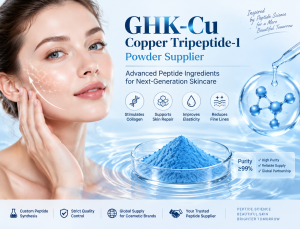
GHK-Cu Copper Tripeptide-1 Powder Supplier signal peptides are a specialized category of cosmetic peptides designed to send biological messages to skin cells.
Unlike collagen peptides, signal peptides do not simply provide structural components. Instead, they act as cell communication molecules.
Their primary role is:
Stimulating fibroblasts to increase production of collagen, elastin, and extracellular matrix proteins.
Common cosmetic signal peptides include:
- Palmitoyl Pentapeptide-4 (Matrixyl)
- Palmitoyl Tripeptide-1
- Palmitoyl Tetrapeptide-7
- Copper Tripeptide-1 (GHK-Cu)
Signal peptides are among the most studied peptide technologies in modern anti-aging skincare.
How Do Signal Peptides Work in Anti-Aging Skincare?
Signal peptides function through a biomimetic mechanism.
When applied in cosmetic formulations, they may stimulate skin cells to increase:
Collagen Production
Fibroblast activation promotes synthesis of:
- Type I collagen
- Type III collagen
- extracellular matrix proteins
Skin Firmness
Enhanced extracellular matrix activity contributes to:
- improved elasticity
- smoother skin texture
- reduced appearance of fine lines
Skin Repair Pathways
Certain peptides also influence:
- wound healing mechanisms
- inflammation regulation
- skin barrier recovery
Research reviews classify cosmetic peptides into functional groups including signal peptides, carrier peptides, enzyme inhibitor peptides, and neurotransmitter inhibitor peptides based on their mechanisms.
Collagen Peptides vs Signal Peptides: What Is the Difference?
| Feature | Collagen Peptides | Signal Peptides |
|---|---|---|
| Main Function | Provide collagen-derived bioactive fragments | Activate cellular signaling |
| Primary Target | Skin nutrition and structural support | Fibroblast stimulation |
| Typical Application | Supplements, nutricosmetics | Serums, creams, professional skincare |
| Mechanism | Supplies peptides/amino acids | Sends regeneration signals |
| Anti-aging Strategy | Supports collagen environment | Promotes collagen synthesis |
| Common Users | Wellness and beauty supplement brands | Cosmetic formulation companies |
Which Peptide Is Better for Anti-Aging Formulations?
There is no universal “best” peptide. The choice depends on the product positioning.
For Beauty Supplements:
Collagen peptides are widely selected because they are suitable for oral beauty products targeting:
- hydration
- elasticity
- overall skin health
For Advanced Topical Skincare:
Signal peptides are commonly preferred because they are designed for targeted skin communication.
For premium anti-aging serums, many cosmetic brands combine multiple peptide technologies:
- signal peptides for collagen stimulation
- carrier peptides for mineral delivery
- enzyme inhibitor peptides for collagen protection
A multi-peptide approach allows formulators to target different mechanisms of skin aging.
Why Are Synthetic Cosmetic Peptides Becoming More Popular?
Modern cosmetic brands increasingly prefer synthesized peptide ingredients because they offer:
High Purity Control
Synthetic peptide production enables:
- controlled amino acid sequences
- consistent batch quality
- reduced biological contamination risks
Custom Design Capability
Manufacturers can develop peptides with:
- specific sequences
- improved stability
- optimized cosmetic applications
Reliable Supply Chain
Compared with biological extraction methods, synthetic peptide manufacturing provides:
- scalable production
- quality consistency
- global supply capability
Advanced Synthetic Peptide Solutions for Cosmetic Brands
We specialize in synthesized peptide ingredients for cosmetic applications, providing high-quality peptide raw materials for skincare manufacturers worldwide.
Our expertise includes:
- anti-aging peptide ingredients
- signal peptide synthesis
- biomimetic peptides
- customized peptide sequences
- high-purity cosmetic peptide solutions
We support:
- skincare brands
- cosmetic formulators
- contract manufacturers
- research laboratories
- ingredient distributors
Our peptide manufacturing capabilities focus on:
✓ Customized peptide synthesis
✓ High purity cosmetic-grade peptides
✓ Technical documentation support
✓ Bulk ingredient supply
✓ Global B2B cooperation
For companies developing next-generation anti-aging skincare products, selecting a reliable cosmetic peptide supplier is essential for formulation performance and market competitiveness.
How to Choose a Reliable Cosmetic Peptide Supplier?
Before purchasing peptide ingredients, cosmetic companies should evaluate:
1. Manufacturing Capability
Check whether the supplier provides:
- peptide synthesis expertise
- quality control systems
- analytical testing
2. Product Documentation
Professional suppliers should provide:
- Certificate of Analysis (COA)
- HPLC testing
- Mass spectrometry data
- Safety documentation
3. Customization Ability
Advanced skincare brands often require:
- customized peptide sequences
- formulation consultation
- application-specific solutions
Conclusion
Collagen peptides focus on supporting skin structure and providing bioactive collagen fragments, while signal peptides focus on activating cellular pathways responsible for collagen and extracellular matrix production.
For advanced cosmetic formulations, especially premium anti-aging skincare, synthesized signal peptides and customized peptide combinations provide formulators with targeted solutions.As a professional synthetic cosmetic peptide ingredient manufacturer, we provide high-quality peptide solutions designed to support global skincare innovation.📩 Contact us to request a quotation or discuss your specific requirements. Let’s build a strong partnership supply for your anti-aging cosmetics product line.
Also See
Comparing 7 Popular Anti-Aging Peptides: Functions, Applications, and Market Opportunities
What Makes Acetyl Octapeptide-3 Powder a Popular Ingredient in Anti-Wrinkle Skincare Formulas
FAQs:
Q1. Are collagen peptides the same as signal peptides?
No. Collagen peptides are collagen-derived fragments mainly used for structural support, while signal peptides activate cellular communication pathways that may stimulate collagen production.
Q2. Are signal peptides effective for wrinkles?
Certain signal peptides have demonstrated potential to improve skin firmness and reduce visible wrinkles by supporting collagen synthesis pathways. However, results depend on peptide type, formulation, concentration, and usage period.
Q3. Can cosmetic peptides replace retinol?
Peptides and retinoids work through different mechanisms. Peptides are often used as complementary anti-aging ingredients, especially in formulations designed for sensitive skin.
Q4. Are synthetic peptides safe for cosmetic use?
Cosmetic peptides produced under appropriate quality standards are widely used in skincare formulations. Safety depends on the specific peptide, purity, concentration, and regulatory compliance.
Q5. Can you supply customized cosmetic peptides in bulk?
Yes. Professional peptide manufacturers can provide customized synthesis and bulk supply solutions according to cosmetic formulation requirements.
References
Rovero P. et al. The Clinical Evidence-Based Paradigm of Topical Anti-Aging Peptides. Clinical, Cosmetic and Investigational Dermatology. 2022.
Pintea A. et al. Peptides: Emerging Candidates for the Prevention and Treatment of Skin Aging. Biomolecules. 2025.
Zhao X. et al. Collagen peptides and related synthetic peptides for skin health. Food & Function. 2021.
Skibska A. et al. Signal Peptides – Promising Ingredients in Cosmetics. 2021.
Schagen S. Topical Peptide Treatments with Effective Anti-Aging Results. Cosmetics. 2017.