



Discover how cosmetic peptides support anti-aging skincare formulations. Partner with a synthetic peptide manufacturer for high-quality peptide ingredients.
What Are Cosmetic Peptides and Why Are They Essential for Anti-Aging Skincare Formulas?
The global skincare industry is rapidly moving toward science-driven active ingredients. Among advanced cosmetic ingredients, cosmetic peptides have become essential components in premium anti-aging formulations because of their ability to support skin firmness, hydration, elasticity, and overall skin appearance.Cosmetic peptides are short chains of amino acids designed to interact with biological pathways involved in skin maintenance. Unlike traditional moisturizing ingredients that mainly improve surface hydration, functional peptides act as signaling molecules, carriers, or protective agents within cosmetic formulations.Today, cosmetic brands, dermatological skincare companies, and formulation laboratories increasingly seek reliable synthetic peptide suppliers capable of providing high-purity peptide ingredients with consistent quality and formulation compatibility.Scientific studies have demonstrated that specific peptides, including palmitoyl pentapeptide and copper peptides, may support collagen-related pathways and improve visible signs associated with skin aging.
What Are Cosmetic Peptides?
Palmitoyl tripeptide-1 powder cosmetic peptides supplier cosmetic peptides are synthetic or bio-derived short amino acid sequences used as active ingredients in skincare products such as:
- Anti-aging creams
- Facial serums
- Eye-care products
- Moisturizers
- Skin repair formulations
- Professional dermatological cosmetics
Peptides are smaller than complete proteins and can be engineered to perform specific cosmetic functions.
In skincare formulations, peptides mainly work through three mechanisms:
1. Signal Peptides
Signal peptides communicate with skin cells and encourage processes related to extracellular matrix components such as collagen.
Examples:
- Palmitoyl Pentapeptide-4
- Palmitoyl Tripeptide-1
- Palmitoyl Tetrapeptide-7
Research on palmitoyl pentapeptide demonstrated its potential to improve the appearance of photoaged skin through collagen-supporting mechanisms.
2. Carrier Peptides
Carrier peptides transport important minerals or trace elements required for skin biological processes.
Example:
- Copper Tripeptide-1 (GHK-Cu)
Copper peptides are widely used in advanced skincare formulations due to their association with skin repair and regeneration pathways.
3. Neurotransmitter-Inhibiting Peptides
These peptides are designed to influence mechanisms related to facial expression lines.
Example:
- Acetyl Hexapeptide-8
Studies have investigated acetyl hexapeptide-8 for improving the appearance of wrinkles and skin elasticity.
Why Are Cosmetic Peptides Important for Anti-Aging Skincare?
Skin aging is associated with several biological changes:
- Reduced collagen synthesis
- Loss of elasticity
- Increased oxidative stress
- Reduced moisture retention
- Structural changes in extracellular matrix proteins
Peptide-based ingredients are developed to address these visible aging concerns through targeted cosmetic mechanisms.
The major benefits include:
1. Supporting Skin Firmness
Collagen is one of the major structural proteins responsible for skin strength and elasticity.
Certain peptides act as signaling molecules that encourage collagen-related activity, helping improve the appearance of firmness.
2. Reducing the Appearance of Fine Lines
Anti-aging peptides are frequently incorporated into wrinkle-care formulations because they may improve skin smoothness and reduce visible fine lines over consistent use.
Clinical studies have reported improvements associated with peptide-containing cosmetic formulations.
3. Improving Skin Hydration
Some peptides support skin barrier function and improve moisture retention when combined with ingredients such as:
- Hyaluronic acid
- Ceramides
- Niacinamide
4. Supporting Skin Recovery
Certain peptide technologies are used in products targeting:
- Damaged skin appearance
- Environmental stress
- Reduced skin resilience
What Types of Cosmetic Peptides Are Used in Skincare Formulations?
Common cosmetic peptide categories include:
| Peptide Type | Main Cosmetic Function | Example |
|---|---|---|
| Signal Peptides | Support collagen-related pathways | Palmitoyl Pentapeptide-4 |
| Carrier Peptides | Mineral delivery and skin conditioning | Copper Tripeptide-1 |
| Enzyme-Modulating Peptides | Support skin protection | Specific bioactive sequences |
| Neurotransmitter Peptides | Expression line appearance care | Acetyl Hexapeptide-8 |
| Customized Synthetic Peptides | Targeted formulation solutions | Proprietary sequences |
Why Choose Synthetic Cosmetic Peptides?
Synthetic peptide manufacturing provides several advantages:
High Purity
Advanced peptide synthesis technologies allow controlled production with reduced impurities.
Batch Consistency
Synthetic manufacturing ensures:
- Stable quality
- Reproducible performance
- Reliable supply chain
Customization Capability
Brands can develop customized peptide solutions according to:
- Skin concerns
- Product positioning
- Regulatory requirements
- Formulation goals
What Should Brands Consider When Selecting a Cosmetic Peptide Supplier?
Choosing the right peptide ingredient supplier is critical for product quality.
Important supplier evaluation factors include:
1. Manufacturing Expertise
A professional synthetic peptide manufacturer should have expertise in:
- Solid-phase peptide synthesis (SPPS)
- Purification technologies
- Analytical testing
- Quality control systems
2. Documentation Support
Reliable suppliers should provide:
- Certificate of Analysis (COA)
- Technical Data Sheet (TDS)
- Safety Data Sheet (SDS)
- Purity analysis
- Stability information
3. Regulatory Compliance
Cosmetic peptide suppliers should support international cosmetic markets through quality management and documentation systems.
What Cosmetic Products Use Peptide Ingredients?
Cosmetic peptides are commonly used in:
Anti-Aging Serums
Designed for:
- Wrinkle appearance reduction
- Firmness improvement
- Skin texture enhancement
Facial Creams
Used for:
- Daily skin conditioning
- Hydration support
Eye Care Products
Target:
- Fine lines
- Skin smoothness
- Elasticity concerns
Professional Skincare Products
Used in:
- Dermatological cosmetics
- Premium beauty formulations
- Customized skincare systems
Why Are Cosmetic Brands Increasingly Searching for Peptide Ingredient Manufacturers?
The demand for peptide ingredients is increasing because consumers increasingly prefer:
- Science-backed skincare
- Clean beauty technologies
- Advanced active ingredients
- Personalized skincare solutions
For cosmetic manufacturers, partnering with a specialized synthetic peptide supplier provides access to innovative ingredients that improve product differentiation.
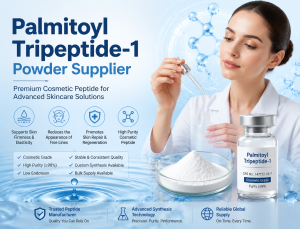
Our Capability as a Synthetic Cosmetic Peptide Manufacturer
As a professional manufacturer specializing in synthesized peptide ingredients, we provide high-quality cosmetic peptides designed for advanced skincare formulations.
Our capabilities include:
- Custom peptide synthesis
- Cosmetic-grade peptide production
- High-purity peptide ingredients
- Research-driven peptide development
- Bulk supply solutions for cosmetic brands
We support:
- Skincare manufacturers
- Cosmetic brands
- Contract formulation companies
- Research organizations
with reliable peptide ingredient solutions.📩 Contact us to request a quotation or discuss your specific requirements. Let’s build a strong partnership supply for your anti-aging cosmetics product line.
Also See
Comparing 7 Popular Anti-Aging Peptides: Functions, Applications, and Market Opportunities
How Peptide Suppliers Support Skincare Brands with Customized Anti-Aging Ingredient Solutions
Why High-Purity Cosmetic Peptides Matter for Premium Anti-Aging Skincare Products
FAQs:
Q1:What are cosmetic peptides used for?
Cosmetic peptides are used in skincare formulations to support visible improvements in firmness, elasticity, hydration, and aging-related skin concerns.
Q2:Are cosmetic peptides safe for skincare products?
Most cosmetic peptides used in commercial skincare formulations undergo safety evaluation and compatibility testing before market use.
Q3:What is the difference between cosmetic peptides and proteins?
Peptides are shorter chains of amino acids, allowing them to function as targeted cosmetic active ingredients, while proteins are larger molecular structures.
Q4:Can peptide ingredients be customized?
Yes. Synthetic peptide manufacturers can design customized peptide sequences according to formulation requirements.
Q5:How do I select a cosmetic peptide supplier?
Brands should evaluate supplier experience, manufacturing capability, quality documentation, purity standards, and regulatory support.
References
Robinson LR, et al. Topical palmitoyl pentapeptide provides improvement in photoaged human facial skin. International Journal of Cosmetic Science.
Pintea A, et al. Peptides: Emerging Candidates for the Prevention and Treatment of Skin Aging.
Veiga E, et al. Anti-aging peptides for advanced skincare.
Van Walraven N, et al. Bioactive peptides in cosmetic formulations: Review of mechanisms and efficacy evaluation.
Nukaly HY, et al. Oral and topical peptides for skin aging: systematic review.