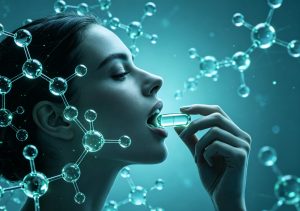




Discover the top anti-aging peptides used in modern skincare, including Palmitoyl Pentapeptide-4, GHK-Cu, Acetyl Hexapeptide-8, and Palmitoyl Tripeptide-1. Learn their functions, benefits, applications, and how to source cosmetic peptide ingredients from a reliable supplier.
Why Are Anti-Aging Peptides Important in Modern Skincare?
Modern skincare formulations increasingly use peptides as targeted cosmetic active ingredients for products designed around visible signs of Anti-aging skin aging, including fine lines, wrinkles, loss of firmness, uneven texture, and reduced skin resilience.
Peptides are short chains of amino acids. In cosmetic formulations, different peptide structures can be selected for different functional objectives. Depending on their design, they may function as signal peptides, carrier peptides, enzyme-inhibitor peptides, or neurotransmitter-associated peptides. This functional diversity makes peptides an important ingredient category for advanced anti-aging skincare.
Recent scientific evidence also supports continued interest in peptide-based approaches. A 2026 systematic review and meta-analysis evaluated 19 randomized controlled trials involving 1,341 participants and found evidence of benefits for some skin-aging outcomes, particularly hydration and brightness, while wrinkle effects were more modest and results for elasticity and skin density were inconsistent. The authors also emphasized the need for larger and better-standardized trials.
For cosmetic brands, however, the key question is not simply whether a peptide is popular. The more important questions are:
What Are Anti-Aging Peptides in Skincare?
Anti-aging peptides are short amino-acid sequences incorporated into skincare formulations to support cosmetic objectives associated with visible skin aging.
Unlike a single universal “anti-aging ingredient,” peptides represent a broad family of molecules with different structures and proposed functions.
For example:
| Peptide | Common Cosmetic Function | Typical Application |
|---|---|---|
| Palmitoyl Pentapeptide-4 | Signal peptide / skin-conditioning | Anti-aging creams, serums |
| Palmitoyl Tripeptide-1 | Signal peptide | Firming and wrinkle-care products |
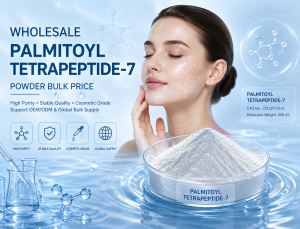
| Palmitoyl Tetrapeptide-7 | Skin-conditioning / anti-aging formulations | Creams, serums, eye care |
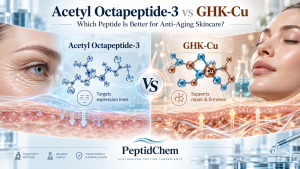
| Copper Tripeptide-1 / GHK-Cu | Copper-associated peptide | Repair-oriented and anti-aging formulations |
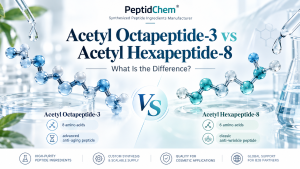
| Acetyl Hexapeptide-8 | Neurotransmitter-associated peptide | Expression-line and wrinkle-care products |
| Palmitoyl Tripeptide-38 | Advanced signal-peptide applications | Firming and wrinkle-care formulas |
The specific benefits of a finished skincare product depend on the peptide, concentration, delivery system, formulation, stability, and combination with other ingredients.
What Are the Top Anti-Aging Peptides Used in Modern Skincare?
Several peptide families have become particularly relevant to premium skincare development.
The most commercially important categories include:
- Palmitoyl Pentapeptide-4
- Palmitoyl Tripeptide-1
- Palmitoyl Tetrapeptide-7
- Copper Tripeptide-1 / GHK-Cu
- Acetyl Hexapeptide-8
- Palmitoyl Tripeptide-38
Each addresses anti-aging formulation from a somewhat different perspective.
What Is Palmitoyl Pentapeptide-4 and Why Is It Used in Anti-Aging Skincare?
Palmitoyl Pentapeptide-4 is one of the best-known signal peptide ingredients used in anti-aging skincare.
It is commonly associated with the Matrixyl peptide family and is based on a palmitoylated peptide sequence. Its lipid modification is relevant to formulation and skin-interaction considerations.
What is its primary function?
Palmitoyl Pentapeptide-4 is primarily used in formulations targeting the appearance of fine lines, wrinkles, and skin texture.
A controlled clinical study involving 93 women aged 35–55 evaluated a moisturizer containing 3 ppm palmitoyl-KTTKS over 12 weeks. The study reported significant improvements in fine lines and wrinkles compared with the moisturizer control and found the formulation to be well tolerated.
Where is Palmitoyl Pentapeptide-4 used?
Typical applications include:
- Anti-aging facial serums
- Firming creams
- Premium moisturizers
- Eye creams
- Neck-care products
- Professional skincare formulations
- Private-label anti-aging products
For ingredient manufacturers, Palmitoyl Pentapeptide-4 is therefore an important candidate for bulk cosmetic peptide supply and customized anti-aging formulations.
How Do Palmitoyl Tripeptide-1 and Palmitoyl Tetrapeptide-7 Work in Skincare?
Palmitoyl Tripeptide-1 and Palmitoyl Tetrapeptide-7 are frequently used together in modern anti-aging formulations.
They belong to the broader category of palmitoylated peptides and are commonly incorporated into products designed to improve the appearance of aging skin.
What makes this peptide combination attractive?
The two peptides can be formulated as complementary cosmetic actives in products focused on:
- Fine lines
- Wrinkle appearance
- Firmness
- Skin smoothness
- Overall skin conditioning
- Eye-area skincare
A 12-week clinical study of an anti-aging eye cream containing palmitoyl tripeptide-1 and palmitoyl tetrapeptide-7, alongside other actives, evaluated hydration, elasticity, photographs, and collagen density. The study reported improvements in fibroblast-related markers and collagen and elastin synthesis in its experimental models, as well as clinical improvements over the 12-week period.
Importantly, because the study evaluated a multi-ingredient formulation, its results should not automatically be attributed exclusively to either peptide.
Commercial applications
These peptides are suitable candidates for:
Anti-aging creams → Eye creams → Firming serums → Neck creams → Premium skincare → Private-label cosmetics
What Is Copper Tripeptide-1 (GHK-Cu)?
Copper Tripeptide-1, commonly known as GHK-Cu, is a copper-associated peptide that has attracted substantial scientific and cosmetic interest.
GHK refers to the tripeptide glycyl-L-histidyl-L-lysine, which can form a complex with copper.
Why is GHK-Cu popular in skincare?
Copper-associated peptides are investigated for their relationships with:
- Extracellular matrix processes
- Collagen-related pathways
- Skin repair
- Fibroblast activity
- Tissue remodeling
- Skin-conditioning applications
Earlier research investigated GHK-Cu and synthetic analogues in wound-healing models and cultured fibroblasts.
More recent research continues to explore copper-tripeptide complexes and skin repair mechanisms. A 2026 study reported that certain copper-tripeptide complexes promoted cell migration in a scratch-wound model without cytotoxicity at the tested concentrations, although these findings are experimental and should not be interpreted as proof of clinical cosmetic efficacy.
What products use Copper Tripeptide-1?
GHK-Cu can be considered for:
- Anti-aging serums
- Skin-conditioning products
- Repair-oriented skincare
- Firming formulations
- Premium facial treatments
- Advanced cosmetic peptide blends
Copper Tripeptide-1 powder is an important search term for brands seeking specialized cosmetic peptide raw materials.
What Is Acetyl Hexapeptide-8 and What Does It Do?
Acetyl Hexapeptide-8, often abbreviated as AH-8, is another widely discussed cosmetic peptide for wrinkle-care formulations.
It is particularly associated with the appearance of dynamic facial lines, making it popular in serums, eye products, and expression-line formulations.
A 2025 review described acetyl hexapeptide-8 as a biomimetic peptide widely used in topical formulations intended for anti-aging, scar-care, and skin-rejuvenation applications, while also highlighting the importance of understanding skin permeability and formulation performance.
Is there clinical evidence?
Recent research provides additional formulation-level evidence.
A 2026 study evaluated a serum containing acetyl hexapeptide-8 together with other active ingredients in ex-vivo and clinical studies. The researchers reported improvements in wrinkle appearance and several skin-quality parameters over 12 weeks. However, because the serum contained multiple active ingredients, the results should be understood as evidence for the finished formulation rather than acetyl hexapeptide-8 alone.
Common applications
Acetyl Hexapeptide-8 is commonly considered for:
- Anti-wrinkle serums
- Eye serums
- Expression-line products
- Facial creams
- Premium anti-aging formulations
- Multi-peptide skincare systems
What Is Palmitoyl Tripeptide-38?
Palmitoyl Tripeptide-38 is a newer-generation palmitoylated peptide frequently associated with advanced anti-aging and wrinkle-care formulations.
It is used in cosmetic development where brands want to build formulas around:
- Fine-line appearance
- Wrinkle-care
- Skin firmness
- Smoothness
- Premium peptide positioning
Its commercial appeal comes partly from its compatibility with the broader trend toward multi-peptide skincare systems, where several peptide technologies are combined rather than relying on a single active.
For B2B brands, this creates opportunities for developing custom peptide blends, high-value serums, eye-care products, and premium anti-aging formulations.
How Do Different Anti-Aging Peptides Compare?
Choosing a peptide should start with the desired cosmetic function rather than simply selecting the most popular ingredient.
| Peptide | Main Positioning | Suitable Product Types |
| Palmitoyl Pentapeptide-4 | Fine-line and wrinkle appearance | Serums, creams |
| Palmitoyl Tripeptide-1 | Signal-peptide skincare | Firming creams, serums |
| Palmitoyl Tetrapeptide-7 | Skin-conditioning / anti-aging | Eye creams, facial creams |
| Copper Tripeptide-1 | Copper-associated skin-conditioning | Serums, repair-oriented products |
| Acetyl Hexapeptide-8 | Expression-line / wrinkle appearance | Serums, eye products |
| Palmitoyl Tripeptide-38 | Advanced wrinkle-care | Premium serums and creams |
Key formulation principle: A peptide’s commercial value depends not only on its name but also on purity, identity, stability, formulation compatibility, documentation, and finished-product performance.
Why Are Cosmetic Brands Choosing Peptides Instead of Using Only Traditional Anti-Aging Ingredients?
Peptides offer a different formulation strategy from ingredients such as retinoids, AHAs, antioxidants, or moisturizing agents.
They can be incorporated into formulas specifically designed around targeted cosmetic functions, making them particularly attractive for premium skincare development.
The 2026 systematic review of peptide interventions found evidence supporting improvements in some skin-aging outcomes, but also reported inconsistent effects for elasticity and skin density. This reinforces an important point for brands: peptides are promising cosmetic actives, but individual peptide performance should be evaluated based on the specific ingredient and formulation rather than broad claims about all peptides.
Peptides are therefore best viewed as one component of a comprehensive anti-aging formulation strategy.
What Should Brands Look for When Buying Cosmetic Peptide Ingredients?
Selecting a cosmetic peptide supplier is critical because peptide performance starts with raw-material quality.
Global buyers should evaluate:
1. Identity and purity
The supplier should provide appropriate analytical documentation supporting peptide identity and purity.
2. Batch-to-batch consistency
Consistent manufacturing is essential for brands developing repeatable formulations.
3. Analytical documentation
Depending on the peptide, documentation may include:
- HPLC
- LC-MS / MS
- Molecular weight information
- Purity testing
- Residual solvent information
- Heavy-metal testing
- Microbiological specifications
- Certificate of Analysis
4. Formulation compatibility
Brands should consider:
- pH stability
- Water solubility
- Temperature sensitivity
- Oxidation sensitivity
- Compatibility with preservatives
- Compatibility with other active ingredients
- Packaging requirements
5. Technical support
A reliable cosmetic peptide manufacturer should be able to provide technical information that helps formulators evaluate the ingredient for their intended application.
Why Choose PeptidChem for Synthesized Cosmetic Peptide Ingredients?
PeptidChem mainly manufactures synthesized peptide ingredients, supporting cosmetic brands, formulators, distributors, and ingredient buyers seeking specialized peptide raw materials.
For global customers, a synthesized cosmetic peptide supplier can provide a more focused approach to ingredient sourcing than a general-purpose raw-material distributor.
PeptidChem’s product positioning can be built around:
- Synthesized cosmetic peptide ingredients
- Anti-aging peptide raw materials
- Bulk peptide ingredient supply
- Cosmetic-grade peptide development
- Customized peptide solutions
- Technical documentation
- Batch consistency
- B2B ingredient sourcing
- Support for cosmetic formulation development
For brands developing premium anti-aging products, the objective is not simply to purchase a peptide powder. It is to obtain a consistent, documented, formulation-ready ingredient that can support reliable product development.
What Are the Best Applications for Anti-Aging Peptides?
Anti-aging peptides can be incorporated into a wide range of cosmetic products.
Facial Serums
Serums provide a strong platform for peptide positioning because they can be designed around concentrated active-ingredient systems.
Anti-Aging Creams
Peptides can be combined with emollients, humectants, antioxidants, ceramides, and other skin-conditioning ingredients.
Eye Creams
Peptide-based eye products are commonly positioned around fine lines, smoothness, firmness, and skin conditioning.
Neck and Décolleté Products
Peptide formulations can also be developed specifically for visible signs of aging on the neck and décolleté.
Professional Skincare
Peptide-containing formulations can be incorporated into professional cosmetic treatment systems where permitted by local regulations.
Private-Label Skincare
Private-label brands can use peptide ingredients to create premium positioning around advanced skincare technology.
How Should Brands Combine Anti-Aging Peptides in a Formulation?
There is no universal “best peptide combination.”
A rational formulation strategy is to select peptides according to different complementary cosmetic functions.
For example:
Signal peptide + copper-associated peptide + expression-line peptide
can create a multi-dimensional product concept addressing different aspects of visible skin aging.
However, formulators should validate:
- Ingredient compatibility
- Concentration
- Stability
- pH
- Preservation system
- Packaging
- Sensory properties
- Finished-product efficacy
- Regulatory requirements in the target market
The final product should be tested as a complete formulation rather than assuming that combining several peptides automatically increases efficacy.
What Regulatory Claims Should Cosmetic Brands Avoid?
This is particularly important when marketing anti-aging peptide products internationally.
In the United States, the FDA explains that a cosmetic product may make appearance-related claims such as moisturizing or making lines and wrinkles less noticeable. However, claims that a product changes the structure or function of the skin can cause the product to fall under drug regulations.
Therefore, brands should carefully distinguish between cosmetic claims such as:
“helps improve the appearance of fine lines”
and stronger claims such as:
“stimulates collagen production in the skin” or “removes wrinkles.”
Claims must be truthful, appropriately substantiated, and compliant with the regulations of the target market.
How Can Brands Choose the Right Anti-Aging Peptide Supplier?
When searching for a cosmetic peptide supplier, buyers should consider five major factors:
Purity → Consistency → Documentation → Technical Support → Supply Capability
A supplier that can provide only a product name and price may not provide enough information for professional formulation development.
Instead, B2B buyers should look for suppliers capable of supporting:
- Ingredient identification
- Purity specifications
- Batch documentation
- Quality control
- Technical data
- Packaging information
- Storage recommendations
- Application guidance
- Commercial-scale supply
This is particularly important when purchasing 📩 Contact us to request a quotation or discuss your specific requirements. Let’s build a strong partnership supply for your anti-aging cosmetics product line for bulk cosmetic peptides manufacturing.
Also See:
What Is Copper Tripeptide Powder and Why Is It a Leading Ingredient in Anti-Aging Skincare
How Does Madecassoside Support Skin Repair, Hydration, and Anti-Inflammatory Skincare Applications
How Does Madecassoside Support Skin Repair, Hydration, and Anti-Inflammatory Skincare Applications
FAQs:
Q1. What are the best peptides for anti-aging skincare?
The most commonly used anti-aging peptides include:
- Palmitoyl Pentapeptide-4
- Copper Tripeptide-1
- Acetyl Hexapeptide-8
- Palmitoyl Tripeptide-1
- Palmitoyl Tetrapeptide-7
Q2. Are cosmetic peptides safe?
Most cosmetic peptides are considered well tolerated when properly formulated and tested according to cosmetic safety requirements.
Q3. Can peptides replace retinol?
Peptides and retinol work through different mechanisms. Peptides are generally considered gentler and can be combined with other anti-aging ingredients depending on formulation requirements.
Q4. What is the difference between peptide powder and peptide solution?
Peptide powders are commonly supplied as raw ingredients for formulation manufacturing, while peptide solutions are pre-dissolved formats designed for easier incorporation.
Q5. Can PeptidChem provide bulk cosmetic peptide ingredients?
Yes. PeptidChem specializes in synthesized peptide ingredients for cosmetic manufacturers requiring reliable peptide raw materials.
References
Nukaly HY, et al. Oral and topical peptides for skin aging: systematic review and meta-analysis of randomized controlled trials. Frontiers in Medicine. 2026;13:1618306. DOI: 10.3389/fmed.2026.1618306.
Gorouhi F, Maibach HI. Role of topical peptides in preventing or treating aged skin. International Journal of Cosmetic Science. 2009;31(5):327–345. DOI: 10.1111/j.1468-2494.2009.00490.x.
Topical palmitoyl pentapeptide provides improvement in photoaged human facial skin. International Journal of Cosmetic Science. DOI: 10.1111/j.1467-2494.2005.00261.x.
Zhu M, et al. The effect of a serum containing acetyl hexapeptide-8, dipeptide diaminobutyroyl benzylamide diacetate and gluconolactone on skin biomarkers, wrinkles and skin texture. International Journal of Cosmetic Science. 2026. DOI: 10.1111/ics.70087.
Zdrada-Nowak J, Surgiel-Gemza A, Szatkowska M. Acetyl Hexapeptide-8 in Cosmeceuticals—A Review of Skin Permeability and Efficacy. International Journal of Molecular Sciences. DOI: 10.3390/ijms26125722.
Adnan SB, et al. Exploring the Role of Tripeptides in Wound Healing and Skin Regeneration: A Comprehensive Review. International Journal of Medical Sciences. 2025;22(16):4175–4200. DOI: 10.7150/ijms.118118.
U.S. Food & Drug Administration. Wrinkle Treatments and Other Anti-aging Products.
U.S. Food & Drug Administration. Cosmetics Labeling Claims.
Aguilar L, et al. Copper(II)-Tripeptide Complexes as Potential Skin Healing Agents: Synthesis, Characterization, and Wound Repair Ability. ChemMedChem. 2026. DOI: 10.1002/cmdc.202501023.