



Discover how cosmetic brands use D-Panthenol Powder in moisturizing skincare formulations. Learn formulation benefits, applications, dosage, compatibility, and sourcing options from a professional cosmetic peptide ingredient supplier.
How Can Cosmetic Brands Use D-Panthenol Powder in Moisturizing Skincare Formulations?
Pantethine Powder consumers increasingly demand skincare products that provide deep hydration, skin barrier support, and long-lasting comfort. Cosmetic brands are therefore searching for multifunctional active ingredients that improve product performance while maintaining excellent safety profiles.
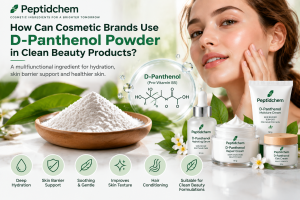
D-Panthenol Powder, also known as Dexpanthenol or Provitamin B5, is one of the most widely used moisturizing ingredients in skincare, haircare, and dermatological formulations. It functions as a humectant, skin-conditioning agent, and barrier-supporting active.
For cosmetic manufacturers developing:
- moisturizing creams;
- facial serums;
- barrier repair products;
- sensitive skin formulations;
- anti-aging skincare;
- post-treatment recovery products,
D-Panthenol Powder provides a scientifically supported solution.
What Is D-Panthenol Powder?
D-Panthenol Powder is the stable powder form of D-Panthenol (Dexpanthenol), a derivative of Vitamin B5 (pantothenic acid).
Its chemical properties allow it to attract and retain water in the skin, making it a valuable moisturizing active ingredient.
Basic Information
| Property | Description |
|---|---|
| INCI Name | Panthenol |
| Common Name | D-Panthenol / Dexpanthenol |
| Function | Humectant, moisturizer, skin conditioner |
| Appearance | White crystalline powder |
| Molecular Formula | C₉H₁₉NO₄ |
| CAS Number | 81-13-0 |
D-Panthenol is converted into pantothenic acid (Vitamin B5) after application, supporting biological processes involved in skin maintenance.
Why Do Cosmetic Brands Use D-Panthenol Powder in Moisturizing Products?
Cosmetic brands use D-Panthenol Powder because it provides multiple skincare benefits.
1. Powerful Moisturizing Effect
D-Panthenol works as a humectant by attracting and binding water molecules within the stratum corneum.
Benefits include:
- improved skin hydration;
- reduced dryness;
- smoother skin texture;
- enhanced softness.
It is particularly suitable for dry and dehydrated skin formulations.
2. Supports Skin Barrier Function
A damaged skin barrier leads to:
- increased transepidermal water loss (TEWL);
- dryness;
- sensitivity;
- irritation.
D-Panthenol helps improve skin comfort by supporting hydration retention and barrier recovery.
This makes it valuable in:
- barrier repair creams;
- sensitive skin products;
- dermatologist-inspired skincare.
3. Soothing and Skin Conditioning Properties
Modern consumers increasingly prefer gentle skincare products.
D-Panthenol is commonly included in formulations designed for:
- irritated skin;
- redness-prone skin;
- after-sun products;
- post-procedure skincare.
The Cosmetic Ingredient Review (CIR) Expert Panel concluded that Panthenol and related ingredients are safe for use in cosmetics under current practices.
What Types of Cosmetic Products Can Use D-Panthenol Powder?
D-Panthenol Powder can be incorporated into multiple cosmetic categories.
Facial Skincare
Applications:
- moisturizing creams;
- hydration serums;
- facial lotions;
- barrier repair creams;
- sleeping masks.
Sensitive Skin Products
Applications:
- calming creams;
- redness care formulations;
- gentle cleansers.
Anti-Aging Skincare
Combination with:
- peptides;
- hyaluronic acid;
- ceramides;
- niacinamide.
D-Panthenol improves hydration, helping aging skin maintain softness and elasticity.
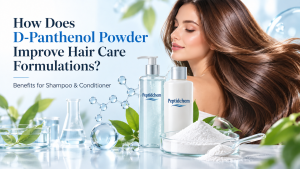
Haircare Products
Applications:
- conditioners;
- hair masks;
- leave-in treatments.
How Much D-Panthenol Powder Should Brands Add Into Formulations?
Typical cosmetic usage levels depend on the product type.
| Product Type | Recommended D-Panthenol Level |
|---|---|
| Daily moisturizer | 1–5% |
| Facial serum | 1–3% |
| Barrier repair cream | 3–5% |
| Sensitive skin product | 2–5% |
| Hair conditioner | 0.5–3% |
The exact concentration should be optimized according to formulation objectives, stability testing, and regulatory requirements.
How Should Cosmetic Manufacturers Formulate With D-Panthenol Powder?
Step 1: Select High-Purity Raw Material
Brands should evaluate:
- purity level;
- cosmetic grade certification;
- COA documentation;
- microbial testing;
- heavy metal testing.
A reliable cosmetic ingredient supplier ensures consistent quality and traceability.
Step 2: Add During the Water Phase
Because D-Panthenol Powder is water soluble, formulators commonly dissolve it during the aqueous phase.
Recommended formulation considerations:
- avoid excessive heating;
- control pH;
- ensure complete dissolution.
Step 3: Combine With Complementary Actives
D-Panthenol works well with:
Hyaluronic Acid
Provides:
- immediate hydration;
- moisture retention.
Niacinamide
Provides:
- barrier support;
- improved skin appearance.
Ceramides
Provide:
- lipid barrier reinforcement.
Cosmetic Peptides
Peptidchem is combined with D-Panthenol create advanced anti-aging and repair-oriented formulations.
For cosmetic brands developing peptide-based skincare, sourcing both synthetic peptide ingredients and moisturizing actives from one supplier can simplify formulation development and quality management.
Why Should Brands Source D-Panthenol Powder From a Professional Cosmetic Ingredient Supplier?
A qualified supplier provides:
Quality Assurance
Including:
- Certificate of Analysis (COA);
- specification sheets;
- safety documentation;
- batch consistency.
Technical Support
Professional suppliers support:
- formulation guidance;
- ingredient compatibility;
- application recommendations.
Supply Stability
Large-scale cosmetic brands require:
- reliable production capacity;
- consistent quality;
- international shipping capability.
Companies specializing in synthetic peptide ingredients and cosmetic active compounds can provide integrated solutions for advanced skincare development.
What Makes D-Panthenol Powder Valuable for Premium Skincare Brands?
Premium skincare consumers increasingly look for ingredients supported by science.
D-Panthenol offers:
✔ Proven moisturizing performance
✔ Excellent formulation compatibility
✔ Broad consumer acceptance
✔ Suitable for sensitive skin products
✔ Compatibility with peptide-based skincare systems
This makes it an attractive ingredient for:
- clean beauty brands;
- dermatologist skincare brands;
- OEM/ODM manufacturers;
- private label skincare companies.
D-Panthenol Powder vs Other Moisturizing Ingredients
| Ingredient | Main Function |
|---|---|
| D-Panthenol | Hydration + barrier support |
| Hyaluronic Acid | Water retention |
| Glycerin | Humectant hydration |
| Ceramides | Lipid barrier repair |
| Peptides | Anti-aging signaling |
Advanced formulations often combine these ingredients for multifunctional skincare performance.
Conclusion:
D-Panthenol Powder remains a valuable cosmetic active ingredient because it combines hydration, skin conditioning, and barrier-supporting properties in a single multifunctional molecule.📩 Contact us for cosmetic brands developing innovative skincare products, combining D-Panthenol with synthetic peptides and advanced active ingredients provides an opportunity to create premium formulations targeting hydration, repair, and anti-aging needs.
Also See
Best Peptides for Wrinkles and Fine Lines
Collagen Peptides vs Signal Peptides: Different Approaches to Skin Anti-Aging
How Can Private Label Skincare Brands Choose the Right Anti-Aging Peptide Ingredients
FAQs:
Q1. Is D-Panthenol Powder safe for cosmetic products?
Yes. Panthenol has been assessed for cosmetic safety and is widely used in skincare and haircare products.
Q2. Is D-Panthenol the same as Vitamin B5?
D-Panthenol is a provitamin form that can convert into pantothenic acid (Vitamin B5) in the skin.
Q3. Can D-Panthenol Powder be used with peptides?
Yes. D-Panthenol is compatible with many cosmetic peptides and is commonly used in advanced anti-aging and repair formulations.
Q4. What is the shelf life of D-Panthenol Powder?
Shelf life depends on supplier specifications, packaging, and storage conditions. Moisture protection is important because Panthenol is hygroscopic.
Q5. Where can cosmetic brands buy bulk D-Panthenol Powder?
Brands should purchase from qualified cosmetic ingredient suppliers providing:
- GMP documentation;
- COA;
- MSDS;
- technical support;
- international supply capability.
References
Scott LN, Fiume M, Bergfeld WF, et al. Safety Assessment of Panthenol, Pantothenic Acid, and Derivatives as Used in Cosmetics. International Journal of Toxicology. 2022.
Ebner F, Heller A, Rippke F, Tausch I. Topical use of dexpanthenol in skin disorders. American Journal of Clinical Dermatology. 2002.
CIR Expert Panel. Safety Assessment of Panthenol, Pantothenic Acid, and Derivatives. Cosmetic Ingredient Review.
PubChem. Dexpanthenol Chemical Information. National Center for Biotechnology Information.