





Compare Acetyl Hexapeptide-8 and SNAP-8 cosmetic peptides. Learn differences, mechanisms, purity requirements, and how synthesized peptide ingredient suppliers support skincare brands with high-quality peptide raw materials.
Acetyl Hexapeptide-8 vs SNAP-8: A Complete Guide for Cosmetic Peptide Buyers
The global demand for peptide-based skincare ingredients continues to grow as cosmetic brands seek advanced anti-aging actives with scientific support. Among the most recognized neurotransmitter-targeting cosmetic peptides are Acetyl Hexapeptide-8 (AH-8, commonly known as Argireline® and SNAP-8 (Acetyl Octapeptide-3.Both peptides are synthetic cosmetic ingredients designed based on the mechanism of the SNAP-25 protein involved in the SNARE complex. They are widely evaluated in premium anti-wrinkle formulations, including serums, eye creams, facial emulsions, and professional skincare products.For skincare brands, distributors, and formulation companies, understanding the differences between Acetyl Hexapeptide-8 and SNAP-8 is essential when selecting a reliable cosmetic peptide ingredient supplier.
What Is Acetyl Hexapeptide-8?
Acetyl Hexapeptide-8 is a synthetic six-amino-acid peptide widely used in cosmetic anti-aging formulations.
It was developed as a biomimetic peptide inspired by the N-terminal sequence of SNAP-25, a protein involved in neurotransmitter vesicle release. By interacting with the SNARE complex pathway, Acetyl Hexapeptide-8 is designed to reduce the appearance of expression lines caused by repetitive facial movements.
Common Cosmetic Applications:
- Anti-wrinkle serums
- Eye contour creams
- Facial moisturizers
- Firming treatments
- Premium anti-aging skincare products
Acetyl Hexapeptide-8 Product Profile
| Specification | Information |
|---|---|
| Ingredient Name | Acetyl Hexapeptide-8 |
| Common Name | Argireline® peptide |
| Peptide Type | Synthetic hexapeptide |
| Application | Cosmetic anti-aging ingredient |
| Function | Expression wrinkle care |
| Form | White lyophilized powder |
| Manufacturing Method | Solid-phase peptide synthesis (SPPS) |
| Quality Testing | HPLC, LC-MS, purity analysis |
What Is SNAP-8 Peptide?
SNAP-8, also known as Acetyl Octapeptide-3, is an eight-amino-acid synthetic peptide developed as an extended version of Acetyl Hexapeptide-8.
The peptide sequence contains additional amino acids compared with AH-8, creating a longer peptide structure designed for improved interaction with the SNARE-related pathway.
SNAP-8 is mainly used in advanced skincare formulations targeting:
- Dynamic wrinkles
- Expression lines
- Facial smoothing products
- Luxury anti-aging formulations
SNAP-8 Product Profile
| Specification | Information |
|---|---|
| Ingredient Name | Acetyl Octapeptide-3 |
| Common Name | SNAP-8 |
| CAS Number | 868844-74-0 |
| Peptide Type | Synthetic octapeptide |
| Molecular Weight | Approximately 1075 Da |
| Application | Cosmetic active ingredient |
| Manufacturing Method | Solid-phase peptide synthesis |
| Testing Methods | HPLC, LC-MS, peptide identity confirmation |
Acetyl Hexapeptide-8 vs SNAP-8: Key Differences
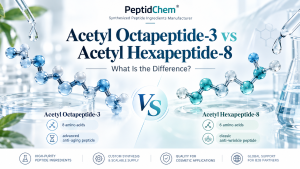
The main difference is peptide length and molecular structure.
| Feature | Acetyl Hexapeptide-8 | SNAP-8 |
|---|---|---|
| Peptide Length | 6 amino acids | 8 amino acids |
| Alternative Name | AH-8 / Argireline® | Acetyl Octapeptide-3 |
| Molecular Design | Original biomimetic peptide | Extended peptide structure |
| Target Application | Expression wrinkle reduction | Advanced anti-aging formulations |
| Cosmetic Positioning | Established peptide active | Next-generation peptide ingredient |
| Formulation Use | Serums, creams, gels | Premium anti-aging products |
Both peptides are designed around the same biological concept: influencing SNARE complex formation associated with neurotransmitter release.
How Do Acetyl Hexapeptide-8 and SNAP-8 Work?
Facial expression wrinkles develop partly due to repeated muscle contractions. The SNARE complex plays an important role in neurotransmitter release at nerve terminals.
Acetyl Hexapeptide-8 and SNAP-8 are designed to mimic parts of SNAP-25, potentially interfering with SNARE complex assembly and reducing signaling related to muscle contraction.
Simplified Mechanism:
Synthetic Peptide Application
↓
Interaction with SNAP-25 related pathway
↓
Modulation of SNARE complex formation
↓
Reduced appearance of expression lines
Which Peptide Is Better: Acetyl Hexapeptide-8 or SNAP-8?
The best choice depends on product positioning, formulation goals, and market requirements.
Choose Acetyl Hexapeptide-8 When:
✔ Developing proven anti-aging skincare products
✔ Targeting mass-market premium skincare
✔ Looking for an established cosmetic peptide ingredient
✔ Building classic anti-wrinkle formulations
Choose SNAP-8 When:
✔ Developing advanced peptide skincare lines
✔ Creating premium anti-aging products
✔ Marketing next-generation peptide technology
✔ Differentiating from traditional peptide formulations
For innovative skincare brands, combining multiple peptide technologies may provide broader anti-aging positioning.
Why Choose a Professional Synthesized Peptide Ingredient Manufacturer?
A professional peptidchem manufacturer must control every stage of peptide production, including synthesis, purification, identification, and quality testing.
A reliable synthesized peptide ingredients supplier typically provides:
1. Advanced Solid-Phase Peptide Synthesis (SPPS)
SPPS allows controlled peptide chain assembly and is widely used for manufacturing cosmetic peptide raw materials.
2. High Purity Testing
Quality evaluation normally includes:
- HPLC purity analysis
- LC-MS molecular confirmation
- Residual solvent testing
- Heavy metal testing
- Microbial testing
3. Batch Documentation
Professional cosmetic peptide suppliers provide:
- Certificate of Analysis (COA)
- Technical Data Sheet (TDS)
- Safety Data Sheet (SDS)
- Stability information
Our Expertise as a Synthesized Peptide Ingredients Manufacturer
We specialize in manufacturing synthesized peptide ingredients for cosmetic and skincare applications.
Our peptide manufacturing capabilities support:
- High-purity cosmetic peptides
- Customized peptide synthesis
- Bulk peptide ingredient supply
- OEM and private-label skincare development
- Technical documentation support
By combining peptide synthesis technology with strict quality control systems, we help cosmetic brands, distributors, and formulation companies develop innovative anti-aging products.
Cosmetic Peptide Supplier Comparison Checklist
Before selecting a peptide ingredient supplier, buyers should evaluate:
| Evaluation Factor | Importance |
|---|---|
| Peptide purity | Ensures formulation consistency |
| Manufacturing technology | Determines product quality |
| HPLC/LC-MS testing | Confirms peptide identity |
| Production capacity | Supports bulk purchasing |
| Documentation | Helps regulatory compliance |
| Custom synthesis ability | Supports product innovation |
Conclusion
Acetyl Hexapeptide-8 and SNAP-8 are two important synthetic peptides used in modern anti-aging skincare formulations. While Acetyl Hexapeptide-8 provides an established solution for expression wrinkle care, SNAP-8 offers an extended peptide structure for advanced cosmetic development.📩 Contact us to request a quotation or discuss your specific requirements. Let’s build a strong partnership supply for your anti-aging cosmetics product line.
Also See
How Does Palmitoyl Tripeptide-1 Powder Improve the Performance of Professional Skincare Products
Why Do Formulators Use Palmitoyl Tetrapeptide-7 Powder in Anti-Aging and Skin Repair Solutions
Why Is Acetyl Tetrapeptide-5 Powder Used in Eye Care and Hydrating Skincare Formulations
FAQs:
Q1: Are Acetyl Hexapeptide-8 and SNAP-8 the same ingredient?
No. Both are synthetic cosmetic peptides related to the SNAP-25 pathway, but Acetyl Hexapeptide-8 contains six amino acids while SNAP-8 contains eight amino acids.
Q2: Which peptide is more suitable for premium skincare brands?
SNAP-8 is often selected for premium formulations because it represents an extended peptide structure, while Acetyl Hexapeptide-8 remains one of the most recognized cosmetic peptides worldwide.
Q3: Can peptide ingredients be customized for cosmetic brands?
Yes. Professional synthesized peptide manufacturers can provide customized peptide sequences, packaging options, and technical support according to brand requirements.
Q4: What purity should cosmetic peptide powders have?
High-quality cosmetic peptide powders are commonly evaluated using analytical methods such as HPLC and LC-MS. Many commercial cosmetic peptide suppliers provide purity specifications around high-percentage peptide content depending on product requirements.
Q5: How should peptide powders be stored?
Most synthetic peptide powders should be protected from moisture, excessive heat, and direct light. Storage conditions depend on the specific peptide stability profile.
References
Avci, P., et al. Acetyl Hexapeptide-8 in Cosmeceuticals—A Review of Skin Permeability and Efficacy. International Journal of Molecular Sciences, 2025.
Blanes-Mira, C., et al. “A synthetic hexapeptide derived from SNAP-25 inhibits acetylcholine release.” International Journal of Cosmetic Science.
Gerber, A., et al. “Botulinum neurotoxin and SNARE protein interactions.” Molecular Biology Reviews.
International Federation of Societies of Cosmetic Chemists (IFSCC). Cosmetic peptide technology research publications.
Lupo, M.P. “Antioxidants and peptides in cosmetic formulations.” Dermatologic Therapy.
Cosmetic Ingredient Review (CIR). Safety assessments of cosmetic peptides.
European Commission Cosmetic Ingredient Database (CosIng).
FDA Cosmetic Ingredient Guidance Documents.