





Compare Acetyl Hexapeptide-8 and SNAP-8 peptides for anti-aging skincare. Discover mechanisms, benefits, applications, and a trusted cosmetic peptide manufacturer.
Acetyl Hexapeptide-8 vs SNAP-8: Which Cosmetic Peptide Is Better for Anti-Aging Skincare?
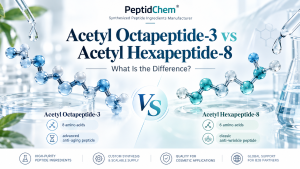
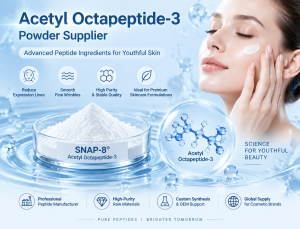
Both Acetyl Hexapeptide-8 and SNAP-8 are advanced neuropeptides designed to reduce the appearance of expression wrinkles by targeting the SNARE complex involved in facial muscle contraction. However, SNAP-8 (Acetyl Octapeptide-3) is an extended peptide sequence developed from Acetyl Hexapeptide-8, offering enhanced anti-wrinkle activity in some cosmetic applications.
For cosmetic brands seeking a reliable anti-aging active ingredient:
- Acetyl Hexapeptide-8 remains one of the most recognized and commercially established anti-aging peptides.
- SNAP-8 may provide stronger wrinkle-reducing potential due to its longer peptide structure.
- The final performance depends strongly on peptide purity, formulation system, concentration, and delivery technology.
As a professional synthetic cosmetic peptide manufacturer, we provide high-quality Acetyl Hexapeptide-8, SNAP-8, and customized peptide ingredients for global skincare brands.
What Are Acetyl Hexapeptide-8 and SNAP-8?
Acetyl Hexapeptide-8 is a synthetic hexapeptide consisting of six amino acids. It is one of the most widely used cosmetic neuropeptides for anti-aging formulations.
It is designed to mimic a fragment of SNAP-25, a protein involved in neurotransmitter release. By influencing SNARE complex activity, Acetyl Hexapeptide-8 may reduce excessive facial muscle contraction and soften the appearance of dynamic wrinkles.
Common Cosmetic Applications:
- Anti-wrinkle serums
- Eye creams
- Forehead wrinkle treatments
- Expression line reduction products
- Premium anti-aging formulations
SNAP-8 (Acetyl Octapeptide-3)
SNAP-8 is an octapeptide derived from the same biological concept as Acetyl Hexapeptide-8 but contains eight amino acids.
Because of its extended peptide sequence, SNAP-8 was developed to improve interaction with the SNARE-related pathway and provide enhanced anti-expression wrinkle activity.
Common Cosmetic Applications:
- Botox-like skincare products
- Advanced anti-aging serums
- Luxury peptide formulations
- Professional skincare products
How Do Acetyl Hexapeptide-8 and SNAP-8 Work?
Both peptides belong to the category of neurotransmitter-inhibiting cosmetic peptides.
Facial expressions such as smiling, frowning, and squinting repeatedly activate facial muscles. Over time, repetitive contraction contributes to dynamic wrinkles.
Acetyl Hexapeptide-8 and SNAP-8 are designed to influence the formation of the SNARE complex, which regulates neurotransmitter release responsible for muscle contraction.
The theoretical pathway:
Reduced neurotransmitter release → Reduced facial muscle contraction → Softer expression lines → Improved wrinkle appearance
However, topical peptides are considerably less potent than injectable botulinum toxin and are intended for cosmetic improvement rather than medical treatment.
Acetyl Hexapeptide-8 vs SNAP-8: Scientific Comparison
| Feature | Acetyl Hexapeptide-8 | SNAP-8 |
|---|---|---|
| INCI Name | Acetyl Hexapeptide-8 | Acetyl Octapeptide-3 |
| Peptide Length | 6 amino acids | 8 amino acids |
| Peptide Category | Neurotransmitter-inhibiting peptide | Neurotransmitter-inhibiting peptide |
| Primary Target | Expression wrinkles | Expression wrinkles |
| Market Recognition | Very high | High and growing |
| Cosmetic History | Longer commercial history | Newer generation peptide |
| Formulation Use | Serums, creams, eye products | Premium anti-aging products |
| Supplier Demand | Very high | Increasing |
Which Peptide Has Better Anti-Aging Performance?
SNAP-8 is often considered a next-generation alternative because the longer peptide sequence may provide improved biological interaction.
Some cosmetic studies have reported significant reductions in wrinkle appearance after topical SNAP-8 application, particularly in expression wrinkle areas.
However, Acetyl Hexapeptide-8 has:
- More extensive commercial acceptance
- Greater consumer recognition
- Broader formulation experience
- Strong demand among cosmetic manufacturers
Therefore:
For established skincare brands:
Acetyl Hexapeptide-8 remains a reliable and market-proven choice.
For premium anti-aging innovation:
SNAP-8 can provide differentiation as an advanced peptide active.
Why Choose a Professional Cosmetic Peptide Manufacturer?
The effectiveness of cosmetic peptides depends not only on peptide selection but also on:
- Peptide purity
- Molecular identification
- Residual solvent control
- Heavy metal testing
- Microbial safety
- Batch consistency
- Stability evaluation
A professional peptidchem manufacturer ensures that cosmetic brands receive reliable raw materials suitable for:
- Serum formulation
- Cream formulation
- Eye-care products
- OEM/private-label skincare development
Our Cosmetic Peptide Manufacturing Capability
We specialize in the synthesis and supply of cosmetic peptide ingredients, including advanced anti-aging peptides.
Our capabilities include:
✔ Custom synthetic peptide production
✔ Cosmetic-grade peptide raw materials
✔ High-purity peptide synthesis
✔ Bulk supply for skincare manufacturers
✔ Quality documentation support
✔ OEM ingredient solutions
Our peptide ingredients are developed for cosmetic companies seeking reliable supply chains and innovative anti-aging solutions.
How to Select Between Acetyl Hexapeptide-8 and SNAP-8?
✔ You need a widely recognized anti-aging peptide
✔ Developing mainstream skincare products
✔ Targeting expression wrinkles
✔ Seeking cost-effective formulation solutions
Choose SNAP-8 when:
✔ Developing premium anti-aging products
✔ Seeking innovative peptide positioning
✔ Targeting advanced wrinkle-care markets
✔ Differentiating your skincare formula
Conclusion:
Both Acetyl Hexapeptide-8 and SNAP-8 represent important innovations in cosmetic anti-aging peptide technology.Acetyl Hexapeptide-8 offers proven market acceptance and formulation reliability, while SNAP-8 provides an advanced peptide option for premium anti-aging products.For skincare brands developing next-generation anti-aging formulations, selecting a trusted cosmetic peptide manufacturer is equally important as selecting the peptide itself.📩 Contact us to request a quotation or discuss your specific requirements. Let’s build a strong partnership supply for your anti-aging cosmetics product line.
Also See
Why Is Acetyl Tetrapeptide-5 Powder Used in Eye Care and Hydrating Skincare Formulations
Why Do Formulators Use Palmitoyl Tetrapeptide-7 Powder in Anti-Aging and Skin Repair Solutions
What Makes Acetyl Octapeptide-3 Powder a Popular Ingredient in Anti-Wrinkle Skincare Formulas
FAQs:
Q1: Is Acetyl Hexapeptide-8 the same as Argireline?
No. Argireline is a commercial trademark associated with Acetyl Hexapeptide-8. The INCI ingredient name is Acetyl Hexapeptide-8.
Q2: Is SNAP-8 stronger than Acetyl Hexapeptide-8?
SNAP-8 was developed as an extended peptide version and may demonstrate enhanced anti-wrinkle activity. However, performance depends on formulation design, concentration, and delivery system.
Q3: Are Acetyl Hexapeptide-8 and SNAP-8 safe for cosmetics?
Both peptides are widely used cosmetic ingredients. Cosmetic safety depends on formulation concentration and regulatory compliance.
Q4: Can cosmetic brands buy Acetyl Hexapeptide-8 and SNAP-8 in bulk?
Yes. Cosmetic manufacturers typically purchase these peptides from specialized synthetic peptide suppliers in bulk quantities with quality documentation.
Q5: What is the recommended peptide purity for cosmetic applications?
High-purity cosmetic peptides are generally preferred because impurities may affect stability, appearance, and formulation performance.
References
Zdrada-Nowak J., et al. Acetyl Hexapeptide-8 in Cosmeceuticals—A Review of Skin Permeability and Efficacy. International Journal of Molecular Sciences, 2025.
Blanes-Mira C., et al. A synthetic hexapeptide derived from SNAP-25 with anti-wrinkle activity. International Journal of Cosmetic Science, 2002.
Olsson S.E., et al. Public Interest in Acetyl Hexapeptide-8: Longitudinal Analysis. JMIR Dermatology, 2024.
Nguyen T.T.M., et al. Non-Invasive Peptides as the Future of Botox Alternatives. Cosmetics, 2024.