



Discover the best cosmetic peptide ingredients for anti-aging skincare formulations. Explore synthesized peptides including GHK-Cu, Matrixyl peptides, Argireline, and collagen-supporting peptides from a professional peptide ingredient manufacturer and supplier.
What Are the Best Peptide Ingredients for Developing High-Performance Anti-Aging Skincare Products?
The global skincare industry is rapidly shifting toward science-driven anti-aging solutions, and cosmetic peptides have become some of the most sought-after active ingredients in advanced skincare formulations.Peptides are short chains of amino acids designed to support targeted biological functions in the skin, including collagen stimulation, skin barrier improvement, hydration enhancement, and wrinkle appearance reduction. Modern cosmetic formulations increasingly incorporate synthesized peptides because of their high purity, stability, and customizable performance.For cosmetic brands developing premium anti-aging serums, creams, and professional skincare products, selecting the right peptide ingredient is critical for achieving measurable product benefits.Scientific reviews have identified more than 100 commercially available cosmetic peptides with applications including collagen regulation, antioxidant protection, pigmentation control, and skin repair support.
Why Are Peptides Important Ingredients in Anti-Aging Skincare?
Wholesale palmitoyl tetrapeptide-7 powder skin aging is associated with reduced collagen synthesis, extracellular matrix degradation, oxidative stress, and decreased skin hydration.
Cosmetic peptides work mainly through four mechanisms:
1. Collagen Signal Activation
Certain peptides act as messenger molecules that stimulate fibroblast activity and support collagen-related pathways.
Examples:
- Palmitoyl tripeptide-1
- Palmitoyl tetrapeptide-7
- Matrixyl® peptides
These peptides are commonly used in anti-wrinkle creams and firming formulations.
2. Copper-Dependent Skin Repair
Copper peptides provide copper ions required for enzymatic processes involved in skin regeneration.
Example:
Copper Tripeptide-1 (GHK-Cu)
Benefits:
- Supports extracellular matrix remodeling
- Helps improve skin firmness
- Provides antioxidant-related activity
3. Expression Line Reduction
Some peptides influence facial muscle contraction pathways, helping reduce the appearance of expression wrinkles.
Example:
Acetyl Hexapeptide-8 (Argireline)
Common applications:
- Eye creams
- Forehead wrinkle treatments
- Premium anti-aging serums
4. Skin Barrier and Hydration Improvement
Certain peptides support skin resilience and improve the overall appearance of aged skin.
Recent cosmetic peptide research highlights their potential roles in collagen regulation, hyaluronic acid production, antioxidant defense, and cellular protection.
What Are the Best Peptide Ingredients for Anti-Aging Skincare Formulations?
The most widely used high-performance cosmetic peptides include:
1. Copper Tripeptide-1 (GHK-Cu)
Best for:
- Skin regeneration products
- Firming creams
- Premium anti-aging serums
Mechanism:
GHK-Cu is a naturally occurring copper-binding peptide involved in skin remodeling processes.
Formulation Benefits:
✔ Supports collagen synthesis pathways
✔ Helps improve skin elasticity
✔ Suitable for mature skin formulations
✔ Compatible with advanced cosmeceutical products
Recommended Product Applications
- Anti-aging serum
- Repair cream
- Post-treatment skincare
2. Palmitoyl Tripeptide-1
Best for:
- Wrinkle reduction formulations
- Collagen-support products
Mechanism:
This lipid-modified peptide improves skin penetration and acts as a signaling peptide.
Benefits:
✔ Stimulates collagen-related activity
✔ Improves visible skin texture
✔ Supports smoother appearance
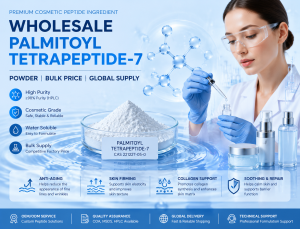
3. Palmitoyl Tetrapeptide-7
Best for:
- Anti-inflammatory anti-aging formulations
- Combination peptide systems
Benefits:
✔ Supports healthier skin appearance
✔ Helps reduce visible signs of aging
✔ Commonly combined with other matrix peptides
4. Acetyl Hexapeptide-8 (Argireline)
Best for:
- Expression wrinkle products
- Eye-area formulations
Benefits:
✔ Targets visible dynamic wrinkles
✔ Provides a non-invasive alternative concept to advanced anti-aging products
5. Palmitoyl Pentapeptide-4 (Matrixyl)
Best for:
- Luxury anti-aging skincare
- Firming formulations
Benefits:
✔ Supports extracellular matrix components
✔ Improves appearance of fine lines
✔ Widely used in premium skincare products
6. Oligopeptide and Customized Synthetic Peptides
Best for:
- Innovative skincare brands
- Differentiated formulations
Synthetic peptide design allows manufacturers to customize:
- Amino acid sequence
- Molecular structure
- Purity level
- Functional performance
For cosmetic companies developing next-generation products, customized peptide synthesis provides opportunities for unique anti-aging formulations.
How Do Cosmetic Peptide Ingredients Compare With Other Anti-Aging Actives?
| Ingredient Category | Main Function | Advantages |
|---|---|---|
| Retinoids | Collagen stimulation | Strong clinical evidence |
| Hyaluronic Acid | Hydration | Excellent moisture retention |
| Vitamin C | Antioxidant protection | Brightening effect |
| Cosmetic Peptides | Targeted signaling | High compatibility and formulation flexibility |
Peptides are generally considered complementary anti-aging ingredients rather than replacements for clinically established actives such as retinoids.
How Should Cosmetic Manufacturers Select a Peptide Supplier?
Choosing the right cosmetic peptide supplier directly affects product quality, stability, and regulatory compliance.
Manufacturers should evaluate:
1. Peptide Purity
High-performance skincare requires:
- High HPLC purity
- Reliable analytical testing
- Batch-to-batch consistency
2. Manufacturing Capability
A professional peptide manufacturer should provide:
- Custom peptide synthesis
- Scale-up production
- Quality control documentation
- Technical formulation support
3. Application Expertise
A supplier should understand:
- Anti-aging formulation requirements
- Cosmetic regulatory standards
- Stability challenges
- Compatibility with other ingredients
Why Choose Synthetic Peptide Ingredients for Skincare Development?
Synthetic cosmetic peptides offer several advantages:
High Purity
Controlled synthesis ensures consistent peptide composition.
Better Supply Reliability
Synthetic production reduces dependence on biological extraction sources.
Customization Possibility
Manufacturers can develop peptides with specific functional targets.
Advanced Product Differentiation
Brands can create unique anti-aging products using proprietary peptide combinations.
What Peptide Combinations Are Recommended for Premium Anti-Aging Products?
High-performance formulations often combine multiple peptides.
Examples:
Firming Serum Formula
- GHK-Cu
- Palmitoyl Tripeptide-1
- Palmitoyl Tetrapeptide-7
Purpose:
- Collagen support
- Skin firmness
- Aging prevention
Advanced Eye Cream Formula
- Acetyl Hexapeptide-8
- Palmitoyl Pentapeptide-4
- Hyaluronic acid
Purpose:
- Expression wrinkle care
- Hydration
- Smoother appearance
Are Cosmetic Peptides Safe for Skincare Products?
Most cosmetic peptides are considered well tolerated when formulated appropriately.
Safety considerations include:
- Recommended usage concentration
- Product stability
- Preservation system
- Regulatory compliance
Scientific reviews indicate cosmetic peptides show promising anti-aging potential, although evidence levels vary among different peptide types and applications.
What Services Should a Professional Cosmetic Peptide Manufacturer Provide?
A reliable peptide ingredient partner should offer:
Custom Peptide Synthesis
Development of customized sequences according to customer requirements.
Bulk Peptide Supply
Large-scale production for:
- Skincare brands
- Contract manufacturers
- Cosmetic laboratories
Technical Documentation
Including:
- Certificate of Analysis (COA)
- HPLC data
- Safety documentation
- Technical specifications
Application Support
Support for:
- Anti-aging serum development
- Cream formulation
- Professional skincare products
Why Partner With Our Synthetic Cosmetic Peptide Manufacturing Platform?
Peptidchem specialize in the development and production of synthesized peptide ingredients for advanced skincare applications.
Our capabilities include:
✔ Custom cosmetic peptide synthesis
✔ High-purity peptide raw materials
✔ Bulk supply for cosmetic manufacturers
✔ Research-driven peptide development
✔ Technical support for formulation partners
Whether you are developing a premium anti-aging serum, professional skincare line, or innovative cosmetic product, our peptide ingredients provide reliable performance and scalable manufacturing solutions.📩 Contact us to request a quotation or discuss your specific requirements. Let’s build a strong partnership supply for your anti-aging cosmetics product line.
Also See
Inside Cosmetic Peptide Manufacturing: Production Process, Quality Control, and Industry Standards
How to Choose a Reliable Cosmetic Peptide Supplier: Quality, Testing, and Documentation Guide
FAQs:
Q1.What are the best peptides for anti-aging skincare?
The most commonly used anti-aging cosmetic peptides include GHK-Cu, Palmitoyl Tripeptide-1, Palmitoyl Tetrapeptide-7, Acetyl Hexapeptide-8, and Palmitoyl Pentapeptide-4.
Q2.What is a cosmetic peptide supplier?
A cosmetic peptide supplier provides synthesized peptide raw materials used by skincare manufacturers to develop creams, serums, and anti-aging products.
Q3.Can peptide ingredients be customized?
Yes. Professional peptide manufacturers can design and synthesize customized peptide sequences according to formulation goals.
Q4.Are synthetic peptides suitable for luxury skincare products?
Yes. High-purity synthetic peptides are widely used in premium skincare formulations because of their consistency and controlled manufacturing.
Q5.How do I buy cosmetic peptide ingredients in bulk?
Cosmetic brands can purchase peptide ingredients directly from qualified peptide manufacturers offering bulk supply, documentation, and technical support.
Reference
Pintea A. et al. (2025). Peptides: Emerging Candidates for the Prevention and Treatment of Skin Aging.
Van Walraven N. et al. (2025). Bioactive peptides in cosmetic formulations: Review of commercially available cosmetic peptides.
Crespi O. et al. (2025). Cosmeceuticals for Anti-Aging: Mechanisms, Clinical Evidence, and Regulatory Insights.
Griffiths T.W. et al. (2023). Skin ageing and topical rejuvenation strategies. British Journal of Dermatology.