




Discover how professional cosmetic peptide manufacturers ensure safety, purity, and batch consistency through GMP standards, advanced synthesis, HPLC, LC-MS testing, and quality control systems. Explore high-quality synthetic peptide ingredients for skincare formulation.
Cosmetic Peptides Manufacturing: Why Quality Standards Matter
Cosmetic peptides have become important bioactive ingredients in modern skincare formulations because of their ability to support skin appearance, hydration, firmness, and overall cosmetic performance.However, the effectiveness of peptide-based cosmetic products depends strongly on manufacturing quality. Unlike conventional cosmetic ingredients, peptides are complex molecular structures that require controlled synthesis, purification, analytical verification, and strict batch management.
A reliable cosmetic peptide manufacturer must ensure three critical factors:
- Safety
- High purity
- Batch-to-batch consistency
Professional peptide manufacturing follows advanced quality systems, including controlled production environments, analytical testing, and documented manufacturing procedures. ISO 22716 Cosmetic Good Manufacturing Practice (GMP) provides internationally recognized guidance for cosmetic product manufacturing quality management.
What Are Cosmetic Peptides?
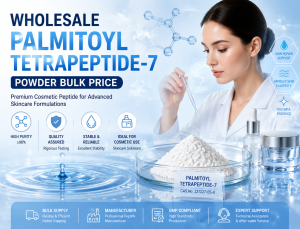
Wholesale Palmitoyl Tetrapeptide-7 Powder Bulk Price are short chains of amino acids designed for topical skincare applications. They are synthesized through controlled chemical processes to obtain specific peptide sequences with targeted cosmetic functions.
Unlike naturally extracted proteins, synthetic cosmetic peptides provide:
- Defined molecular structure
- Controlled purity
- Reliable formulation performance
- Improved manufacturing consistency
Synthetic peptide technology allows manufacturers to produce customized peptide ingredients according to specific skincare formulation requirements.
How Are Cosmetic Peptides Manufactured?
Step 1: Peptide Design and Sequence Selection
The manufacturing process begins with peptide sequence design. Scientists determine the amino acid sequence required for the intended cosmetic application.
Factors considered include:
- Molecular stability
- Solubility
- Compatibility with cosmetic formulations
- Skin application requirements
Step 2: Solid-Phase Peptide Synthesis (SPPS)
Most synthetic cosmetic peptides are produced using Solid-Phase Peptide Synthesis (SPPS).
During SPPS:
- Amino acids are sequentially added to a growing peptide chain.
- Chemical reactions are carefully controlled.
- Protective groups are removed at specific stages.
- The final peptide sequence is released and purified.
SPPS provides accurate control over peptide structure and supports scalable manufacturing from laboratory quantities to commercial production.
Step 3: Purification Process
After synthesis, crude peptides contain:
- Target peptide molecules
- Side products
- Short peptide fragments
- Chemical impurities
Advanced purification technologies are used to achieve required purity levels.
Common purification methods include:
- Reverse-phase high-performance liquid chromatography (RP-HPLC)
- Preparative chromatography
- Filtration systems
High-quality peptide suppliers commonly provide products with purity levels exceeding 98% depending on customer requirements and applications.
What Quality Standards Should a Cosmetic Peptide Supplier Follow?
A professional cosmetic peptide supplier should operate under internationally recognized quality principles.
1. Cosmetic GMP Compliance (ISO 22716)
ISO 22716 provides guidelines covering:
- Raw material control
- Production processes
- Documentation
- Personnel training
- Storage conditions
- Quality management
These practices help ensure cosmetic ingredients are produced consistently and safely.
2. Raw Material Quality Control
High-quality peptide manufacturing begins with qualified raw materials.
Supplier evaluation includes:
- Amino acid purity verification
- Chemical identification
- Supplier qualification
- Material traceability
Raw material variation can directly influence peptide purity and final product performance.
3. Controlled Manufacturing Environment
Reliable peptide production requires:
- Controlled production areas
- Contamination prevention systems
- Equipment calibration
- Standard operating procedures (SOPs)
Every production stage should be documented to maintain traceability.
How Is Cosmetic Peptide Purity Tested?
A professional cosmetic peptide manufacturer uses multiple analytical techniques.
High-Performance Liquid Chromatography (HPLC)
HPLC is widely used to determine:
- Peptide purity percentage
- Impurity profile
- Batch consistency
Liquid Chromatography–Mass Spectrometry (LC-MS)
LC-MS confirms:
- Molecular weight
- Peptide identity
- Structural accuracy
Combining HPLC and LC-MS provides strong analytical confirmation of peptide quality.
Why Is Batch-to-Batch Consistency Important for Cosmetic Peptides?
Skincare manufacturers require ingredients that perform consistently in every production cycle.
Poor manufacturing control may lead to:
- Different peptide concentrations
- Variable cosmetic performance
- Formulation instability
- Increased product development challenges
A reliable cosmetic peptide supplier maintains consistency through:
- Validated manufacturing processes
- Batch records
- Analytical testing
- Quality release procedures
Quality control systems help reduce variability between production batches.
What Documentation Should a Cosmetic Peptide Manufacturer Provide?
Professional peptide ingredient suppliers typically provide:
Certificate of Analysis (COA)
Including:
- Product identity
- Purity results
- Batch number
- Testing methods
Technical Data Sheet (TDS)
Including:
- Product specifications
- Storage conditions
- Recommended application information
Safety Documentation
Including:
- Handling information
- Stability information
- Regulatory support documents
These documents help cosmetic brands verify ingredient quality before formulation.
Why Choose Synthetic Cosmetic Peptide Ingredients?
Peptidchem offer several advantages compared with traditional extraction methods:
High Structural Accuracy
Synthetic manufacturing allows precise control of amino acid sequences.
Better Purity Control
Advanced purification technologies remove unwanted by-products.
Scalable Production
Manufacturers can supply:
- Research quantities
- Pilot batches
- Commercial-scale orders
Customization Possibility
Brands can request customized peptide sequences according to formulation objectives.
How to Select the Best Cosmetic Peptide Supplier?
Before choosing a supplier, cosmetic brands should evaluate:
Manufacturing Capability
Check:
- Peptide synthesis technology
- Production capacity
- Custom manufacturing options
Quality System
Confirm:
- GMP practices
- Analytical testing capability
- Documentation system
Technical Support
A professional supplier should provide:
- Formulation support
- Technical consultation
- Product documentation
Our Cosmetic Peptide Manufacturing Capability
As a specialized manufacturer of synthetic peptide ingredients, we focus on producing high-quality cosmetic peptides through controlled synthesis and advanced purification technologies.
Our manufacturing capabilities include:
- Custom synthetic peptide production
- High-purity peptide ingredients
- Analytical quality verification
- Batch consistency control
- Bulk supply solutions for cosmetic brands
We support skincare companies, ingredient distributors, and cosmetic formulation developers with reliable peptide raw materials.📩 Contact us to request a quotation or discuss your specific requirements. Let’s build a strong partnership supply for your anti-aging cosmetics product line.
Also See
Copper Tripeptide-1 (GHK-Cu): Cosmetic Formulation Guide | Peptidchem
What Is Hydrolyzed Collagen Peptide and Why Is It the Preferred Ingredient for Supplement Brands
How Does Hydrolyzed Collagen Peptide Support Beauty, Joint, and Healthy Aging Supplement Formulas
FAQs:
Q1:What is a cosmetic peptide manufacturer?
A cosmetic peptide manufacturer produces synthetic peptide ingredients designed for skincare applications using controlled synthesis, purification, and quality testing processes.
Q2:What purity level should cosmetic peptides have?
Purity requirements depend on application needs. Many professional peptide suppliers provide cosmetic peptides with high purity specifications verified through analytical testing such as HPLC and LC-MS.
Q3:Are synthetic peptides safe for cosmetic formulations?
Synthetic cosmetic peptides are designed under controlled manufacturing conditions and evaluated according to applicable cosmetic ingredient safety requirements.
Q4:How can I verify a cosmetic peptide supplier?
Check supplier documentation, analytical testing methods, manufacturing standards, batch traceability, and quality certificates.
Q5:Can cosmetic peptides be manufactured according to custom requirements?
Yes. Professional peptide manufacturers often provide customized peptide synthesis services for cosmetic brands and ingredient companies.
References
International Organization for Standardization. ISO 22716: Cosmetics — Good Manufacturing Practices (GMP).
Eurogentec. GMP Peptide Manufacturing Services and Quality Standards.
Serox GmbH. ISO 9001, ISO 22716 Cosmetic GMP and Analytical Quality Control for Peptide Manufacturing.
Bachem. Quality Control of Amino Acids & Peptides: A Guide.
Elsayed YY et al. (2025). Regulatory Guidelines for the Analysis of Therapeutic Peptides.