




Discover why palmitoyl peptides are high-value cosmetic ingredients in luxury skincare. Learn about Palmitoyl Tripeptide-1, Palmitoyl Tetrapeptide-7, Palmitoyl Pentapeptide-4, manufacturing, benefits, applications, and how to source high-quality synthesized peptide ingredients from a reliable cosmetic peptide supplier.
Why Are Palmitoyl Peptides Considered Premium Ingredients in Luxury Skincare Formulas?
Luxury skincare has shifted from traditional moisturizing and botanical-based formulas toward science-driven active ingredients. Among modern cosmetic actives, Palmitoyl Tripeptide-1 Powder have become some of the most valuable ingredients used in premium anti-aging serums, repair creams, eye treatments, and professional skincare formulations.
These advanced synthetic peptides combine bioactive amino acid sequences with palmitic acid, creating molecules designed to improve skin compatibility, stability, and delivery performance. Their ability to support collagen-related pathways and extracellular matrix functions has made them highly attractive to luxury skincare developers worldwide.
What Are Palmitoyl Peptides?
Palmitoyl peptides are a specialized class of lipid-modified cosmetic peptides formed by attaching a palmitic acid chain to a peptide sequence.
The peptide portion provides biological signaling activity, while the palmitoyl group improves:
- Lipid compatibility
- Skin penetration potential
- Formulation stability
- Interaction with skin surface structures
The palmitoylation process increases the molecule’s lipophilic characteristics, helping peptide ingredients integrate better into cosmetic delivery systems.
Common cosmetic palmitoyl peptides include:
| Ingredient | INCI Name | Main Cosmetic Application |
|---|---|---|
| Palmitoyl Tripeptide-1 | Pal-GHK | Anti-aging, collagen-support formulas |
| Palmitoyl Tetrapeptide-7 | Pal-GQPR | Skin repair and anti-inflammatory skincare |
| Palmitoyl Pentapeptide-4 | Pal-KTTKS | Wrinkle-care and firming products |
| Palmitoyl Tripeptide-38 | Pal-KMO2K | Advanced matrix-support formulations |
Why Are Palmitoyl Peptides Used in Luxury Skincare Products?
1. Advanced Anti-Aging Positioning
Premium skincare consumers increasingly demand scientifically supported ingredients rather than simple moisturizing effects.
Palmitoyl peptides are widely incorporated into luxury anti-aging formulations because they are designed to influence processes associated with:
- Collagen maintenance
- Skin firmness
- Fine-line appearance
- Texture improvement
Research reviews indicate that cosmetic peptides can regulate collagen synthesis, extracellular matrix activity, and skin repair pathways.
How Do Palmitoyl Peptides Improve Skin Appearance?
A. Supporting Collagen-Related Skin Functions
Collagen provides structural support for youthful-looking skin. Aging, environmental stress, and UV exposure contribute to collagen degradation.
Signal peptides such as palmitoyl pentapeptide-4 are designed to mimic fragments involved in extracellular matrix communication, supporting pathways associated with collagen production.
Palmitoyl pentapeptide-4 (Pal-KTTKS) is one of the most recognized cosmetic peptides used in wrinkle-care formulations.
B. Improving Skin Firmness and Elasticity Appearance
Luxury skincare brands commonly combine palmitoyl peptides with:
- Hyaluronic acid
- Ceramides
- Antioxidants
- Retinoids
- Growth-factor-inspired ingredients
This combination approach allows formulators to develop multi-functional products targeting hydration, barrier support, and visible aging concerns.
C. Suitable for Sensitive Skin Formulations
Compared with some stronger active ingredients, peptides are often positioned as gentle cosmetic actives.
Palmitoyl tripeptides are frequently used in products designed for consumers seeking anti-aging benefits with lower irritation potential compared with aggressive exfoliating ingredients.
Why Are Palmitoyl Peptides Considered Premium Cosmetic Ingredients?
1. Complex Manufacturing Technology
Unlike conventional cosmetic ingredients, synthetic peptides require controlled manufacturing processes, including:
- Solid-phase peptide synthesis (SPPS)
- Purification
- Chromatographic separation
- Structural confirmation
- Quality testing
High-quality peptide manufacturing requires advanced synthesis capability and analytical verification.
2. High Purity Requirements
Luxury skincare brands typically require:
- High HPLC purity
- Accurate molecular identification
- Low impurity profiles
- Batch-to-batch consistency
- Complete documentation
A professional cosmetic peptide supplier should provide:
- COA (Certificate of Analysis)
- HPLC chromatograms
- MS testing
- Stability data
- Technical documentation
3. Strong Marketing Value for Premium Brands
Modern skincare consumers recognize peptides as advanced biotechnology ingredients.
Brands use palmitoyl peptides to support product claims such as:
- Advanced anti-aging serum
- Collagen-supporting skincare
- Professional-grade facial treatment
- Luxury peptide repair cream
The cosmetic peptide synthesis market continues expanding as prestige beauty brands increasingly adopt science-based active ingredients.
What Are the Most Popular Palmitoyl Peptides for Skincare Manufacturers?
Applications:
- Anti-wrinkle creams
- Firming serums
- Premium facial treatments
Key Advantages:
- One of the most studied cosmetic peptides
- Strong luxury skincare recognition
- Commonly used in matrix-support formulas
Palmitoyl Tripeptide-1
Applications:
- Anti-aging moisturizers
- Repair creams
- Skin renewal products
Benefits:
- Supports youthful skin appearance
- Compatible with multiple cosmetic systems
Palmitoyl Tetrapeptide-7
Applications:
- Sensitive skin products
- Anti-aging formulations
- Barrier-support products
Benefits:
- Designed for advanced skin conditioning formulations
Palmitoyl Tripeptide-38
Applications:
- Premium wrinkle treatments
- High-performance serums
It is designed from sequences associated with extracellular matrix components and is used in advanced anti-aging products.
How Are Cosmetic Palmitoyl Peptides Manufactured?
A professional synthesized peptide manufacturing process generally includes:
Step 1: Peptide Sequence Design
Scientists select specific amino acid sequences according to cosmetic functionality.
↓
Step 2: Solid Phase Peptide Synthesis (SPPS)
Amino acids are sequentially assembled on a resin support.
↓
Step 3: Palmitoylation Modification
A palmitic acid chain is chemically attached to improve lipid compatibility.
↓
Step 4: Purification
Advanced purification removes:
- Short peptide fragments
- Reaction by-products
- Organic impurities
↓
Step 5: Quality Control
Testing includes:
- HPLC purity analysis
- Mass spectrometry
- Appearance testing
- Residual solvent analysis
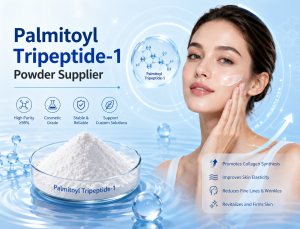
How Can Cosmetic Brands Select a Reliable Palmitoyl Peptide Supplier?
Before purchasing bulk cosmetic peptides, brands should evaluate:
Manufacturing Capability
✔ In-house peptide synthesis
✔ Advanced purification equipment
✔ Quality management system
Documentation
✔ COA
✔ MSDS
✔ Technical data sheet
✔ Stability information
Supply Capability
✔ Small laboratory quantities
✔ Bulk cosmetic ingredient supply
✔ Customized peptide synthesis
Why Choose Our Synthesized Cosmetic Peptide Ingredients?
We specialize in manufacturing synthetic cosmetic peptide ingredients for global skincare brands, cosmetic manufacturers, and ingredient distributors.
Our peptide solutions include:
- Palmitoyl peptides
- Anti-aging peptides
- Signal peptides
- Customized cosmetic peptides
- High-purity peptide powders
We support cosmetic companies with:
✔ Reliable bulk supply
✔ Competitive wholesale pricing
✔ Customized synthesis services
✔ Technical documentation
✔ International cosmetic ingredient standards
Conclusion
Palmitoyl peptides represent the intersection of biotechnology, cosmetic chemistry, and luxury skincare innovation. Their advanced molecular design, manufacturing complexity, and strong positioning in anti-aging formulations make them premium ingredients for high-performance skincare products.📩 Contact us to request a quotation or discuss your specific requirements. Let’s build a strong partnership supply for your anti-aging cosmetics product line.
Also See
Palmitoyl Tripeptide-5 Explained: Mechanism, Skincare Benefits, and Formulation Applications
What Is Palmitoyl Tetrapeptide-7 and Why Is It Used in Anti-Aging Skincare Formulas
FAQs:
Q1: What are palmitoyl peptides used for?
Palmitoyl peptides are cosmetic active ingredients mainly used in anti-aging skincare products to support skin firmness, elasticity, and improved appearance.
Q2: Are palmitoyl peptides natural or synthetic?
Most commercial palmitoyl peptides are synthesized using controlled laboratory peptide production methods to achieve high purity and consistency.
Q3: What is the difference between palmitoyl tripeptide-1 and palmitoyl pentapeptide-4?
Palmitoyl tripeptide-1 contains three amino acids, while palmitoyl pentapeptide-4 contains five amino acids. Both are used in premium skincare formulations but have different peptide sequences and cosmetic applications.
Q4: Can I buy palmitoyl peptides in bulk?
Yes. Cosmetic manufacturers can purchase bulk palmitoyl peptide powders from specialized peptide ingredient suppliers.
Q5: What documents should a peptide supplier provide?
Professional suppliers should provide:
- Certificate of Analysis (COA)
- HPLC report
- MS verification
- Safety documentation
- Technical specification sheet
References
Pintea A. et al. Peptides: Emerging Candidates for the Prevention and Treatment of Skin Aging. 2025.
Tang Y. Peptides in Cosmetics: From Pharmaceutical Inspiration to Skin Health Applications. Cosmetics, 2025.
Schagen S. Topical Peptide Treatments with Effective Anti-Aging Results. Cosmetics.
Sederma research documentation on Matrixyl peptide technology.
Cosmetic peptide synthesis market analysis reports.