




Discover peptidchem what Nonapeptide-1 Powder it supports advanced skin brightening formulas, and why cosmetic brands choose synthetic peptide ingredients for private label skincare. Learn about applications, benefits, specifications, and wholesale peptide supply solutions from a professional cosmetic peptide manufacturer.
What Is Nonapeptide-1 Powder?
Nonapeptide-1 Powder Bulk Supplier is a synthetic biomimetic peptide ingredient widely used in advanced skin brightening and tone-evening skincare formulations. It is a short-chain peptide consisting of nine amino acids designed to interact with specific biological pathways involved in skin pigmentation regulation.
As a cosmetic active ingredient, Nonapeptide-1 is mainly incorporated into:
- Brightening serums
- Whitening creams
- Anti-dark spot products
- Tone-correcting formulations
- Premium facial treatments
- Professional skincare products
Unlike traditional whitening ingredients, peptide-based actives provide cosmetic brands with a modern biotechnology-driven approach for developing multifunctional skincare solutions.
How Does Nonapeptide-1 Work in Skin Brightening Products?
Skin pigmentation is primarily regulated by melanin production, which occurs inside melanocytes. Melanin synthesis involves several signaling pathways, including activation of melanogenic enzymes such as tyrosinase.
Nonapeptide-1 is designed as a melanogenesis-targeting peptide that helps regulate pigmentation-related pathways.
The cosmetic mechanism is generally described as:
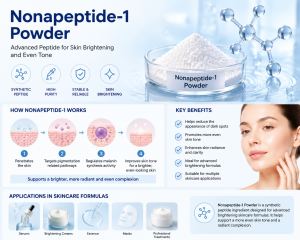
Nonapeptide-1 Peptide Application Pathway
Nonapeptide-1 Powder
↓
Penetration into cosmetic formulation system
↓
Interaction with pigmentation-related signaling pathways
↓
Regulation of melanin synthesis activity
↓
Improved skin tone uniformity
↓
Brighter and more even-looking skin appearance
For cosmetic applications, this makes Nonapeptide-1 a valuable ingredient for products targeting:
✓ Uneven skin tone
✓ Visible dark spots
✓ Dull complexion
✓ Age-related pigmentation concerns
Why Are Cosmetic Brands Choosing Nonapeptide-1 Powder?
The global skincare market has shifted toward high-performance biotechnology ingredients, especially peptides, because consumers increasingly demand scientifically supported active ingredients.
According to market research reports, the global cosmetic peptide market continues to expand due to increasing demand for:
- Anti-aging solutions
- Skin rejuvenation products
- Brightening formulations
- Clean beauty ingredients
- Advanced cosmetic biotechnology
Synthetic peptides provide several advantages:
| Advantage | Importance for Cosmetic Brands |
|---|---|
| High purity | Suitable for premium formulations |
| Defined molecular structure | Consistent product performance |
| Biotechnology-based production | Supports modern skincare positioning |
| Easy formulation integration | Compatible with multiple product formats |
| Global market acceptance | Suitable for international cosmetic brands |
Nonapeptide-1 Powder Applications in Skincare Formulas
Nonapeptide-1 can be used in multiple skincare categories:
1. Skin Brightening Serum Formulations
Serums require highly concentrated active ingredients. Nonapeptide-1 is often selected for:
- Lightweight brightening serums
- Intensive pigmentation care products
- Professional facial treatments
2. Whitening and Tone-Correcting Creams
Advanced creams combine peptides with:
- Hyaluronic acid
- Niacinamide
- Antioxidants
- Botanical extracts
to create multifunctional skincare products.
3. Anti-Aging Brightening Products
Premium anti-aging formulas often combine peptide ingredients to address:
- Loss of radiance
- Uneven complexion
- Visible signs of aging
Nonapeptide-1 Powder Technical Advantages for Cosmetic Manufacturers
For cosmetic manufacturers, ingredient quality and supply consistency are critical.
A professional synthetic peptide supplier provides:
1. High Purity Peptide Production
Synthetic peptide manufacturing enables controlled:
- Amino acid sequence
- Molecular composition
- Batch consistency
- Quality testing
2. Stable Bulk Supply
- Product launches
- Large-scale manufacturing
- Private label skincare production
3. Custom Documentation Support
Professional peptide suppliers typically provide:
- Certificate of Analysis (COA)
- HPLC purity testing
- MS identification reports
- Safety documentation
- Technical data sheets
Product Specification Sheet – Nonapeptide-1 Powder
| Product Name | Nonapeptide-1 Powder |
|---|---|
| Ingredient Type | Synthetic Cosmetic Peptide |
| Application | Skin Brightening & Tone Correction |
| Form | White Powder |
| Purity | High Purity Cosmetic Grade |
| Main Function | Brightening, Pigmentation Care |
| Solubility | Water-Compatible Formulation Systems |
| Recommended Applications | Serums, Creams, Masks, Treatments |
| Manufacturing Type | Synthetic Peptide Production |
| Quality Control | HPLC, MS, Analytical Testing |
| Supply Options | Bulk Wholesale / Cosmetic Ingredient Supply |
How to Select a Reliable Nonapeptide-1 Powder Supplier?
When selecting a cosmetic peptide manufacturer, brands should evaluate:
Manufacturing Capability
Choose suppliers with:
- Professional peptide synthesis technology
- Controlled production systems
- Stable global supply capacity
Quality Standards
Important quality indicators include:
- Purity verification
- Batch-to-batch consistency
- Analytical testing
- Documentation support
Industry Experience
A specialized cosmetic peptide supplier understands:
- Skincare formulation requirements
- International cosmetic regulations
- Private label product development
Why Choose a Synthetic Peptide Manufacturer for Nonapeptide-1 Supply?
Working directly with a synthetic peptide ingredient manufacturer helps cosmetic companies achieve:
Competitive Wholesale Supply
Direct manufacturing reduces unnecessary supply chain costs.
Technical Support
Ingredient manufacturers can provide:
- Formulation recommendations
- Product specifications
- Stability information
Custom Cosmetic Ingredient Solutions
Brands can develop:
- Customized peptide blends
- Private label skincare products
- Innovative brightening formulations
Conclusion
Nonapeptide-1 Powder represents the growing trend toward precision biotechnology ingredients in cosmetic formulations. With its role as a synthetic peptide active for advanced brightening products, it provides skincare brands with opportunities to create innovative, science-focused formulations. 📩 Contact us to request a quotation or discuss your specific requirements. Let’s build a strong partnership supply for your anti-aging cosmetics product line.
Also See
Why Are Brands Choosing Hydrolyzed Collagen Peptide Powder for Private Label Supplements
How Does Hydrolyzed Collagen Peptide Support Beauty, Joint, and Healthy Aging Supplement Formulas
What Is Hydrolyzed Collagen Peptide and Why Is It the Preferred Ingredient for Supplement Brands
Acetyl Dipeptide-1 Cetyl Ester vs Ceramide 3: A Cosmetic Formulations Guide to Barrier Repair
https://peptidchem.com/2026/07/16/acetyl-dipeptide-1-cetyl-ester-vs-ceramide-3/
FAQ:
Q1: Is Nonapeptide-1 a natural or synthetic peptide?
Nonapeptide-1 is a synthetic peptide produced through controlled peptide synthesis technology. Synthetic production ensures consistent quality and molecular accuracy.
Q2: What is Nonapeptide-1 Powder used for?
Nonapeptide-1 Powder is mainly used in cosmetic formulations designed for:
- Skin brightening
- Uneven skin tone improvement
- Dark spot care
- Radiance enhancement
Q3: Can Nonapeptide-1 be used in private label skincare products?
Yes. Cosmetic brands commonly use Nonapeptide-1 as an active ingredient in private label serums, creams, and professional skincare products.
Q4: What products can contain Nonapeptide-1?
Common applications include:
- Facial serum
- Whitening cream
- Anti-aging products
- Essence products
- Professional skincare treatments
Q5: How should Nonapeptide-1 Powder be stored?
Like many peptide ingredients, Nonapeptide-1 should generally be stored in a cool, dry environment and protected from excessive heat and moisture according to supplier specifications.
Q6: What documents should a Nonapeptide-1 supplier provide?
A professional supplier should provide:
- COA
- Purity analysis
- Technical data sheet
- Safety documentation
- Batch testing records
References
Lupo MP. Antioxidants and vitamins in cosmetics. Clinics in Dermatology. 2001;19(4):467–473.
Draelos ZD. Cosmetic Dermatology: Products and Procedures. Wiley-Blackwell.
Schagen SK. Topical peptide treatments with effective anti-aging results. Cosmetics. 2017;4(2):16.
Fields K, et al. Bioactive peptides in skin care applications. International Journal of Cosmetic Science. 2018.
Lintner K. Peptides and proteins in cosmetics: science and applications. Cosmetic Science Technology Series.