




Why Cosmetic Peptides Are Redefining Anti-Aging Skincare?
Cosmetic peptides are no longer simple skincare additives. They are bioactive signaling molecules that influence skin regeneration, collagen synthesis, and cellular repair pathways.
Unlike traditional ingredients such as hyaluronic acid or vitamin C, peptides act as cellular communication signals, instructing skin cells to behave younger, repair faster, and produce more structural proteins.
However, most guides only scratch the surface.
This advanced guide explains:
How peptides work at the molecular level
Why many peptides fail in real formulations
The truth behind GHK-Cu, Matrixyl, and Argireline
Delivery system science that determines real efficacy
Next-generation peptide innovation trends
What Are Cosmetic Peptides?
Cosmetic peptide suppliers are short chains of amino acids designed to interact with skin biology.
They function through four main mechanisms:
Signal Peptides
Trigger collagen production and extracellular matrix repair
Example: Matrixyl (Palmitoyl Pentapeptide-4)
Carrier Peptides
Deliver trace elements like copper into skin cells
Example: GHK-Cu
Neuro-Active Peptides
Reduce muscle contraction signals to soften expression lines
Example: Argireline (Acetyl Hexapeptide-3)
Enzyme Modulating Peptides
Help regulate collagen degradation enzymes (MMPs)
How Cosmetic Peptides Work in Skin Biology?
Cosmetic peptides work by sending biological signals to skin cells, stimulating collagen production, reducing muscle contraction, and improving skin repair mechanisms.
At the biological level, peptides interact with:
Fibroblasts (collagen-producing cells)
Keratinocytes (skin barrier cells)
Neuromuscular signaling pathways
Extracellular matrix proteins
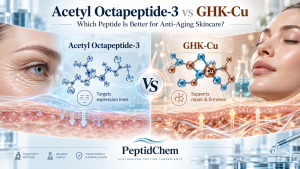
GHK-Cu (Copper Peptide): The Most Studied Anti-Aging Peptide
GHK-Cu (Copper Tripeptide-1) is one of the most scientifically validated cosmetic peptides:
Stimulates collagen and elastin production
Supports wound healing pathways
Reduces inflammatory signaling
Enhances antioxidant enzyme activity
GHK-Cu acts as a gene expression modulator, influencing multiple skin repair systems simultaneously rather than a single pathway
Matrixyl vs Argireline: Two Leading Anti-Aging Peptides
Matrixyl (Palmitoyl Pentapeptide-4) mimics collagen fragments, triggering fibroblasts to produce new collagen.
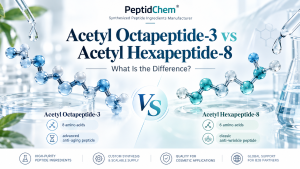
Argireline (Acetyl Hexapeptide-8) reduces neurotransmitter release linked to facial muscle contraction.
Why Many Cosmetic Peptides Fail in Real Skincare Products?
Despite strong scientific backing, many peptides show weak real-world performance due to:
Skin Barrier Limitations
Peptides often exceed optimal molecular size for dermal penetration.
Enzymatic Breakdown
Skin enzymes degrade peptides before they reach target cells.
Poor Formulation Systems
Water-based serums often fail without encapsulation or stabilization.
Incorrect Dosage
Many commercial products use sub-therapeutic peptide concentrations.

How to Choose a High-Quality Cosmetic Peptide Supplier?
≥98% purity (HPLC verified)
Full COA available
Stability data in final formulation
Clear INCI naming (no hidden blends)
Batch traceability
Controlled storage conditions
At Peptidchem, a cosmetic ingredients manufacturer. We supply bulk GHK-Cu, Matrixyl, and Argireline with 99% purity. We offer sample availability and provide comprehensive documentation, including COA, SDS, TDS. If you are seeking a reliable raw material supplier for your formulations, look no further— Contact us today!
FAQs:
Q1.What are cosmetic peptides used for?
Cosmetic peptides are used to improve skin firmness, reduce wrinkles, stimulate collagen production, and support skin repair mechanisms.
Q2.Do peptide serums really work?
Yes, but effectiveness depends on peptide type, concentration, and delivery system used in formulation.
Q3.What is the best anti-aging peptide?
GHK-Cu and Matrixyl are considered the most scientifically supported anti-aging peptides.
Q4.Are peptides better than retinol?
Peptides work differently than retinol. Peptides signal repair, while retinol accelerates skin cell turnover.
Q5.Can peptides penetrate skin?
Yes, but penetration depends heavily on molecular size and delivery system technology.