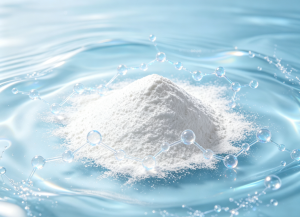




Peptidchem supplies bulk sodium hyaluronate powder manufactured through microbial fermentation, providing animal-free, high-performance ingredients for cosmetic, dietary supplement, pharmaceutical manufacturers worldwide.
Our factory offers multiple molecular weight grades ranging from Oligo HA to High Molecular Weight HA, enabling customers to develop customized formulations for capsules, tablets, powders; serums, creams, eye drops, and injectable intermediates (subject to applicable regulations and customer qualification).
What is the Source of Sodium Hyaluronate Powder?
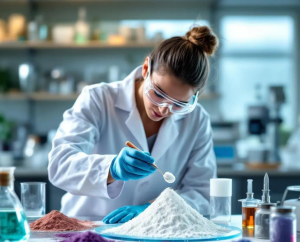
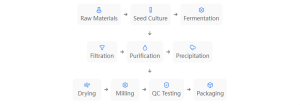
Modern industrial Sodium Hyaluronate is primarily produced through microbial fermentation, replacing traditional animal-derived extraction methods. Industrial production commonly uses controlled bacterial fermentation followed by purification and drying, providing consistent quality, traceability, and scalability.
Benefits include:
High purity
Animal-free production
Consistent molecular weight control
Suitable for vegan formulations
Sodium Hyaluronate Powder Process Flow
Cosmetic-Grade Sodium Hyaluronate Powder Specifications
| Parameter | Specification |
|---|---|
| Product Name | Sodium Hyaluronate Powder |
| INCI Name | Sodium Hyaluronate |
| CAS No. | 9067-32-7 |
| Source | Microbial Fermentation |
| Appearance | White to off-white powder |
| Odor | Characteristic / Odorless |
| Assay | 95.0–105.0% |
| Molecular Weight | Customized: 5–10 kDa, 10–100 kDa, 100–500 kDa, 500–1,500 kDa, etc. |
| pH | 5.5–8.0 |
| Loss on Drying | ≤10.0% |
| Protein | ≤0.2% |
| Heavy Metals | Complies with applicable specification |
| Total Plate Count | ≤100 CFU/g* |
| Yeast & Mold | ≤10 CFU/g* |
| E. coli | Negative |
| Salmonella | Negative |
| Solubility | Soluble in water |
| Animal Origin | None |
| Grade | Cosmetic-Grade |
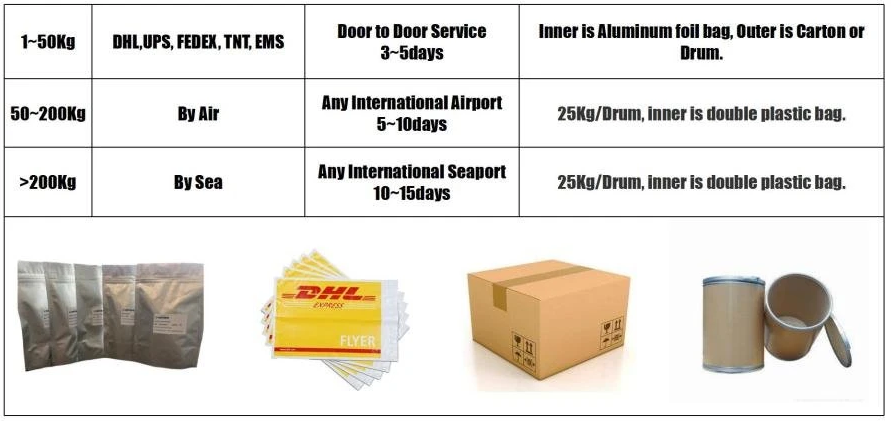
| Packaging | 25 kg |
| Shelf Life | 24 months when properly stored |
Molecular Weight Selection
A 2024 study examining HA from approximately 60 to 2,500 kDa found that molecular weight and concentration significantly influence viscosity and other formulation properties.
| Molecular Weight | Suggested Cosmetic Positioning | Typical Starting Level |
|---|---|---|
| <10 kDa | Low-MW hydration formulations | 0.02–0.10% |
| 10–100 kDa | Lightweight hydration | 0.02–0.20% |
| 100–500 kDa | Hydration + sensory balance | 0.05–0.30% |
| 500–1,500 kDa | Surface hydration / film-forming | 0.05–0.20% |
| >1,500 kDa | High-viscosity / film-forming applications | 0.02–0.15% |
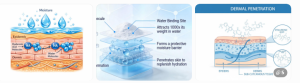
Sodium Hyaluronate Powder for Moisturizing & Anti-Aging Cosmetics Solutions
Bulk HA Powder is a fermentation-derived cosmetic ingredient designed for high-performance moisturizing, hydrating, and skin-conditioning formulations. Its strong water-binding capacity makes it suitable for serums, creams, essences, masks, and other leave-on cosmetic products.
1.Moisture-Retention Formula
For a hydrating serum, Sodium Hyaluronate can be used as the principal water-binding polymer.
| Ingredient | % | Function |
|---|---|---|
| Purified Water | 91.30% | Solvent |
| Glycerin | 4.00% | Humectant |
| Propanediol | 3.00% | Humectant / solvent |
| Sodium Hyaluronate | 0.20% | Moisture retention |
| Panthenol | 1.00% | Skin-conditioning / moisturizing |
| Betaine | 0.30% | Osmolyte / moisturizer |
| Preservative System | 0.80% | Preservation |
| pH Adjuster | q.s. | pH adjustment |
| Total | 100% |
2.Anti-Aging / Firming Formula
For a cosmetic product positioned around hydration + fine-line appearance + skin conditioning, I would recommend a multi-active formulation rather than relying on Sodium Hyaluronate alone.
| Ingredient | % | Function |
|---|---|---|
| Purified Water | 86.80% | Solvent |
| Glycerin | 4.00% | Humectant |
| Propanediol | 3.00% | Humectant |
| Niacinamide | 3.00% | Skin conditioning |
| Panthenol | 1.00% | Moisturization |
| Sodium Hyaluronate, High MW | 0.10% | Surface hydration / film formation |
| Hydrolyzed Sodium Hyaluronate, Low MW | 0.10% | Hydration |
| Acetyl Hexapeptide-8 | 0.05% | Anti-wrinkle cosmetic active |
| Ectoin | 0.30% | Moisture/barrier support |
| Tocopherol | 0.20% | Antioxidant |
| Preservative | 0.80% | Preservation |
| pH Adjuster | q.s. | pH adjustment |
| Other formulation components | q.s. | Texture / stability |
| Total | 100% |
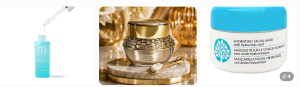
Why Choose Peptidchem?
1. Free sample available: Sodium hyaluronate powder suppliers 10-30g samples could be offered for your R&D trial. Qty: 1ton, Delivery method: FOB/CIF.
2. Quality and Purity: Pure cosmetic-grade that their hyaluronic acid powder is of the highest quality and purity. They often use third-party testing and provide a Certificate of Analysis (COA) to guarantee the product’s safety and efficacy.
3. Our Certificates: Over the years, we have been committed to product manufacture optimization and quality system establishment. We’ve set up the quality management system and obtained certificates for it. We provide ISO9001, Halal, Kosher, etc.
4. Customized Bulk Supply
We support:
Small trial orders
Bulk container supply
Private label manufacturers
Ingredient distributors
5. Global Export Capability
Markets served:
USA
Europe
Australia
Canada
Middle East
Asia-Pacific
Peptidchem can supply bulk sodium hyaluronate powder price with customized active specifications, formulation support, COA documentation, and export-ready quality systems. Contact us today!
Frequently Asked Questions
Q1:Is your Sodium Hyaluronate animal-free?
Yes. It is produced through microbial fermentation.
Q2:What molecular weights are available?
Oligo, Low, Medium, and High Molecular Weight grades.
Q3:Can I request customized viscosity?
Yes. We can recommend suitable molecular weight and viscosity ranges for your application.
Q4:Is it suitable for vegan products?
Yes.
Q5:What is the MOQ?
Typically 1 kg for samples, with bulk production available.
Q6:Can it be used in gummies?
Yes. It is commonly used in gummies, capsules, tablets, powders, and beverages.
Q7:What documents are available?
COA, TDS, MSDS, Certificate of Origin, and export documentation.
Q8:How should it be stored?
Store in a cool, dry place below 25°C in sealed packaging.
References
United States Pharmacopeia. Sodium Hyaluronate (From Microbial Fermentation).
USP
Marwan-Abdelbaset E., et al. Microbial production of hyaluronic acid: Current advances.
Stanford Chemicals. Hyaluronic Acid Technical Data Sheet.
European Pharmacopoeia Sodium Hyaluronate Reference Standard.